Carmen Elena is a Colombian woman whose life was upended by the violence that took the lives of her husband and her brother. Her plan to build a village that would offer a safe haven for mothers trying to keep their children from being recruited by armed groups collapsed when USAID shut down
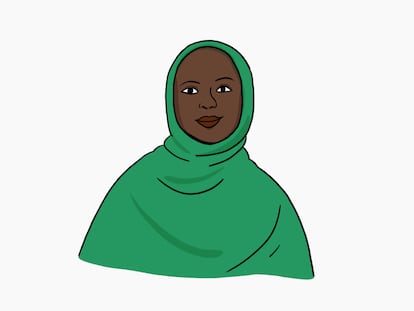
Hamada has five children and lives in Nigeria with HIV. Her husband and her father threw her out of the house when they learned about her illness and the fact that she had warned the second wife about the illness. When the United States halted the antiretroviral program that had allowed her to access her medication, she fell into despair
Tamanna lives in Afghanistan, the only country in the world where half of the population — women — are forbidden from almost everything: they cannot work, study, or take part in public life. Her life was upended when one of the very few job opportunities available to her — working for an NGO — disappeared due to funding cuts
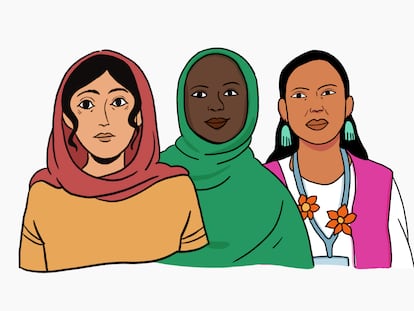
The world is rearming and humanitarian aid is collapsing. Tamanna, Hamada and Carmen Elena have felt the shock of the global upheaval firsthand. Like them, millions of women in the Global South feel the sting of decisions made in offices thousands of kilometers away. Three comics and a common denominator: being a woman
Declassified documents belonging to the disgraced financier have given wings to a conspiracy theory that’s been explored in ‘Eyes Wide Shut’ and by QAnon alike: does one do evil simply because one can?
‘The Pitt’ is the greatest exponent of this genre of shows and films in which the characters plan and execute tasks efficiently
Armando Lovera, a Peruvian biblical scholar based in Valladolid, talks to EL PAÍS about the pontiff who married him, baptized his daughters, and has never failed to reply to his messages despite his busy schedule
One analysis highlights a growing sense among women that the system no longer guarantees stability, and they associate feminism with the establishment
The secretary general of the UITP advocates in favor of a carrot-and-stick approach: restrictions on private vehicles and good service from subways, trains and buses
President Lula da Silva’s government aims to expand the Care Station, a pilot project tested in the city of Fortaleza. By the end of the year, 400 more units are set to open
The YouTuber has uploaded a video in which he shows off having built up to 10 education centers on three different continents
This supposed subculture unleashes hatred on social media through hoaxes and exaggerations that target trans people and feed the far-right narrative about a decadent society
Death by one’s own hand often leaves those who were close to the deceased in a state of sadness, bewilderment and guilt. And the wounds, which are difficult to heal, are not always well understood
EL PAÍS reconstructs a record‑breaking weekend of simultaneous surgeries and helicopter organ transfers to save four lives within a critical window
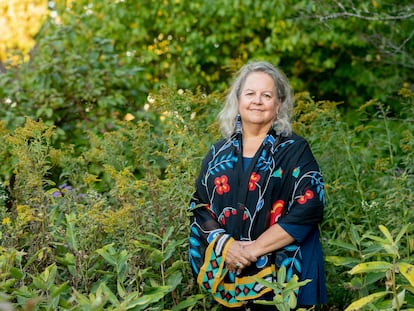
The author captivated millions of readers with her book, ‘Braiding Sweetgrass.’ In ‘The Serviceberry,’ her latest work of nonfiction, she proposes changing the dominant narrative as part of the resistance against climate disasters and social collapse
The Brazilian jurist begins his term as president of the Inter-American Court of Human Rights focusing on three key areas: climate action, bringing the court closer to citizens, and expediting measures
The taqueria founded by Victor Villa, a Californian with parents from Michoacán, appeared for six seconds during the halftime show. On Monday, the line at the restaurant was over an hour long
Beyond the xenophobia, as was made clear by Bad Bunny’s performance at the Super Bowl, the existence of different languages does not weaken countries, but enriches them
In his work, the German thinker explores the usefulness of political projects that aspired to reinvent society, even though they inevitably ended in failure
Two former employees took their case, which also accused the singer of human trafficking and harassment, to the National Court in Madrid
The singer, accused of sexual assault and human trafficking, has spent 40 years cultivating the mystery surrounding his life, hidden away in impenetrable mansions in the Caribbean. But the veil has begun to lift
The billionaire and philanthropist participated this Monday in an event marking the 50th anniversary of the founding of EL PAÍS, where he reflected on the challenges of a world in crisis
Jovana Ríos and Gema Fernández, the Women’s Link directors who exposed the star’s alleged abuse, say this is not an isolated case: ‘There is a framework of tolerance and impunity’
The owner of X responded to a flood of complaints about violations of the right to one’s own image, privacy, and honor, as well as threats of bans from numerous governments
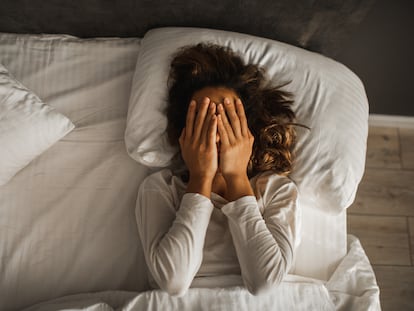
Women sleep worse than men due to hormonal changes, mental strain, and a lack of shared responsibility. These factors affect mental health and increase the risk of developing chronic illnesses
It is paradoxical that small farmers consider environmentalists their enemies