

Venezuela is foreshadowing the new world order that Trump wants to impose
The military operation against Maduro is the most representative example of the foreign policy that the US president intends to extend
The military operation against Maduro is the most representative example of the foreign policy that the US president intends to extend

The US president insists that ‘we’re in charge’ of the country after capturing Nicolás Maduro and his wife Cilia Flores and flying them to the US to face criminal charges
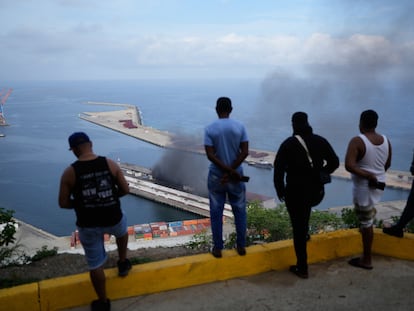
Trump embodies an approach that is willing to intervene directly when it believes its strategic interests are at stake
Whatever happens in the country, we would do well to remember that regime change can never be legitimized by force; that has never turned out well
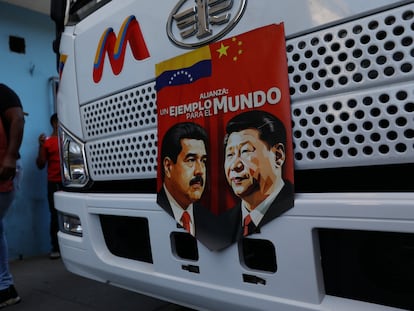
Beijing and Caracas strengthened their strategic partnership in 2023, but this does not entail security commitments

The ousted leader greeted onlookers upon arriving at the Metropolitan Detention Center in Brooklyn. He was transported in a van with a police escort after landing in New York by helicopter

The United States’ military intervention against Maduro’s authoritarian regime violates international law; an immediate de-escalation is needed for a democratic and peaceful solution
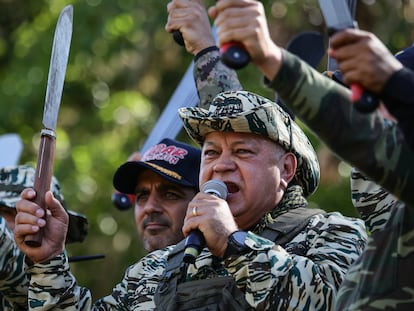
Delcy Rodríguez, as vice president, is second in the line of succession, and her brother Jorge, president of the National Assembly, is third

Attorney General Pam Bondi thanked President Donald Trump for his ‘courage’ in hunting down ‘these two alleged international narco traffickers’

Trump has confirmed the ‘large-scale’ operation and announced the capture of Nicolás Maduro

Trump ordered a ‘large-scale strike,’ while Caracas has declared a state of emergency

Trump says Washington will control Venezuela until there is ‘a safe transition,’ claiming opposition leader María Corina Machado lacks the ‘support or respect’ to assume power

Caracas has avoided comment on the military attack on Venezuelan soil announced by the US president, but claims to have shot down 39 illegal aircraft in 2025
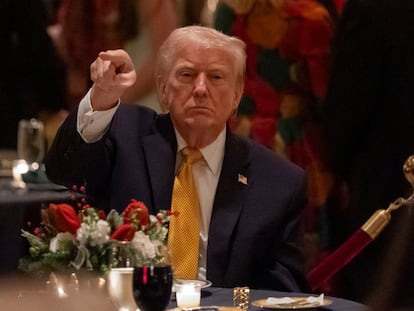
Washington has declined to share details about the operation, which if confirmed would be the first US ground attack against the Latin American country

The government of Nicolás Maduro has let out nearly 100 dissidents, the largest number in a year. But NGOs note there are still around 1,000 opponents behind bars
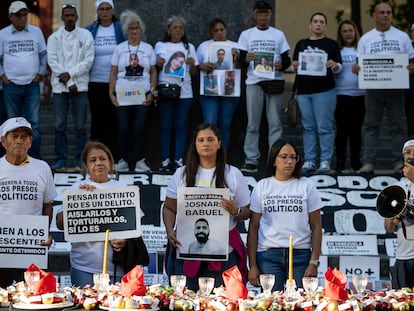
This holiday season is overshadowed by unprecedented tensions between the country and the United States

Following Trump’s call to consider the airspace closed as part of his pressure campaign against the Maduro regime, many members of Spain’s large Venezuelan community will be unable to spend time with their loved ones

The country’s enormous energy and mineral resources are consolidating as a key factor in the geopolitical dispute and in Venezuela’s institutional collapse

The seizure of tankers points to a gradual plan to cripple the finances of Nicolás Maduro’s regime

Caracas accuses the Caribbean island nation of participating in the seizure of an oil tanker off the Venezuelan coast
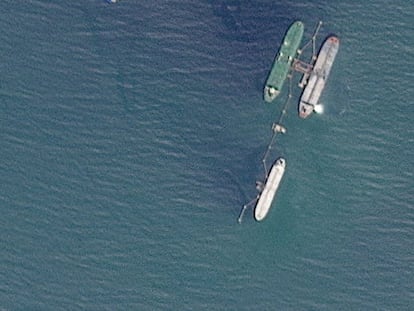
The US president says the military deployment in the Caribbean will continue until the Maduro regime returns ‘the oil, land and other assets they stole from us’
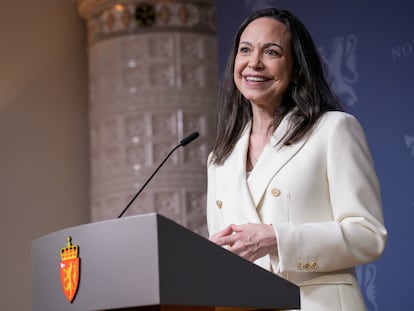
The opposition leader, who declined to provide any details about her next steps, asserts that ‘time is against Nicolás Maduro and the regime, and in favor of the opposition, of Venezuelans’

The White House anticipates further interceptions of vessels and is preparing sanctions against the nephews of the leader of the Chavista regime

Jørgen Watne Frydnes’ message is clear: Maduro must accept the election results and lay the groundwork for a peaceful transition

The opposition leader is traveling to Norway but will not be present at the award ceremony. The prize committee highlighted her struggle to promote democracy in her country and her leadership of the resistance against Nicolás Maduro

In recent months, the opposition leader has joined the Republican’s efforts to pressure Maduro to relinquish power

The Venezuelan opposition leader has been organizing internal resistance and persuading Washington to toughen its stance against Nicolás Maduro