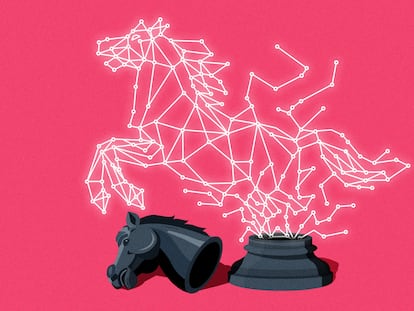
Researchers, executives and engineers who left OpenAI, Google and Anthropic have spent years warning about safety failures, military uses and increasingly uncontrollable systems. This is what worries them
Diego Córdoba and Luis Martínez‑Zoroa’s research is the foundation of the announcement that artificial intelligence has solved one of the greatest enigmas in history. Both believe the achievement will radically change the discipline
A large-scale study analyzing more than a million people has found that the family environment plays a smaller role than previously thought in shaping traits such as curiosity and agreeableness
NASA has launched its most ambitious space telescope yet, a mission designed to help answer two of astrophysics’ biggest questions: what are dark matter and dark energy
A recent series of unprecedented, coordinated security attacks has led experts to call for a moratorium, as the race among investors, companies, and nations heats up
There is not a single cause but several interwoven ones. The hypothesis with the most weight points to the development of our brain and the origin of language: gestures
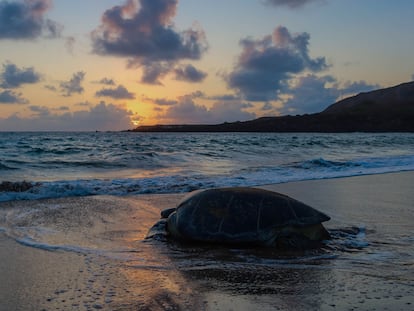
Once hunted nearly to extinction and today a conservation success story, the Atlantic’s largest reproductive colony of green sea turtles lives on the island of Ascención
A study analyzing 12 ‘Panthera spelaea’ genomes finds its lineage split from African lions far earlier than thought, with interbreeding shaped by glaciations
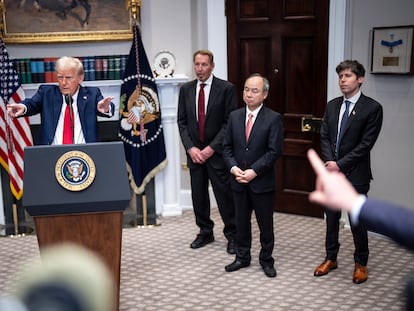
Elon Musk and Sam Altman may grab the headlines, but billionaires, theorists, and futurists are designing the most transformative technology of our era
A study describes two species with powerful beaks, and possibly intelligent, that hunted in the Cretaceous seas
A six-year study reveals that the rodent, which does not develop cancer or feel pain, also has a more sophisticated system of governance than previously thought
Reid Wiseman, Victor Glover, Christina Koch and Jeremy Hansen are the chosen ones for the first manned lunar mission since 1972
Having never been tested with astronauts, the space capsule’s heat shield and life support system are raising concerns after problems were detected in the unmanned Artemis 1 mission
Genetic analysis reveals that dogs already lived closely with Paleolithic humans and, in two sites, were buried in the same way as human dead
The expert, who has worked with patients for more than 40 years, has published ‘Love’s Labor,’ a book about what he has learned from the pain that human relationships can cause
EL PAÍS reconstructs what many media outlets sold as ‘the news story of the year,’ and some of its protagonists described as a ‘disgrace’: the supposed ‘gold medal-level performance’ by big tech, which overshadowed the real competition involving 600 youngsters
The American professor has spent 30 years studying the social brain. He speaks with EL PAÍS about the loneliness epidemic, specifically how artificial intelligence and political polarization might influence it
The awards are moving to Switzerland, because their founder believes he can no longer guarantee the laureates’ safety in the United States
The company employs a ‘red team’ that evaluates all artificial intelligence before its launch — and blocks its release if necessary
The satirical science prizes, which reward the most surprising research of the year with the support of real Nobel laureates, will be held in Switzerland and later in other European countries, ‘a little bit like Eurovision’
A study shows that interbreeding between the two species occurred primarily in one direction, and the origin of this bias is still unclear
A new study unravels the mysteries of self-fermentation as research identifies the bacteria responsible for a rare disorder that causes people to be drunk without drinking alcohol
Preventable infections drive deaths in women, while tobacco dominates among men, according to the WHO’s most extensive study yet
The pioneer of quantum computing talks about how Albert Einstein would have reacted to his experiments, the hype around the technology, and the parallels between physics and his new hobby: magic
From Tom Brady to Javier Milei, more and more people are paying tens of thousands of dollars to clone their animals, a business that exploits the notion of ‘eternal love.’ But what do they actually buy? Twenty years after the cloning of Snuppy, companies, scientists and bioethicists are divided
Archaeologist and anthropologist Jerry Moore reviews the findings that explain a relationship marked first by fear and then by mutual interest and admiration