
Four out of 10 cancers could be prevented: ‘The percentage can change’
Preventable infections drive deaths in women, while tobacco dominates among men, according to the WHO’s most extensive study yet

In 2022, 7.1 million new cancers were diagnosed worldwide that could have been prevented. That’s almost four out of every 10 cases. The data comes from the most comprehensive analysis of preventable tumors, published on Tuesday in Nature Medicine by the World Health Organization (WHO) and its International Agency for Research on Cancer (IARC). The study examines 30 modifiable risk factors in 36 types of cancer across 185 countries, an unprecedented scientific undertaking that, for the first time, maps globally where and how cancer could be prevented before it starts.
This is the first time that different risk factors have been combined in a single study, including individual behaviors, environmental factors, and, for the first time, infectious agents. “I think many people are still surprised to hear that four out of 10 cancers are preventable,” explained Isabelle Soerjomataram, lead researcher of the study, at a press conference last week. “Cancer is a disease that impacts many people, and this is a substantial number that indicates that many of them can be avoided,” added the head of cancer research at the IARC.
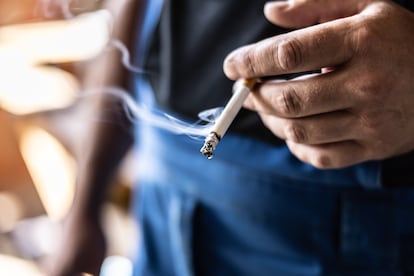
Smoking is the leading cause of preventable cancers, with 3.3 million cases. It is followed by infections such as human papillomavirus (HPV) and Helicobacter pylori (2.2 million) and alcohol (700,000 cases). “In 2022 alone, 7.1 million of the 18.7 million new cancer cases diagnosed in adults were attributable to the 30 risk factors we examined,” the researcher said. “This represents 37.8% of the total cancer burden, a very significant proportion,” she added.
But these numbers mask a crucial pattern: cancer prevention is not a one-size-fits-all problem. Sex, geography, and tumor type demand radically different strategies.
The gender gap
There is a huge difference in cancer incidence between men and women. For men, 45.4% of all cancers (4.3 million) are preventable, almost one in two. For women, it’s 29.7% (2.7 million).
The causes are very different. In men, tobacco is the leading risk factor in 126 of the 185 countries studied, and it causes 23.1% of all male cancers worldwide. In women, infections — primarily the human papillomavirus (HPV) — are the main risk factor in 141 countries.
This contrast reflects historical patterns, but also social decisions from past decades. Female tobacco use has increased dramatically in wealthy countries since the 1970s, but remains low in poor countries, where HPV prevalence, however, is disproportionately high.
Soerjomataram explained: “This marked difference between the sexes reflects distinct epidemiological patterns, cultural and social norms, and underlines why specific and gender-sensitive prevention strategies need to be developed.”
Geographical disparities
Regional disparities are dramatic. Among men, East Asia tops the list with 57.2% of cancers preventable, while Latin America reaches only 28.1%. Among women, sub‑Saharan Africa leads with 38.2%, compared with 24.6% in North Africa.
In Europe, where 32% to 39% of cancers are preventable, smoking and obesity are the dominant risk factors. Infections play a lesser role thanks to widespread HPV vaccination and improved sanitation.
Spain is in line with the European average. Some 35.9% of cancers are preventable, with smoking being the leading cause. By sex, 41.8% of tumors in men could have been avoided, compared with 26% in women.
Among Europe’s successes, the study highlights cervical cancer: Spain’s HPV vaccination program (in place since 2008) reaches more than 80% coverage. But it is also a stark example of regional inequality: in sub‑Saharan Africa and South Asia, where incidence remains among the highest in the world, vaccination coverage is still insufficient. Only 30% of eligible girls received their first dose in the past two years.
“Cervical cancer is the perfect example [of preventable tumors]. For the first time, we have the opportunity to eliminate a cancer if public policies advance,” said André Ilbawi, WHO Technical Lead for Cancer. “With three pillars of intervention [vaccination, screening, and treatment], we can, in fact, reach zero cases of cervical cancer globally,” he added.
The importance of public policies
The study shows that all these numbers can be changed. France and South Africa implemented substantial tobacco taxes and have achieved significant reductions in the prevalence of lung cancer.
The study makes it clear that improving the figures for preventable cancers requires three decisions. First, recognizing that investing in prevention — that is, in taxes, regulation, and public education — has economic returns and benefits for the overall health of the population. Second, understanding that this is a shared responsibility, rather than seeking individual blame. As André Ilbaw explained: “Prevention without blame.” And third, adapting strategies to the local context. A country with a high prevalence of H. pylori needs sanitation programs; one with high smoking rates needs policies to control the tobacco industry; and one with inequitable access to vaccines needs equity policies.
“The main conclusion of this study is the value of prevention in effectively reducing the burden that cancer places on our population,” explained Marina Pollán, cancer epidemiologist and director general of the Carlos III Health Institute, to the Spanish Medical Association (SMC). “Clearly, in our context, tobacco, alcohol, infectious agents, obesity, and a sedentary lifestyle are the main factors to avoid,” she added.
“The percentage of preventable cancers can change over time,” André Ilbawi insisted during the presentation of the study. “That doesn’t mean all cancer will disappear if we eliminate all risk factors, because, of course, there are cancers that arise from natural aging, cell division, and hereditary factors. But the idea that we can bring this percentage down to zero is not a pipe dream,” he added. Ilbawi explained that, to compile this report, the WHO listened to more than 4,000 people in 125 countries and reviewed the experiences of nearly one million people diagnosed with cancer globally. “Each story is unique, but they all reflect a call for shared action, from prevention to palliative care,” he concluded.
Sign up for our weekly newsletter to get more English-language news coverage from EL PAÍS USA Edition









































