
When your body becomes a brewery
A new study unravels the mysteries of self-fermentation as research identifies the bacteria responsible for a rare disorder that causes people to be drunk without drinking alcohol

A retired U.S. Navy officer began to experience strange symptoms. At 60, he was in excellent physical shape and only drank alcohol occasionally. But, after taking antibiotics to treat prostate inflammation, he began to experience strange episodes: he felt drunk without having drunk any alcohol. He became disorientated, drowsy and had difficulty speaking. The emergency doctors were bemused, as was his family. He had to install a breathalyzer lock on his vehicle, but even he didn’t know how to explain what was happening to him.
He wasn’t crazy. His body had literally turned into a brewery. Cases like this have been mere medical anecdotes for decades, but they have just received the most solid scientific validation yet. A study published in Nature Microbiology, conducted by researchers at the University of California (UC) San Diego and Massachusetts General Hospital, has finally identified what happens inside the gut of these patients. More importantly, it has found a treatment that works: a stool transplant.
The first medical description of auto-brewery syndrome (ABS) dates back to the late 19th century. But for generations, doctors were skeptical. How could anyone get drunk without drinking? Meanwhile, cases continued to occur, such as that of a Belgian man repeatedly accused of drunk driving; he was finally acquitted because it was proven that he had not drunk a drop. In 2019, a groundbreaking paper by Chinese researchers indicated ethanol-producing bacteria as the culprit. But without a large cohort of patients studied systematically, the evidence remained anecdotal.
Now, researchers have studied 22 patients with clinically documented ABS, comparing them to 21 members of their families with no symptoms. This has revealed how the body can make its own alcohol. “Patients are not believed by anyone, not even their doctors,” explains Bernd Schnabl, a gastroenterologist at UC San Diego and lead author of the study. “When someone arrives at the hospital intoxicated, it’s very easy to assume that they’ve been secretly drinking. And then there are the real-life consequences such as losing your job, family problems, legal problems. This disease is terrible for families,” he adds. Consequently, it is impossible to calculate how many people suffer or have suffered from this syndrome globally.
But the stories are striking: a young woman who couldn’t walk after receiving glucose during a routine diabetes test; previously healthy patients in their thirties who began to experience unpredictable outbreaks of severe ‘alcohol’ poisoning after certain meals. In some cases, victims of the disease also suffered signs of liver damage, and one patient had even developed cirrhosis.
Molecular analysis points to two prime suspects: Escherichia coli and Klebsiella pneumoniae – gut bacteria that, under normal circumstances, exist in equilibrium with thousands of other microbial species. But in ABS patients, both become pathogenic: they reach abnormal numbers and, most importantly, the metabolism spins out of control.
“All of us probably produce small amounts of alcohol in our intestines, because we usually have some E. coli and K. pneumoniae present,” Schnabl explains. “But only when these bacteria become excessively abundant does alcohol production reach levels that intoxicate the patient.”
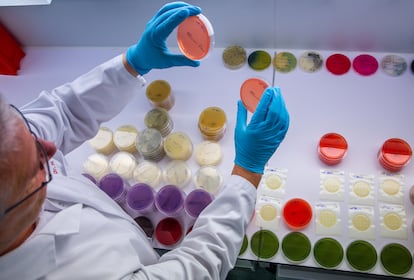
When researchers cultured stool samples from ABS patients, the bacteria had produced measurable levels of ethanol within 24 hours. Samples from healthy relatives produced trivial amounts that were easily metabolized by the body. In sick patients, peaks of 136 mg/dl were detected, almost three times the legal limit of alcohol for driving in some European countries.
When genetic composition came into the equation, the picture became even clearer. During the outbreaks, the bacterial genome was enriched with genes for ethanol fermentation: three different metabolic pathways that bacteria use to transform sugar into alcohol. But during periods of remission, when patients had no symptoms, the predominant genes were different: present were those that allow other bacteria to metabolize and remove the ethanol that was being produced.
“It’s like the body is in balance during remission,” Schnabl says. “But during an outbreak, that balance is broken.”
The impact of antibiotics
What causes these normal bacteria to become pathogenic? The evidence points to antibiotics. The former marine had taken multiple antibiotics for a prostate infection. His gut microbiome—a finely tuned ecosystem of trillions of organisms—was wiped out. When the bacteria grew back, the balance was never properly restored. E. coli and K. pneumoniae returned in disproportionate numbers, without the defense bacteria that normally keep them in check. After years of experiencing episodes, the Massachusetts man joined a patient support group that mentioned a radical strategy: fecal microbiota transplants (FMT), which basically means introducing bacteria from a healthy person into the patient’s gut to restore the lost balance.
The patient contacted Elizabeth Hohmann, a doctor at Massachusetts General Hospital who specializes in fecal transplants. Hohmann consulted Schnabl. And they both decided to give it a try. For the treatment, Hohmann selected a special donor: a healthy personal trainer and gym manager. His feces were processed, freeze-dried and packaged in capsules. The patient took multiple doses over several weeks. Gradually, something remarkable happened. The man’s symptoms disappeared. His microbiota was rebalanced. The ethanol-producing bacteria were displaced. Sixteen months later, he remains in total remission. Fecal transplantation works, but Schnabl is clear about its limitations: “We want more targeted and, ideally, easier options to implement than fecal transplants.”
Hohmann and Schnabl are already conducting a larger clinical trial in other ABS patients. Auto-brewery syndrome is extraordinarily rare. But Schnabl points out something disturbing: the underlying mechanism probably isn’t. Other studies have detected low-level microbial ethanol production in patients with diabetes and fatty liver disease. If those patients are constantly being exposed to small amounts of endogenous alcohol, might that contribute to liver damage, weight problems and insulin resistance?
“We don’t know yet,” Schnabl admits. “But there are definitely reasons to investigate these connections.” What we do know now is that self-fermentation syndrome is not a myth. It’s real, it’s caused by bacteria, and it’s treatable, for now, with a personal trainer’s supermicrobiome.
Sign up for our weekly newsletter to get more English-language news coverage from EL PAÍS USA Edition









































