
How beer helped change the history of modern surgery
The fermentation of the beverage allowed science to observe something that until then had been invisible: germs
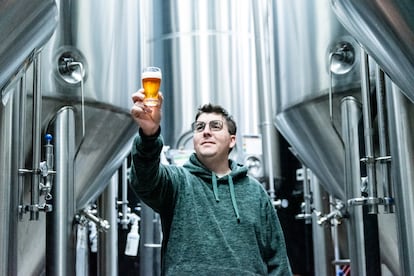
It might sound like an exaggeration, but it’s not: beer played an indirect but crucial role in the birth of modern surgery. Not because it held the key to cures, nor because anyone drank it in an operating room, but because it was one of the first products in which science observed something previously invisible. That something — germs — would forever change how we understand fermentation, food… and also human infections.
When beer “got sick”
In the mid-19th century, beer and wine frequently spoiled. It changed flavor, turned sour, and became cloudy. For brewers, it was a practical problem; for science, a mystery. Why did one beer turn out well while another, made with the same ingredients and processes, was ruined?
This is where Louis Pasteur comes in. His interest in fermentation wasn’t gastronomic, but scientific: to understand why it failed. By observing samples of beer and wine under a microscope, Pasteur demonstrated something crucial for the time, culminating a scientific debate that had been ongoing for decades: fermentation wasn’t a spontaneous phenomenon, but a biological process caused by living microorganisms, and other, different microorganisms were responsible for the beer “going bad.”
This discovery not only solved a technical problem for the brewing industry. It also played a decisive role in disproving the then-prevalent theory of spontaneous generation, which held that life — and by extension infections — arose naturally from decaying matter.
Beer thus became a veritable laboratory. And from that laboratory arose a question as simple as it was revolutionary: if microbes could spoil beer and wine, could they do the same to the human body?
Pasteur wasn’t a doctor, but his intuition extended far beyond the world of beverages. If there was a clear correlation between the presence of microorganisms and beer “sickness,” that relationship could be extended to other areas. This idea began to gain traction in science, though not without resistance. One who clearly understood the medical implications of Pasteur’s work was Joseph Lister, a British surgeon. Lister realized that the same germs that contaminated beer could infect open wounds. In an era when anesthesia had already enabled more ambitious surgeries, the major problem was different: the more invasive the operation, the greater the risk of infection… and death.
Inspired by Pasteur’s ideas, Lister introduced antisepsis into surgery: wound washing, instrument cleaning, control of the surgical environment, and the use of antiseptic agents. The results were remarkable. Open fractures, previously considered almost always fatal, began to heal. Postoperative mortality fell dramatically.
Modern surgery wasn’t born from a new surgical technique, but from understanding why patients died after the operation. And that understanding began, in part, by observing beer that was turning sour.
Pasteurization: control versus chaos
Pasteur’s research led to another key concept: pasteurization, a heat treatment that aims to reduce the microbial load to prevent spoilage. In beer, this process enabled something fundamental: stability, safety, and the ability to transport the product without it spoiling.
Today, more than a century later, pasteurization remains a common tool in the brewing industry. For decades, it was associated almost exclusively with large brands and the need to produce beer on a vast scale, ensuring it was stable and could travel thousands of miles without spoiling. And it’s true: mass-produced beers are often pasteurized because they require microbiological safety, consistency, and a long shelf life.
A prime example is Budějovický Budvar, the historic Czech brewery that remains state-owned. Its lager is brewed with Czech malt, Saaz hops, and undergoes long cold maturation. It is then pasteurized to ensure it can be shipped and stored without losing its clean, balanced, and distinctive character. Thanks to this microbiological control, Budvar can reach markets worldwide while maintaining its traditional character, demonstrating that pasteurization can also enhance flavor and identity.
But that’s not the only scenario where pasteurization makes sense. Today, smaller breweries and craft projects also use it selectively and consciously, especially in categories where the microbiological risk is higher. This is the case with fruit beers, where the fruit contributes freshness, acidity, and complexity, but also fermentable sugars and, in many cases, microorganisms that are difficult to control. In these styles, pasteurization becomes one of the tools to guarantee stability and safety without sacrificing the product’s character.
This is where projects like the Malandar brewery in Rota (Cádiz), known for its fruit sours, fit in. To bottle and distribute these beverages, so vibrant and delicate by definition, they apply pasteurization processes that allow them to fix the final profile, prevent unwanted refermentation, and ensure that the beer reaches the consumer exactly as intended. Specifically, Solero Smoothie Sour is one of their 5% fruit sours made with mango, cream, and vanilla. In a beer with this intense, creamy profile and high ingredient content, pasteurization is key to stabilizing the product once the desired balance has been achieved. The process allows them to fix the texture, the fruity aromas, and the integrated sweetness, preventing residual fermentation or deviations in the bottle, and guaranteeing that the beer reaches the consumer with the same expression it had when it left the brewery.
Another area where pasteurization is particularly important is in non-alcoholic beers. Lacking the protective effect of alcohol, these beverages are much more susceptible to microbiological contamination and flavor changes over time. Therefore, in many cases, pasteurization is not a secondary option, but a fundamental tool for ensuring safety, stability, and a consistent consumer experience.
In this segment, pasteurization makes it possible to avoid residual fermentations, unwanted aromatic changes, and preservation problems, ensuring that the non-alcoholic beer remains true to its original profile from the factory to the point of consumption.
This practice doesn’t make a beer better or worse. It makes it different. It provides stability, predictability, and safety. Today, it coexists with unpasteurized beers, which are more fragile, more readily available, and also more demanding to handle. Both have their place and serve different purposes.
Pasteurized beers add options and context. And they remind us that, sometimes, humanity’s greatest advances, including in medicine, begin in unexpected places.
Sign up for our weekly newsletter to get more English-language news coverage from EL PAÍS USA Edition









































