
When Jacob Elordi replaced Andrew Garfield: Hollywood’s most memorable last‑minute casting shake‑ups
In the film industry, it’s not unusual for major roles to change hands even after shooting is underway. Here, we look at some well‑known cases — with mixed results
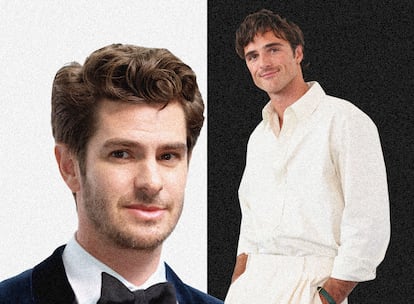

Some TV seasons are spaced so far apart that, between the end of one and the start of the next, actors who were virtually unknown can become full‑fledged stars. That’s what has happened with Euphoria, whose third season has just arrived on HBO. Neither Sydney Sweeney nor Jacob Elordi resemble the performers who said goodbye to their characters in 2022.
Elordi is perhaps the one whose fame has grown the most, since — unlike Sweeney, who has received plenty of attention for reasons other than her roles — he has made headlines for his work. The actor is returning to the role of Nate Jacobs with an Oscar nomination for Frankenstein, a part he landed by sheer chance, as Guillermo del Toro had never considered him to play Mary Shelley’s creature.
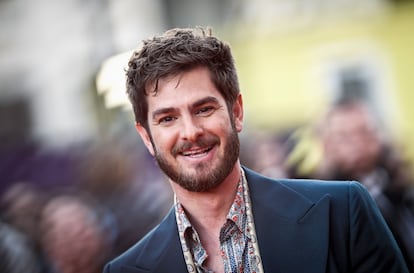
The Mexican director had chosen Andrew Garfield, hoping to break away from the usual portrayal of the monster and present him as more human and vulnerable — a tragic figure that suited the Spider‑Man and Hacksaw Ridge actor. The problem arose when Garfield’s projects began to overlap due to the 2023 writers’ strike, forcing him to drop out two months before filming began.
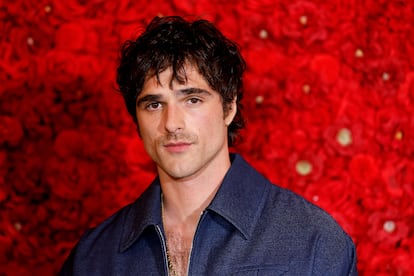
With everything ready to go, they needed to replace him with an actor of similar qualities, and the challenge was considerable. In the end, the choice was Jacob Elordi, in whom Del Toro saw certain similarities. Elordi didn’t hesitate to take on the biggest challenge of his still‑young career. It was an extraordinarily demanding role in which he shifts from behaving like an infant to becoming an irate god who decides the fate of others — and it also required an accelerated crash course.
To prepare, Elordi studied butoh, a Japanese dance form inspired by the nuclear horror of World War II, and he also observed the movements of his dog Layla, a golden retriever, looking for ways to express innocence. On top of that, he had to endure grueling daily makeup sessions lasting up to ten hours — his closeness with the hair and makeup department was obvious in his enthusiasm when they won the Oscar — and perform with prosthetic teeth and contact lenses. He had barely two months to prepare for the role, and the result makes clear that it was enough.
This is far from the first time an actor has had to come to the rescue of a production after a firing, a dropout, or “creative differences.”
Jodie Foster replacing Nicole Kidman in Panic Room (2002)
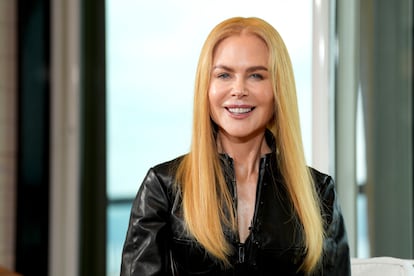
The first choice: Panic Room had been something of an event from the moment word got out. It marked the pairing of David Fincher — fresh off the success of Seven and Fight Club — with Nicole Kidman, a rising star after Eyes Wide Shut and Moulin Rouge!. The Australian actress was beginning to shine beyond her marriage to Tom Cruise, and both the projects and the media attention around her were intensifying.
Filming on Fincher’s movie had already been delayed after Kidman injured her knee during the shooting of Moulin Rouge!. But the director never considered replacing her: he thought she was perfect to play a woman who hides in a fortified room with her daughter when a group of burglars breaks into their home. In the end, though, he had to move forward without her after the actress realized she was emotionally exhausted and couldn’t carry on with the role.
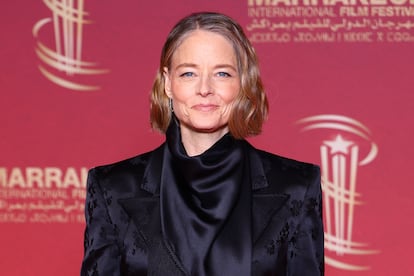
Who ended up playing the role? The project needed a star, and it found one: Jodie Foster. Foster happened to be available because her directing project Flora Plum had been halted (it was never resumed) after its lead actor, Russell Crowe, was injured. Foster didn’t match the icy Hitchcock‑blonde image Kidman was meant to embody in Fincher’s thriller, but that contrast arguably makes her presence more intriguing — and elevates the film.
The actress had barely nine weeks to prepare for a physically demanding role, and she faced added complications: everything had been designed for someone 20 centimeters taller, including her on‑screen daughter, a nearly debuting Kristen Stewart, who has remained close friends with Foster ever since and had been cast for her resemblance to Kidman.
To make things even more challenging, Foster was pregnant, something the wardrobe department had to conceal. “Jodie stepped in and was brilliant,” Fincher told Variety. Kidman didn’t leave the production entirely; she voices a character heard over the phone.
Viggo Mortensen replacing Stuart Townsend in The Lord of the Rings (2001)

The first choice: Bringing J. R. R. Tolkien’s work to the screen was no simple task — not only because of the sheer scale of the project, but also because of the risk of disappointing the saga’s enormous fan base. Casting was especially delicate: every reader had their own mental image of the characters. Even Peter Jackson, who dreamed of casting Sean Connery as Gandalf, saw that hope vanish when the Scotsman said he didn’t understand the script and bowed out. Jackson also initially imagined a very different Aragorn from the one we eventually saw: Irish actor Stuart Townsend, then an emerging star who often made headlines for his relationship with Charlize Theron.
However, just before filming began, Jackson fired him — and to this day, the exact reason remains unclear. Reports mentioned that Townsend had been difficult to work with (years later, he was also dismissed from Thor), and others suggested Jackson had reconsidered the age he wanted for the future king of Gondor.
“I was there rehearsing and training for two months, then was fired the day before filming began,” Townsend told Entertainment Weekly. “I have no good feelings for those people in charge, I really don’t. The director [Peter Jackson] wanted me and then apparently thought better of it because he really wanted someone 20 years older than me and completely different.”
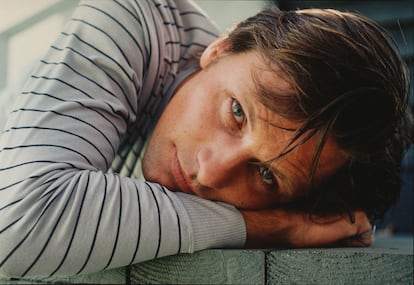
Who ended up playing the role? The importance of age became clear when Jackson chose Viggo Mortensen as the replacement — at 42, he was 14 years older than Townsend. A stroke of luck, judging by the results, although Mortensen hesitated before taking on a role that meant an extremely demanding shoot far from home. It was his son, a fan of Tolkien’s novel, who encouraged him.
“When I was told that I would be replacing someone I felt awkward about it,” Mortensen told The Irish Times. “I wondered if I would meet the actor but he was gone when I got there. I was just thrown into it and had to do the best I could.” He joined the production late, but ended up being more committed than anyone.
Meryl Streep replacing Madonna in Music of the Heart (1999)
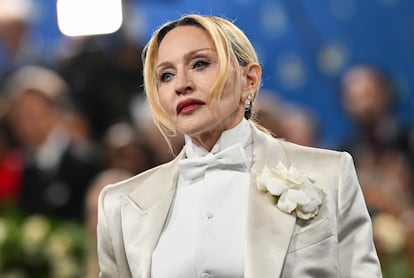
The first choice: The pop diva had been trying to make it in film since her debut album — Desperately Seeking Susan, Shanghai Surprise, Who’s That Girl, attempts with varying degrees of success. But her big break came in 1996 with Evita, where she could finally show her acting chops and work under a major director, Alan Parker. Wes Craven was supposed to be next. The master of horror was preparing a project far removed from what audiences expected from the creator of A Nightmare on Elm Street and Scream: the story of Roberta Guaspari, a violin teacher juggling a difficult divorce while teaching children in low‑income neighborhoods. A kind of Dangerous Minds with string instruments.
But after three months learning to play the violin, Madonna walked away from the project. According to rumors, the singer — who had spent considerable time with Guaspari — disliked how the script portrayed her story, and her demands pushed Craven to drop her. Miramax, however, eager to avoid a controversy that might hurt the film, insisted it had been a mutual decision.
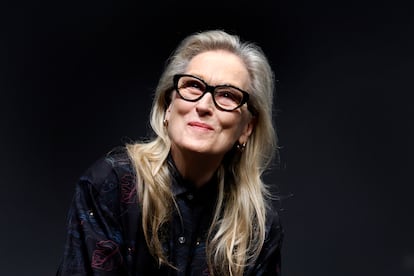
Who ended up playing the role? To replace Madonna, names like Sandra Bullock and Meg Ryan were floated, but the part ultimately went to Meryl Streep — Craven’s first choice from the very beginning. Streep hesitated because the preparation time was extremely short, but after all, Madonna had snatched the coveted role in Evita from her, and this felt like a good moment for payback. Her son, a big Craven fan, also encouraged her. She trained on the violin for six weeks, and what happened next was predictable: even though the film received a lukewarm reception, she walked away with an Oscar nomination.
Mark Wahlberg replacing Ryan Gosling in The Lovely Bones (2009)
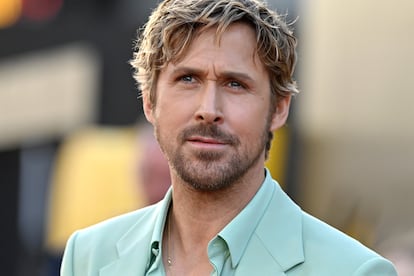
The first choice: Peter Jackson already knew what it was like to drop an actor before shooting began, so Ryan Gosling’s case didn’t exactly catch him off guard. Fresh off his star‑making turn in The Notebook, Gosling had been cast as Jack Salmon, the father of a murdered girl who cannot accept what her death. The role was his — until he made a strange decision: he decided the character needed to be heavyset and started eating Häagen‑Dazs to put on weight.
“We had a different idea of how the character should look,” he told The Hollywood Reporter. “I really believed he should be 210 pounds.”
When he arrived on set with a long beard and considerable weight gain, neither Jackson nor the producers took it well. Gosling says the real issue was a lack of communication during pre‑production. Jackson fired him, and Gosling suddenly found himself “fat and unemployed.” Years later, Fran Walsh — Jackson’s wife and the film’s screenwriter — explained that Gosling had never felt entirely comfortable with the role because he thought he was too young for it. Jackson and Walsh were so convinced he was right for the part that they assured him makeup could solve everything, but Gosling chose to take matters into his own hands.
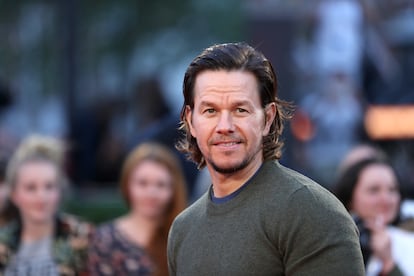
Who ended up playing the role? Mark Wahlberg joined the production just one day before filming began. He had been one of the actors Jackson had considered, along with Hugh Jackman, who was the first to be offered the part. Wahlberg had just wrapped The Happening and accepted without hesitation — only to find the role deeply traumatic. He later admitted that when he saw the finished film, he couldn’t stop crying as he thought about his own daughter.
Critics cried too, but for different reasons: the movie landed poorly with almost everyone, and least of all with fans of Alice Sebold’s novel on which it was based.
Margot Robbie replacing Emma Stone in Babylon (2022)
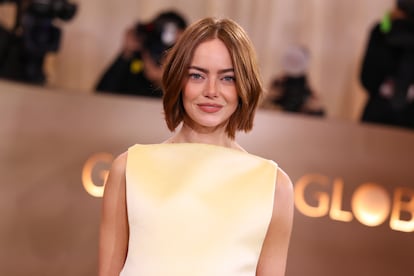
The first choice: Babylon — Damien Chazelle’s epic love letter to cinema, charting the excess and glamour of early Hollywood — was meant to reunite the director with Emma Stone after the success of La La Land, which had earned her an Oscar. Chazelle had set the role aside for her, unable to imagine anyone else playing it, but shortly before filming began, Stone’s departure from the project was announced.
This time it wasn’t a clash over the character or creative differences, but something more prosaic: the pandemic had upended production schedules across the industry, and Stone’s was one of them. Unable to juggle overlapping commitments, she had to walk away from Babylon.

Who ended up playing the role?Once again, one star was swapped for another. Australian actress Margot Robbie took on the role of Nellie LaRoy. Chazelle was pleasantly surprised by Robbie — and seemingly even grateful for Stone’s absence. “Now that I see Margot and the role, it’s hard to imagine anyone other than her doing it,” he said. “So I think things happen for a reason.”
Whether Stone might have elevated a film that had grand ambitions but ultimately fizzled with audiences, critics, and the Academy — which this time didn’t buy what Chazelle was selling — is something we’ll never know.
Michael J. Fox replacing Eric Stoltz in Back to the Future (1985)
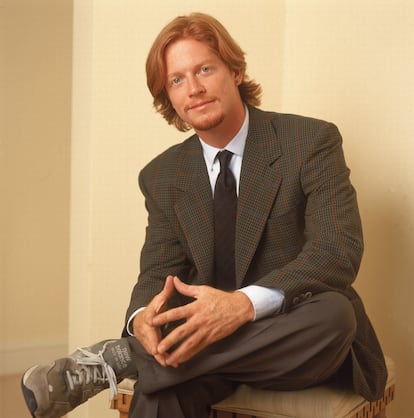
The first choice: In this case, the firing happened after a substantial amount of footage had already been shot. In fact, it’s easy to find clips of Stoltz playing Marty McFly, because filming continued even though everyone on the production knew he wasn’t the right fit. Everyone except Stoltz. They didn’t tell him for fear that, if he walked away, it would signal that the project was doomed — and there was enormous pressure for it to succeed. That’s why Universal kept its backup plan to replace him strictly under wraps.
Stoltz was an excellent actor, but he saw the film in a completely different light from Robert Zemeckis and Bob Gale, the director and screenwriter of Back to the Future. He didn’t see a breezy summer teen comedy; he saw an almost existential story about a boy whose memories would never match his real past. He threw himself into the role — dressing like his character and asking to be called Marty even off‑camera — but his sensibility simply didn’t align with the movie.
When they finally broke the news, he was devastated. He was a young, promising actor on the verge of starring in a major studio film, only to watch the chance evaporate before he could taste it. Now that is an existential drama.
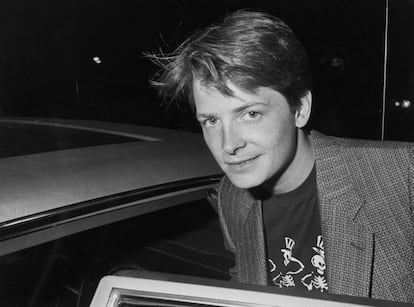
Who ended up playing the role? The truth is that Michael J. Fox had always been the first choice to play the lead in Back to the Future, but his commitment to the sitcom Family Ties made his participation impossible. Eventually, NBC agreed to negotiate, and Fox managed to juggle both shoots: he filmed the series from ten in the morning to six in the evening, then drove to Universal to work with Zemeckis from seven at night until three in the morning.
Once he joined the project, everything clicked. His chemistry with Christopher Lloyd was instantaneous, he was the Marty Zemeckis had dreamed of, and even a last‑minute idea — the red puffy vest he threw on one cold night on set — ended up becoming an iconic piece of the character’s look.
Eddie Murphy replacing Sylvester Stallone in Hollywood Super Detective (1984)
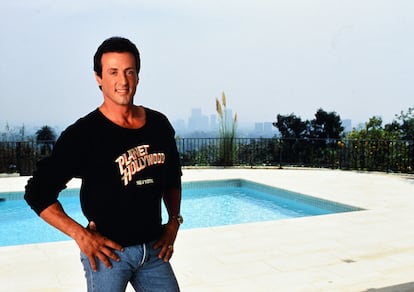
The first choice: In its early stages, Beverly Hills Cop was a very different film from the one we know today. The story of a tough Detroit cop in Beverly Hills originally had Mickey Rourke attached as the lead, and the directors being considered included Martin Scorsese and David Cronenberg. When Rourke left the project, producers turned their attention to Al Pacino — but they also sent the script to one of the biggest box‑office stars of the decade: Sylvester Stallone.
It wasn’t the kind of movie Stallone usually signed on for, but his agent encouraged him. The script had humor — something more often associated with his great rival Arnold Schwarzenegger — which made the project even more appealing to Stallone. In fact, he got so excited that he ended up rewriting it. And who could say no? After all, he had earned an Oscar nomination as a screenwriter for Rocky.
The result, however, was an ultra‑violent film that bore little resemblance to the original concept. Stallone’s version, packed with action and explosions, drove the budget so high that the producers decided it would be more practical to replace the star.
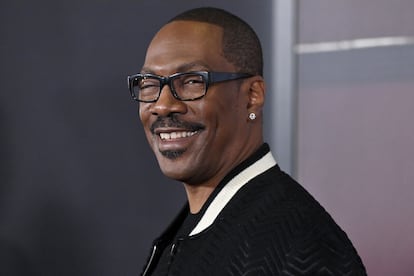
Who ended up playing the role? Once Stallone was out, the producers turned to Eddie Murphy — already a star thanks to Saturday Night Live and tested in action films with 48 Hrs. The moment he arrived on set, it was clear he was the perfect Axel Foley. As director Martin Brest later admitted, most of the film’s funniest moments came from Murphy himself, not only through the script but through his improvisations.
The movie became an instant hit and spawned three sequels. Stallone didn’t fare badly either; he took the script he had written and reworked it into Cobra.
Scarlett Johansson replacing Samantha Morton in Her (2013)
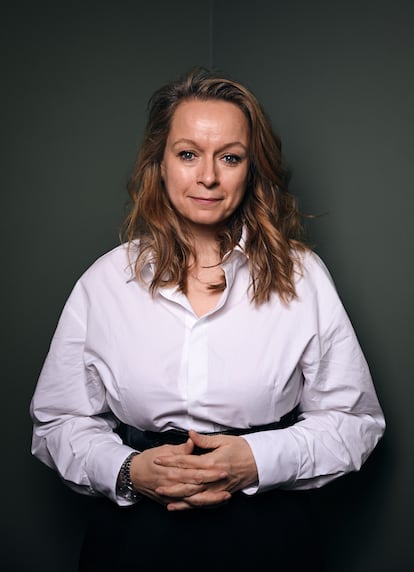
The first choice: As with V for Vendetta, Her never shows its protagonist on screen — but it does give us something just as crucial as a face: a voice. Samantha Morton, known for Sweet and Lowdown and Minority Report, was cast to play exactly that, the voice of a virtual assistant. She is the her of the title, and to make her performance more believable, the director asked that she never meet Joaquin Phoenix during filming.
However, once production wrapped, Jonze realized it wasn’t what he wanted for the film and decided to re‑record the role entirely. It was a devastating blow for Morton, and to make amends, Jonze credited her as an associate producer and, as a nod to her work, named the voice Samantha.

Who ended up playing the role? The solution came with Scarlett Johansson, the star of Lost in Translation— a film directed by Jonze’s ex‑wife, Sofia Coppola, inspired by their divorce, in which Johansson played the partner of a character loosely based on Jonze. Gossip aside, Johansson’s husky voice brought the warmth and easy sensuality Jonze had been looking for, and helped turn the film into a modern classic.
Hugo Weaving replacing James Purefoy in V for Vendetta (2005)
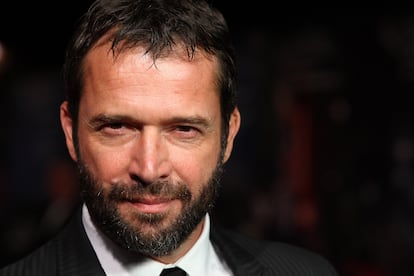
The first option: This is a unique case: despite the popularity of James McTeigue’s adaptation of Alan Moore’s comic — and despite the irreverent V being its central figure — few viewers can picture the actor behind the Guy Fawkes mask. James Purefoy, the British actor seen in Blood Diamond and Rome, where he played Mark Antony, was McTeigue’s initial pick. But the trouble began the moment he had to wear the now‑famous mask later adopted by Anonymous.
According to McTeigue, Purefoy was “troubled by the mask.” “He’s a great actor, but also, you’re taking away someone’s tool, their face, that they’ve been using for 40 years, and so that’s hard to do,” the director told Collider on the film’s 20th anniversary.
Playing the masked anarchist was especially demanding: unable to use facial expressions, he had to convey emotion solely through his body, and on top of that, he had to do it while wearing the mask for the entire shoot.
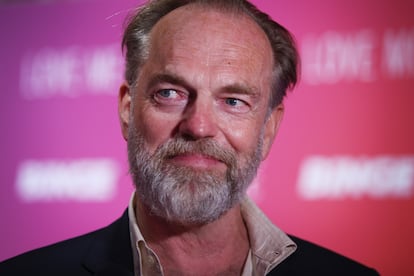
Who ended up playing the role? The director didn’t have to look far to find the right replacement. As soon as Purefoy left the production, he called Hugo Weaving. McTeigue had worked as an assistant director for the Wachowski sisters (who were producers on V for Vendetta) on The Matrix, where Weaving played the implacable Agent Smith. And he was hardly unknown to audiences: the Australian actor had already appeared as one of the drag queens in The Adventures of Priscilla, Queen of the Desert and as Elrond in The Lord of the Rings.
Weaving accepted the challenge of acting behind a mask because it was something he had trained for in drama school, and he didn’t find it uncomfortable — which made him the perfect choice. McTeigue said that as soon as he saw him on the first scene, “I’m like, ‘Oh my god, this guy just saved me.’”
Sign up for our weekly newsletter to get more English-language news coverage from EL PAÍS USA Edition









































