
Civil rights and immigrant groups urge tourists to reconsider visiting Florida for the 2026 World Cup: ‘It’s not safe’
The organizations point out that immigration control tactics could expose foreign fans to arbitrary detention during the competition
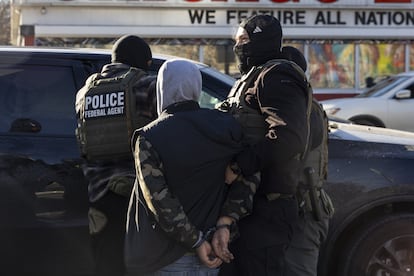

The 2026 World Cup may not be so safe for some tourists, according to a coalition of civil rights and immigrant organizations, which this week issued a travel alert aimed at international travelers planning to attend FIFA World Cup matches in Florida. The groups warn that the state’s current immigration policies could put their personal freedom and safety at risk.
The advisory, released Thursday, recommends that visitors “reconsider travel to the state” and comes in response to what the groups describe as a growing pattern of arbitrary detentions, interrogations, and holds linked to federal and local immigration operations. The alert places special emphasis on the potential impact on foreign fans, people of color, visitors from Latin America, Africa, and Asia, as well as dual nationals.
“Florida is no longer a safe destination for international tourists,” said Tessa Petit, executive director of the Florida Immigrant Coalition, during a press conference outside FIFA’s offices in Miami. “When federal and local agents can detain anyone at anytime without cause and without identifying themselves, everyone is at risk."
The coalition includes the ACLU of Florida, Florida Immigrant Coalition, American Friends Service Committee, Family Action Network Movement, Florida Rising, and Semillas Colombia. Although the groups avoided openly calling for a boycott of the tournament, they warned that such an option is not off the table if there are no changes before the games begin.

Florida will host seven World Cup matches, all in the Miami area, including Hard Rock Stadium in Miami Gardens. Thousands of international fans, sports delegations, and foreign media are expected to attend.
The groups recommend that visitors carry identification at all times and register their trip with their consulates before arriving in the United States. They also warn of increased cooperation between local and federal immigration agencies under agreements promoted by Governor Ron DeSantis, as well as the expansion of detention centers, including the well-known Alligator Alcatraz.
“What we don’t want is our fans being harassed by immigration enforcement when they’re just trying to attend the game,” said Thomas Kennedy, spokesman for the Florida Immigrant Coalition. He said that he wanted “assurances that there won’t be immigration enforcement happening at these games indiscriminately.”
Representatives of the organizations insisted that the purpose of the warning is not to cause panic but to warn of real risks. Dariel Gomez, organizer for the ACLU of Florida, said, “For too many people a simple interaction with police now comes with the fear of deportation.”

The national context makes the warning even more serious. In recent weeks, civil organizations have reported incidents in different states in which federal agents detained tourists, legal residents, and even U.S. citizens. The groups also mentioned the fatal shootings by federal agents in Minneapolis and the expansion of immigration restrictions under the Trump administration.
Although the federal government created a special task force for the World Cup, which includes Secretary of State Marco Rubio, it has not publicly guaranteed that there will be no immigration operations during the games. In December, White House officials avoided ruling out raids during tournament events, noting that Trump “does not rule out anything that will help make American citizens safer.”
FIFA declined to comment on the alert. Its president, Gianni Infantino, who awarded President Trump the so-called “FIFA Peace Award” in December, has previously stated that “fans from all over the world will be welcome.” However, voices inside and outside the world of soccer have questioned that promise. Swiss lawyer Mark Pieth, former chairman of a FIFA reform committee, recently urged fans not to travel to the United States, warning that they could face arbitrary detention or deportation.
The organizations also pointed out the limitations of the exceptions to the current immigration ban. Although the Trump administration included exemptions for players, coaches, and immediate family members, countries such as Haiti — qualified for the first time in more than five decades — and Iran do not have the same treatment for their fans.
This is not the first time Florida has faced warnings of this kind. In 2023, civil and LGBTQ organizations issued similar alerts following the passage of state laws against diversity programs, inclusive education, and healthcare for transgender people. Despite extensive media coverage, tourism was not significantly affected, and DeSantis himself dismissed the warnings as “a joke.”
But the groups behind the current alert insist that the context has changed. “There’s racial profiling, judging people for how they look or their accent, and getting away with literal murder,” Petit said. “International visitors must ask themselves if a soccer match is worth the risk of being kidnapped and jailed until God-knows-when.”









































