
Fear of deportation silences Mexican Independence Day celebrations in the US
Traditional celebrations in cities like Los Angeles and Chicago have been canceled or scaled back, and those that remain expect fewer participants for fear of immigration raids
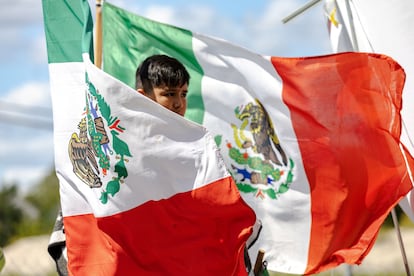
While insisting that her real name not be published, Adriana, an undocumented migrant, says that this year, for the first time in her 10 years in the United States, she will not be joining the celebrations for the Grito de la Independencia de México (Cry of Mexican Independence). It pains her because it’s a tradition she attended before she emigrated and because it was instilled in her son, who was born in Texas. Furthermore, this year is the 215th anniversary of independence, and such dates are “special.” She, however, feels unsafe due to the White House’s anti-immigrant policies and the Immigration and Customs Enforcement (ICE) raids. So she will stay home, where she will have an intimate dinner on the patio, featuring tacos and ranchera music.
“Before, we used to go to the gatherings organized by the consulates, wear traditional dresses, eat tamales, and celebrate with music and dancing,” Adriana recalls. “But now it’s not safe to go out.” She says that every year, a lot of people come and there’s a “really colorful” party. “And around midnight, everyone falls silent and cries, ‘Viva México! Viva!’ That’s El Grito (The Cry). It’s like the symbolic ringing of freedom for us,” Adriana says. But this year, she’s going to shout softly. And she’s not the only one.
In Chicago, where 30% of the population is Latino, mostly of Mexican descent, anxiety has swallowed up the festive atmosphere that was usual in September. President Donald Trump’s decision to deploy federal agents to the city, under the guise of combating crime, has intensified immigration enforcement and, thus, fear. The celebration of El Grito Chicago was postponed. “It was a painful decision, but holding it at this time would jeopardize the safety of our community,” the organizers said in a statement.
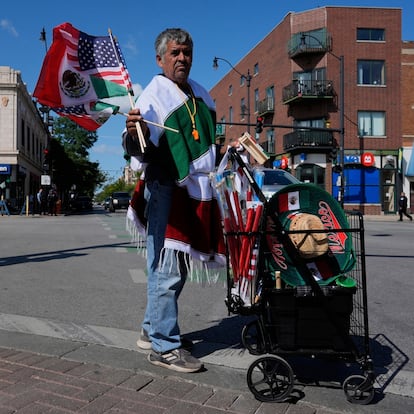
Thousands of people took to the streets last week to protest the threats of deportation. The demonstrations reached the front of Trump Tower in downtown Chicago. There were also parades, where celebration mingled with anxiety. “We’re scared, but we’re here,” said a dancer during an event in Pilsen, one of the city’s most iconic Latino neighborhoods. “We are Mexicans. We have to celebrate, and they won’t stop us,” she added.
In Los Angeles, according to local reports, several events scheduled to celebrate the Grito de Independencia have been canceled due to recent ICE operations in the city. Three of the four parades planned for this month were canceled to avoid the chaos that the presence of immigration agents in public places could cause. Instead, communities have opted to organize smaller, “safer” cultural events and activities. However, the Mexican Civic Patriotic Committee, which has organized the traditional parade in the east end of the city for 79 years, decided to maintain its event, scheduled for September 14. They stated that the parade will feature school bands, folkloric groups and floats, and that it will be held under strict security measures, with the support of the Mexican consulate and local authorities.
Meanwhile, some businesses in Texas have refused to host Latino events, seeking to avoid being associated with undocumented immigrants. Hannah María Garza, an activist with Hands Off Central Texas (HOCTX), said that while trying to organize a “Know Your Rights” workshop in Austin, the state capital, several businesses rejected the proposal for fear of retaliation.
Despite this, in Texas, the Grito de Independencia celebrations have not been officially canceled. The Mexican Consulate in Austin announced on social media its intention to hold the event in a public park. The Grito de Independencia celebrations, they said, will be led by Consul Humberto Hernández Haddad, and will include concerts and Mexican crafts fairs.
Homero Sotomayor, Mexico’s deputy consul in Dallas, told EL PAÍS that activities in the Dallas-Fort Worth area are also continuing. He also assured that the consulate is in contact with the relevant authorities to provide assistance if necessary. “We understand our community’s concerns, which is why we want to reiterate that these festivities are a cultural and family event,” Sotomayor stated. He also recommended avoiding excessive alcohol consumption, respecting the law, having an emergency plan, and not using false documents to ensure a “safe and responsible” celebration.
“Even though churches, schools, hospitals, and domestic violence shelters are no longer protected areas, consulates are foreign territory and safe havens, so they’re one of the last places immigrants can gather and feel protected,” said immigration attorney Kate Lincoln-Goldfinch. “The attack on the community and the cancellation of these events extinguishes the vitality of Mexican culture and heritage in the United States. When that disappears and these communities go into hiding, things become quieter, sadder, more insipid. If this continues for too long, it will extinguish the vitality of this country,” she added.
“Some people feel like we’re giving up and abandoning our culture and celebrations. It’s difficult; we don’t want to gather Latinos and become an easy target, but we have to take that fear and use it as fuel,” said Hannah María Garza. That’s why HOCTX is conducting local patrols aimed at protecting immigrants in this context.
“When a celebration of this kind is canceled, not only is the event lost, but also income for small businesses, cultural visibility, and an opportunity to create a sense of belonging. For members of the Hispanic community, cancellations can also exacerbate an environment of surveillance and fear, weakening civic trust and participation beyond a single weekend,” said Salvador Espinoza, another HOCTX member.
Adriana is even afraid of having to go out to buy what she needs for her small dinner. She worries deeply about who her son will live with if she is detained, and the trauma it could cause. “I want my son to know our traditions, our music, our food,” she says. “But I also want him to be safe.”
Sign up for our weekly newsletter to get more English-language news coverage from EL PAÍS USA Edition









































