
Iran, with the wounds of repression still fresh, fractured as it faces military strikes
The US and Israeli attacks threaten a cornered regime, but also a traumatized and impoverished population
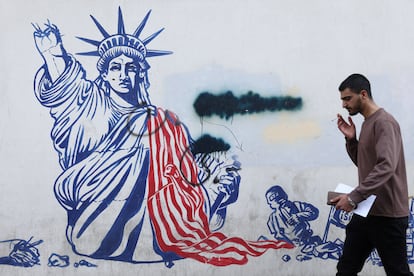

The Iranian Supreme Leader, Ali Khamenei, is a well-read man. He is familiar with the works of Dante Alighieri, John Steinbeck, and Leo Tolstoy, among many others. The Shia cleric especially admires Victor Hugo. He has called Les Misérables the best novel ever written: a “miracle”; “a book of history, criticism, love, and feeling.” Its protagonist, Jean Valjean, returns to the righteous path thanks to the forgiveness and compassion of a religious figure: Bishop Myriel. Les Misérables is a tale of piety and redemption.
In Khamenei’s Iran — which the United States and Israel attacked Saturday after Thursday’s final round of negotiations for a nuclear agreement in Geneva — there was no mercy for the thousands of protesters whose lives were lost in the crackdown in January. Many Iranians believe there will be no redemption for this now war-torn regime either, a regime that, in order to survive, has already stained its hands with so much of its own people’s blood. Last week, Khamenei alluded to Karbala, the Iraqi city where Imam Hussein died, the martyrdom that solidified the schism in Islam between Shias and Sunnis. For the former, Karbala embodies the idea of resisting at all costs.
The more than 7,000 dead, whose names were identified by the NGO Hrana in a report released last Monday; the nearly 30,000 wounded, hundreds of whom have been blinded by metal pellets; the over 53,000 detained and the 26 young men already sentenced to death have caused profound trauma among the country’s population. This open wound is now threatened by the indiscriminate violence of a military operation that will also affect ordinary Iranians. This is what happened last June, when around 1,000 civilians perished in 12 days of supposedly “surgical” Israeli bombings in Iran, according to the official IRNA news agency, which were later joined by U.S. strikes.
On one hand, Iranians live under a regime that, according to NGOs and the United Nations, has killed thousands of protesters and “intends to continue killing, now in prisons,” by condemning demonstrators to death by hanging, notes Mahmood Amiry-Moghaddam, director of Iran Human Rights, which monitors the application of capital punishment. On the other, the Iranian population is now facing a military offensive that is likely to be more violent and perhaps more prolonged than the one in June.
Even so, some Iranians have begun protesting again, a sign of their desperation. Last week, as the 40-day mourning period for the victims of the crackdown came to a close, dozens, perhaps hundreds, of people across the country once again chanted “Death to the dictator” (Khamenei) at funeral ceremonies. On Saturday, the first day of a return to in-person classes, students from several universities in Tehran, Isfahan (central Iran), Shiraz (southern Iran), and Mashhad (northeastern Iran) demonstrated on campuses, demanding the release of detained students. All of these cities were epicenters of the January protests.
These new protests serve as a reminder that Iran faces military aggression while the rift between its regime and a large part of its population remains wide open. In the days leading up to the attack, Iranians were trying to “carry on with their normal lives, but they were terrified about the future,” notes a Tehran-based analyst who spoke to this newspaper on condition of anonymity. This man, like other residents of the country — those who can afford it — has stockpiled water and canned food in recent weeks.
In early February, the Tehran authorities designated 82 metro stations as bomb shelters. They also identified 300 underground parking garages. All in all, it’s not a large number, considering the 16 million people who live in the Iranian capital and its surrounding metropolitan area.
These strikes, advocated by a segment of the country’s diaspora, likely don’t even offer a better future for Iran, according to several experts consulted by this newspaper. Even if the attack topples the Islamic Republic, the price could be, in addition to many lives, the destruction of the state, notes economist Esfandyar Batmanghelidj, founder and executive director of the Bourse & Bazaar Foundation, speaking from London. “The question is,” he asserts, “how to protect the institutions, infrastructure, and functionality of the Iranian state from the attack,” upon which the well-being and even the survival of the country’s 92 million inhabitants depend.
Iran may be devastated, but that doesn’t necessarily mean its regime — designed to survive with its two armies, a militia of around one million members, and a decentralized military command — will fail. That could happen “in its current form or a different one,” confirms Vali Nasr, former U.S. State Department advisor on Iran and professor at Johns Hopkins University, in a phone interview from Washington.
Without an “easy alternative to the Islamic Republic” or “any political party or organization in Iran that can take power, many Iranians who dislike the Islamic Republic” are uncertain about a future in which it is unclear how “a government would be formed, or how services, food, and security would be provided” to Iranians should such a political change materialize, or, in the worst-case scenario, a landscape of chaos, partition, or civil war that some scholars have warned about.
“There will be no smooth transition,” concludes the former State Department advisor, to a democracy which more than 89% of Iranians said they preferred as a political system in a 2025 survey conducted by Gamaan, a Netherlands-based opinion research center.
With the Iranian internal opposition either killed or imprisoned, the “idea that exiled leaders from abroad can get off a plane and govern the country is too simplistic,” this specialist emphasizes, likely alluding to the son of the ousted Shah, Reza Pahlavi.
Nasr does not rule out increased repression if the U.S. attacks fail to cause the collapse of the Islamic Republic, a fear expressed by Iranian political prisoners such as Nobel Peace Prize laureate Narges Mohammadi. She and other opposition figures have warned that salvation will not come from Trump.
This is what happened after the Israeli and U.S. bombings last summer, when Iran arrested hundreds of people and tightened its espionage law. Publishing critical content on social media can now lead to five years in prison; speaking to a “hostile” foreign media outlet, 10 years; and deploying a Starlink satellite, even the death penalty, according to Iranian media in exile.
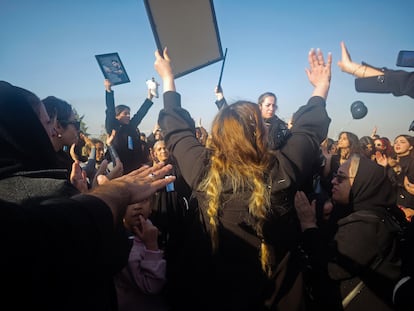
Parisa, a pseudonym for a woman exiled in a European country, explained on Thursday that two of her friends in Iran had been summoned by intelligence services for sharing information about the recent university protests on social media. She claims that many people have already been arrested, although the Iranian government denies this. While the internet blackout imposed by the authorities in January continues with some exceptions, NGOs warn that what is known about the repression is just the tip of the iceberg.
Broken promises
Iranians ratified the Islamic Republic with over 97% support in a 1979 referendum. Since then, the disconnect between a segment of the population and its political system stems from numerous broken promises. One in particular stands out: the promise that the mustazafan, the oppressed, would inherit the Islamic Republic. Its founder, Ruhollah Khomeini, promised them free housing, water, electricity, and buses. The new Iranian Constitution stipulated that it would eradicate poverty.
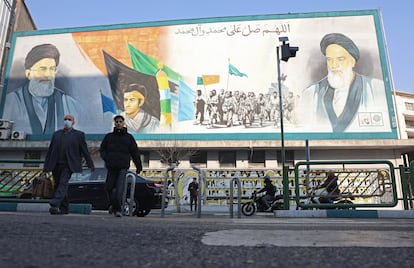
Forty-seven years later, Iranians are buying oil on credit and paying exorbitant prices for eggs and chicken. According to data from the Iranian Statistical Center, the price of the basic food basket has more than doubled (110%) in a year. “Bread and cooking oil — the most common staples for working-class families — have increased in price by 142% and 207%, respectively,” reports Iranwire.
Like the Misérables described by Victor Hugo, many Iranians walk destitute across the land that holds the world’s fourth-largest oil reserves and second-largest natural gas reserves. Despite this, they suffer constant power and water outages, partly due to the appalling environmental management of a country that contains 32 of the 50 most overexploited aquifers on the planet, according to the Elcano Royal Institute (RIE). In December, when the protests erupted, year-on-year inflation reached 52%; food inflation reached 72%, according to data from The Economist Intelligence Unit. In the six months following the June bombings, the rial devalued by 90% against the dollar.
“The causes of the massive protests in Iran,” reads the RIE analysis, “go beyond the triple economic, energy, and environmental crisis that the country has been suffering for years.” The anger of many Iranians ultimately stems from a lack of freedom and injustice.
Nearly 10 million citizens, many from the middle class, fell into poverty between 2011 and 2020, according to the World Bank. In just one year, between 2020 and 2021, the number of people living in extreme poverty in Iran doubled, and by 2023, 40% of Iranian households were already living in deprivation, according to a research center of the Iranian parliament. This wave of destitution coexisted, as early as 2020, with 250,000 millionaires, according to estimates by the international consulting firm Capgemini. This included Khamenei’s son, Mojtaba, who has built a real estate empire abroad, Bloomberg reported.
The reality in Iran, the “anger” of the Iranian people, argues Esfandyar Batmanghelidj, is “very similar” to that of the period preceding the fall of the Pahlavi monarchy in 1978 and 1979. Now, too, there is “a political system that has concentrated economic and political power in the hands of an ever-shrinking elite,” to the detriment of the “social contract” and “the way in which privileges and resources are distributed.” At the same time, “the Islamic Republic has become more authoritarian, more repressive, and has lost its legitimacy as a political project.”
Iranian authorities typically blame the impoverishment of their population on international sanctions imposed due to its uranium enrichment program, which the United States wants Iran to abandon. They fail to mention the other major cause cited by experts: corruption.
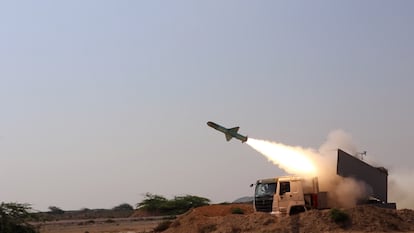
Over the years, the Iranian regime has implemented “neoliberal” policies of public spending cuts and established a “crony capitalism,” confirms the economist. For example, the Revolutionary Guard, the parallel army whose purpose is to protect the regime, controls between 20% and 30% of the Iranian economy. There are also parallel channels for evading sanctions and exporting oil. The director of the Bourse & Bazaar Foundation believes that the burden of these sanctions has not fallen on this impoverished population by chance. He describes it as “a deliberate strategy” by the elites.
In 2022, the late President Ebrahim Raisi used the regime’s conservative faction’s control of parliament to eliminate subsidies for basic foodstuffs such as oil and medicines.
Batmanghelidj criticizes the United States for also “using the pain of the Iranian people” to “force political change.” This is not only because they know that the sanctions affect ordinary people more than they expected, those who, with their anger, would overthrow the Islamic Republic. It is also because urging Iranians to demonstrate, as Trump and Pahlavi have done, “is very dangerous in an authoritarian context like Iran’s.”
Ali Vaez, a researcher at the International Crisis Group, warned this Thursday in The Times that “the convergence of an external threat and internal instability” is making the Iranian regime “more aggressive and intolerant of any kind of internal dissent.”
The Gamaan poll concluded that 71% of Iranians opposed the Islamic Republic. This figure aligns with estimates from several studies that only about a third of Iran’s population supports its political system. The polling center noted, however, that this rejection had risen to 81% during the crackdown on the 2022 protests, sparked by the police killing of Yina Mahsa Amini.
That fracture now seems even deeper. One of the at least 7,000 confirmed deaths reported by Hrana was a three-year-old. Her name was Melina Asadi, and she died when a bullet fired by security forces struck her in the heart while her father held her in his arms in Kermanshah, in Iranian Kurdistan. Another is Aida Heidari, a 23-year-old medical student killed on January 8 in Tehran’s Sadeghieh Square. In a viral video, this young woman’s mother goes out onto her balcony at night to weep. Her cries as she raises her arms to the sky are so heartbreaking that even the woman filming the footage ends up sobbing.
Sign up for our weekly newsletter to get more English-language news coverage from EL PAÍS USA Edition









































