What is ICE? And how does it differ from the Border Patrol? Key points to understand Trump’s immigration enforcement
Both agencies, which have a presence on the ground in cities like Minneapolis, have significantly expanded their capabilities during the Republican’s second term
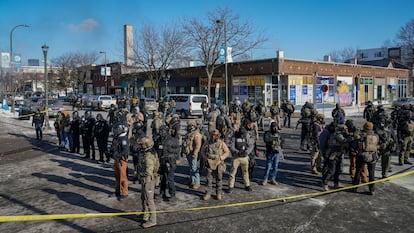

In Donald Trump’s United States, where federal agents wear masks, drive unmarked cars, and sometimes operate in plain clothes, it’s difficult to distinguish between the federal agencies that, amid chaos and terror, implement the White House’s immigration policy. It’s even more complicated to know what rules they are supposedly bound by and to identify when they have overstepped the limits of their authority. This latter issue is at the heart of national (and even international) debate after officers from two immigration agencies fatally shot two U.S. citizens in Minneapolis.
Alex Pretti, a 37-year-old nurse, was shot and killed by Border Patrol agents last Saturday while assisting a woman at a protest in Minneapolis. A group of six officers beat him to subdue and disarm him before killing him. Seventeen days earlier, a few blocks further south, Renee Good, a poet and mother of the same age as Pretti, was shot three times, including a fatal shot to the head, by an Immigration and Customs Enforcement (ICE) agent.
ICE and Border Patrol are two separate entities, but they operate under the same parent department, the Department of Homeland Security. Together, they are the two main immigration agencies in the United States. Historically, they have had distinct powers, but under the current Republican administration, their functions have often overlapped, and their agents work closely together, along with many others from government agencies such as the DEA and the FBI, which have joined Trump’s immigration crusade.
Below, we offer a guide to Trump’s immigration police.
What is ICE?
ICE is the primary agency responsible for enforcing U.S. immigration laws. It was established in the aftermath of the September 11, 2001 terrorist attacks and was created alongside the current Department of Homeland Security by merging the investigative and internal control elements of the former U.S. Customs Service and the Immigration and Naturalization Service.
ICE’s work is internal; its agents do not protect the borders. The agency has two main branches: Enforcement and Removal Operations (ERO) and Homeland Security Investigations (HSI). Until recently, ERO agents were responsible for arresting migrants and arguing for deportations in immigration court, while HSI agents focused on transnational crimes. However, now both branches are working toward the same goal: carrying out the largest deportation in history, as desired by Trump.
How has it grown under Trump?
Thanks to the Republican administration, ICE has the largest budget of any agency in U.S. history. Approved last July as part of Trump’s tax reform, the funding allocation exceeds $100 billion through 2029. Of that budget, $30 billion is earmarked for further expanding its ranks. The agency has already more than doubled its staff under Trump, reaching 22,000 officers, according to the Department of Homeland Security. And this year, an extensive recruitment campaign targeting individuals with conservative leanings or interests will be conducted.
In addition, $45 billion of the next four years’ budget will be used to hold migrants in the network of detention centers operated by ICE, which includes more than 200 facilities nationwide. These are places where there are numerous reports of abuse against detainees and appalling conditions. The first year of Trump’s second term ended with the highest number of deaths in two decades in these centers: 32, according to figures from the Department of Homeland Security. So far in 2026, at least six migrants have died in ICE custody.
Where are their agents? How can they be identified?
Since last summer, the government has deployed thousands of ICE agents to several Democratic-leaning cities for both large-scale operations and smaller raids. There have been major operations in Los Angeles, Washington, D.C., Charlotte (North Carolina), Portland (Oregon), Portland (Maine), Chicago, Minneapolis, and other cities. Agents have also been seen conducting random and sporadic arrests in cities like New York, Boston, and Atlanta. The list is extensive and continues to grow.
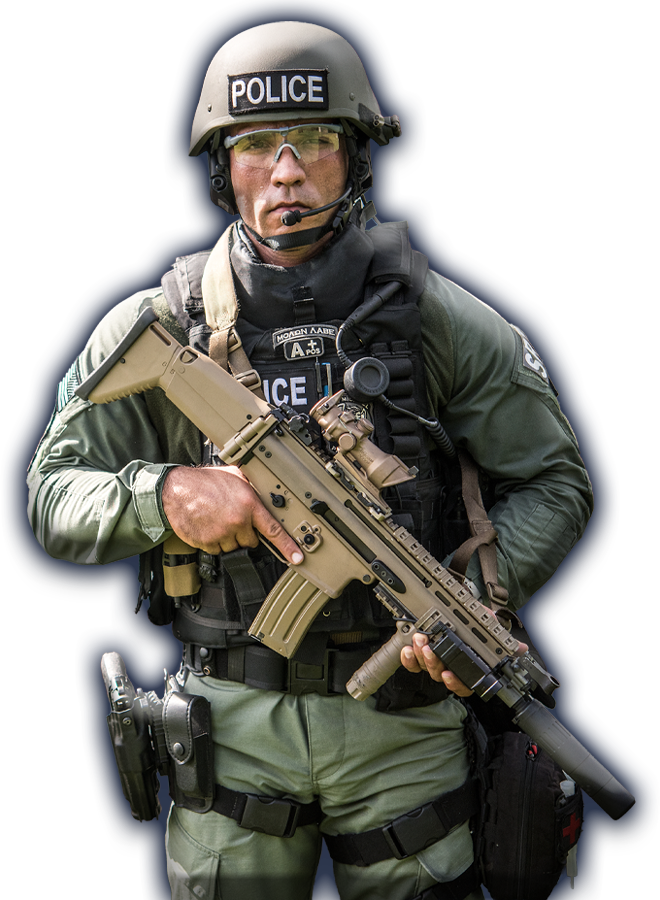
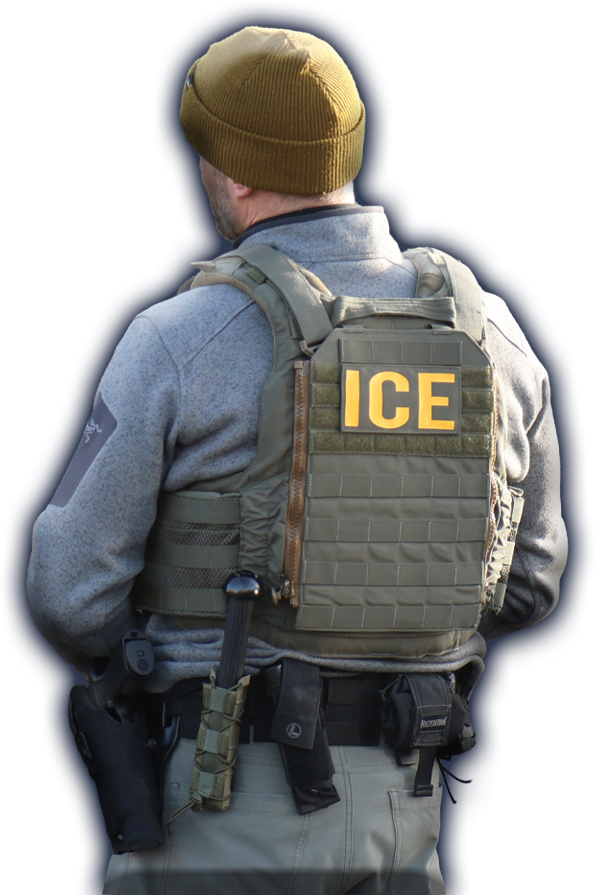
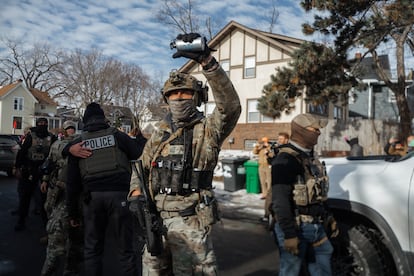
Identifying ICE agents on the ground can be difficult, especially if they are not part of a large-scale operation already announced by the White House. They may be in plainclothes without identification. Most wear masks and bulletproof vests with identifiers such as “Police,” “Federal Agent,” “ERO,” or “HSI” — the agency’s two main branches. Others have smaller badges that may be harder to spot, but they are required to identify themselves during arrests. They may also be wearing military-style uniforms if they are part of the immigration service’s special response teams.
On the streets, some citizens have learned to identify police officers, even if they’re driving ordinary vehicles. They know, for example, that SUVs with tinted windows that don’t obey traffic laws are usually theirs, and they start blowing their whistles or honking their own horns.
What kind of training do they receive?
To expedite the recruitment process spearheaded by the Trump administration, ICE has shortened the training period for agents: it now lasts approximately eight weeks, down from 16. Virtual courses are offered that can be completed before or after this period, the requirement to learn Spanish — a course that previously took over a month — has been eliminated, and firearms training has been shortened. Recruits must still meet other requirements, such as physical endurance and self-defense tests, and study U.S. immigration law. However, most ICE agents do not receive specialized training in crowd control or responding to protests like those seen in cities such as Minneapolis.
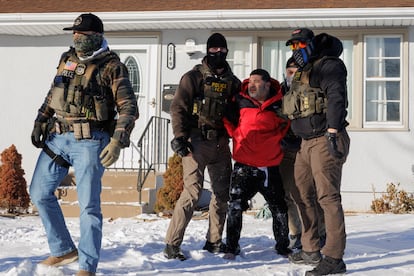
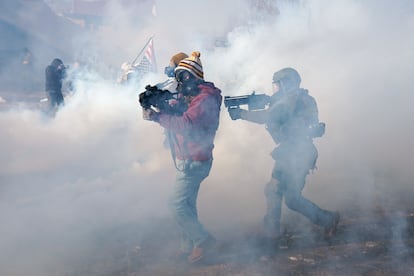
The actions of agents in these situations have sparked outrage, as they have been seen attacking protesters with tear gas and pepper spray, in violation of court orders prohibiting it, and detaining both migrants and U.S. citizens. It was during one of these confrontations with protesters that an agent fatally shot Renee Good in Minneapolis. That incident, which shocked the nation, raised questions about the use of deadly force against unarmed individuals. According to the immigration agency’s regulations, agents are only authorized to use firearms “with the intent to prevent or stop threatening behavior that warrants the use of deadly force.”
In Good’s case, the government maintains that Officer Jonathan Ross shot her because she had tried to run him over with her car, even though videos recorded by witnesses and Ross himself show that Good was trying to flee from the officer when he killed her.
What is the difference between the Border Patrol and ICE?
The United States Border Patrol (USBP) is part of Customs and Border Protection (CBP), which in turn operates under the Department of Homeland Security. Historically, the main difference between the Border Patrol and ICE has been that the former is responsible for monitoring U.S. borders, while the latter operates within the country. While ICE was created in this century, the Border Patrol was established in 1924, though it has evolved drastically up to the present day, always under criticism for its violent and racist tactics.
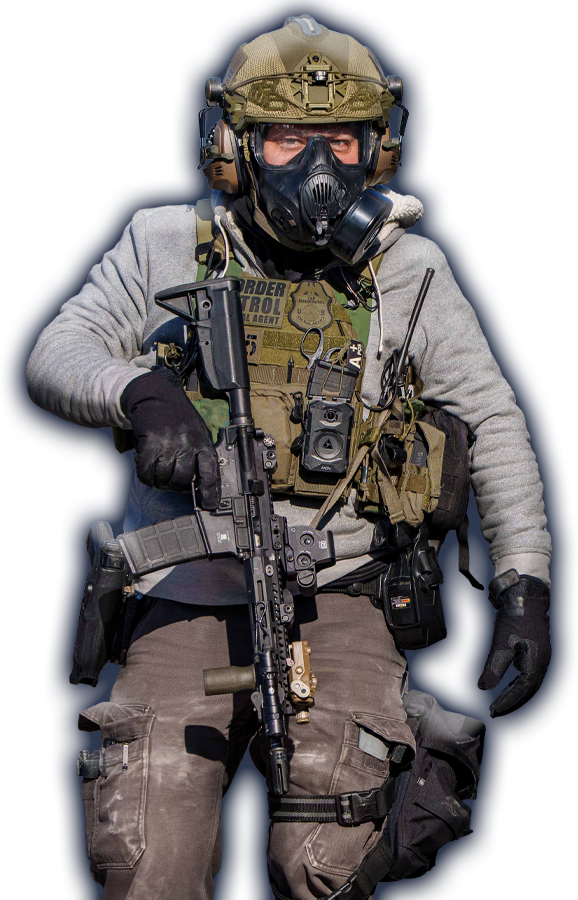
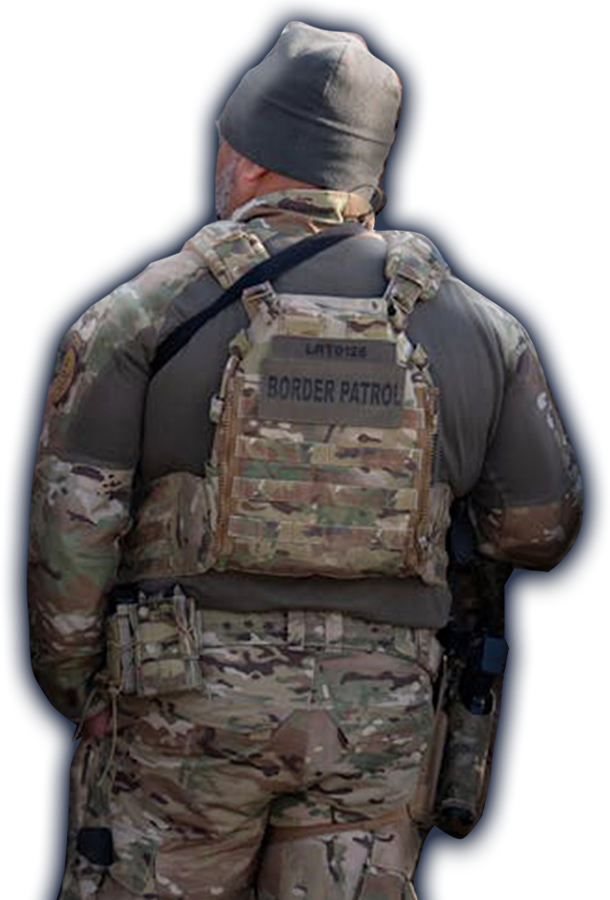
Although no president before Trump made such extensive use of this policy, the agency can operate within a radius of up to 182 kilometers (100 air miles) of the country’s land and coastal borders. Within this so-called “100-mile zone,” the Border Patrol can search for undocumented immigrants, establish and operate checkpoints, and conduct searches and arrests without a warrant.
Why are there Border Patrol agents in cities like Minneapolis?
Minneapolis lies outside that 100-mile zone, as do some of the other cities where the Border Patrol has been deployed under Trump to support ICE efforts. However, the U.S. Immigration and Nationality Act grants agencies within the Department of Homeland Security — that is, both ICE and the Border Patrol — several powers beyond the border zone, such as the authority to question anyone they believe may be undocumented or to make arrests without a warrant if they believe a person is violating immigration law and is likely to flee.
However, national security and immigration experts point out that Border Patrol officers are not adequately trained to operate in urban areas. Former Customs and Border Protection Commissioner Gil Kerlikowske stated this in an interview with public radio this week.
Do ICE and Border Patrol work together?
Both agencies participate in large-scale immigration raids and operations, such as the one underway in Minnesota. They also conduct arrests inside federal immigration courts, a practice banned for years but revived by Trump. Like ICE agents, Border Patrol agents have faced criticism for their response to public protests. Pretti’s death is the latest in a long history of the use of excessive force by Border Patrol officers, emboldened by Gregory Bovino, whom the Trump administration has put in charge of several anti-immigration operations in recent months. The Border Patrol commander was removed from Minnesota after Pretti’s killing.