
Fifty years ago, Hollywood took a chance on what became classics
In 1976 ‘Taxi Driver’, ‘All the President’s Men’ and ‘Network’ all offered an alternative view of the US
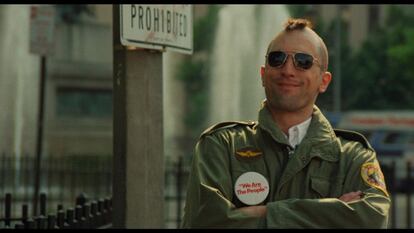

It was 50 years ago and a new genre of cinema that many of us critics consider to be the best to have ever existed, found its way into movie theaters. I’m talking about American cinema. This was not only delivered by U.S. directors but also by distinguished European directors, who were offered multiple means to develop their talent. Meanwhile, investors and producers remained adamant that the main objective of their business was to make money, invent formulas to triumph at the box office, or repeat themes, schemes, emotional, moral or pseudo-moralistic motifs that almost never fail. Not to mention spectacle and star-making. And risks? They wanted the bare minimum.
Still, during the 1970s, the approach to business and art could prove surprising. At the beginning of the decade, a certain Francis Ford Coppola gave us the masterful first and second parts of The Godfather, combining exquisite art with box office appeal; almost no one – not only in the U.S., but in the entire world – wanted to miss these absolute classics. They would usher in a new mindset and make it easier for the industry to realize that taking risks can also bring financial success. It is now 50 years since the premiere of three films that ditched conventional formulas in favor of stories that addressed what was really happening in America. In the public and political spheres and in the world of television.
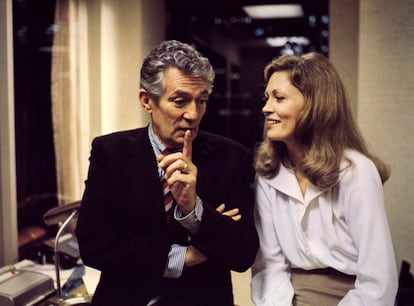
Those films were Taxi Driver, All the President’s Men and Network. I watch them frequently and they never disappoint. What and how they narrate is still interesting 50 years on. And, of course, it’s still scary.
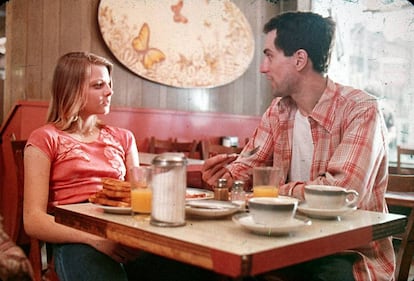
The crazed taxi driver Travis Bickle, a paranoid and desperate example of urban solitude, inspires unease, pity and terror as he drives through the New York nights. He is a wannabe vigilante who wants to act as a terrorist without a cause, riddling a presidential candidate, and as a social avenger by exterminating the gang of pimps threatening a twelve-year-old girl working as a prostitute in the most nasty places. The public may view him as a hero, but his actions are driven by his isolation. And isolation can create monsters, ones that are trying to kill themselves by cleaning up the filth on the streets of New York. With the help of Paul Schrader’s complex, violent and somber script, Martin Scorsese achieved his first masterpiece. A few more would follow.
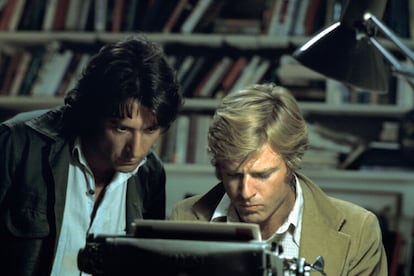
In 1976 All the President’s Men was also released. It is an exemplary reconstruction of the investigation undertaken by two journalists into the corruption that riddled Richard Nixon’s administration, which would become known as the Watergate scandal. Alan J. Pakula, who is not among my favorite directors, did a wonderful job of transferring William Goldman’s script to the screen. And Robert Redford and Dustin Hoffman gave brilliant performances as the two journalists who dared to investigate the filth of the nearly always untouchable power.
And we have to talk about another illustrious screenwriter, Paddy Chayefsky, who portrayed the cunning workings of television in Network, directed by the intelligent Sidney Lumet, the man who has best depicted the streets of New York in films like Dog Day Afternoon. A star television presenter announces that he is going to commit suicide live. Imagine the morbid fascination this generates in viewers and the profits imagined by the the network’s executives. 1976 was a bumper year for American cinema. And it opened the door for directors who had something to tell and a talent for telling it.
Sign up for our weekly newsletter to get more English-language news coverage from EL PAÍS USA Edition









































