
Gabriel Boric, a moment of reflection: ‘The left that only blames its adversary is doomed to fade away’
The president of Chile, who will leave office on March 11, is an unusual figure in his political sphere. EL PAÍS spoke with him in three meetings. He will work from the opposition and could run again in four years

The paper-thin walls Leonard Cohen sings about in Paper Thin Hotel have nothing to do with these walls, which today are listening to the sound of one of the Canadian genius’s most chaotic albums. The vinyl of Death of a Ladies’ Man is spinning in an office at Chile’s La Moneda Palace, just a few meters from the spot where, on September 11, 1973, Salvador Allende addressed the Chilean people for the last time to announce that the great avenues would open again, before taking his own life amid the military coup that marked the beginning of Augusto Pinochet’s dictatorship.
Gabriel Boric was born 13 years after the bombing of the palace. A symbol of a vanguard of the Latin American left, he keeps that pain very much in mind. On the same wall where he displays part of his record collection hangs an enormous graphic commemorating those who disappeared during the military dictatorship. None of this will still be here on March 11, when the man who has served as Chile’s president since 2022 ends his term at just 40 years old. Boric will hand this office over to José Antonio Kast. And La Moneda, the epicenter of Chilean democracy, will cease to be the workplace of an admirer of Allende and become the home of the first head of government supportive of Pinochet since the return to democracy in 1990.
Boric is an unusual figure in an age of extreme megalomania. He became the youngest president in his country’s history — arriving at La Moneda at 36 — which earned him the label of a standard-bearer for a new left. He shies away from both stereotypes, because they carry an implicit condescension he is quick to reject: “I’m relatively young, not so young anymore, but I’ve been in politics for a long time. Youth isn’t a virtue; there are old things that are worthwhile. I’m not trying to be new. What I’m trying to be is consistent.”
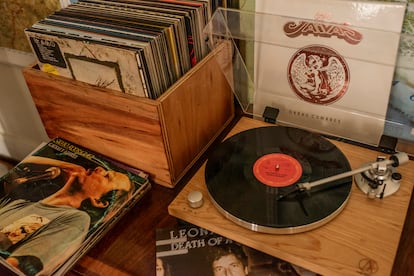
Those who know Boric or have dealt closely with him — whether supporters or critics — recognize his genuineness. It’s a quality that becomes evident over the course of his three long conversations with EL PAÍS, before and after the elections, and which is noticeable from his very workplace, where the first meeting took place at the end of October. Boric had just visited Pope Leo XIV at the Vatican — “the world leader of a party with more than 2,000 years of history, the Church” — and was particularly interested in Dilexi te, the first apostolic exhortation on love for the poor. He read aloud a few passages and then, at this newspaper’s request, showed the dozens of objects decorating his office. Gifts received on his tours, photographs, posters, stacked books, and records — from Silvio Rodríguez to Pink Floyd, and Kolpez Kolpe by Kortatu — coexist in this space.
Among all the memorabilia, there is something one wouldn’t expect in the office of someone who declared himself a non-believer as a teenager: a figure of the Virgin Mary. “I don’t have the gift of faith, I’m agnostic,” Boric explains. But his mother, Soledad Font, is deeply religious. A member of the Schoenstatt movement and a foster mother to children awaiting adoption, she placed the figure in a bright corner of the office, next to a window, along with a handwritten letter in which Font prays for the main political reforms the government sought to implement. “Ask the Blessed Mother, ask her,” she advised him on many occasions.
It was here, on December 15, one day after the elections, that Boric received Kast, newly elected after winning 58% of the vote and defeating the communist candidate Jeannette Jara, a former minister in the current government, who garnered 42%. They met alone for what Boric describes as an “institutional and republican” conversation. Evidently, one of the first things to catch the future president’s attention was the Virgin: Kast, who along with his wife María Pía Adriasola has nine children, is also a member of Schoenstatt and surely did not expect to find the figure in the office of someone so politically opposite.
In the rooms adjacent to the office, four days after the elections, an eight-year-old boy plays with a ball. He is Boric’s stepson, Vale, the child of his partner Paula Carrasco, with whom the president had his first daughter, Violeta, six months ago. In the secondary offices, cribs and rocking chairs are set up for the baby when he visits his father. Boric has grown up during this four-year term. On a personal level: he entered La Moneda in 2022 with a girlfriend — ending the role of first lady — and broke up with her halfway through his term. He will leave the government in 2026 a father, with a family he intends to expand: “I wake up every day with a five-month-old baby girl babbling beside me and making me smile. Regardless of the political circumstances, my heart and spirit are full.”
Politically, Boric has changed even more.
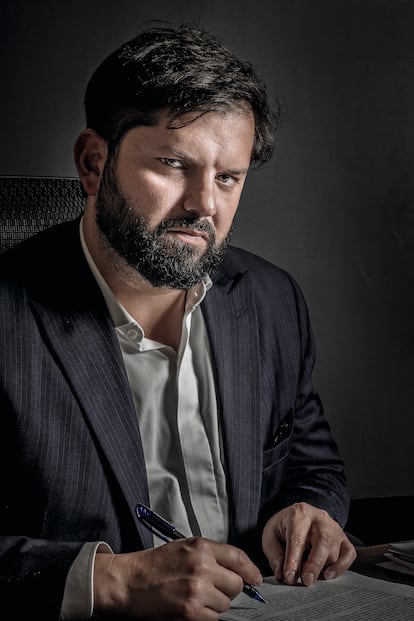
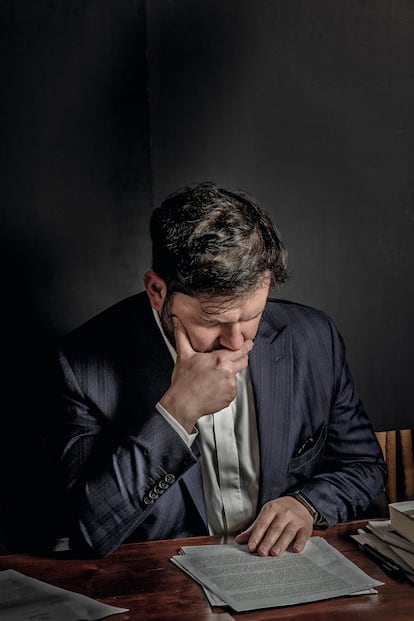
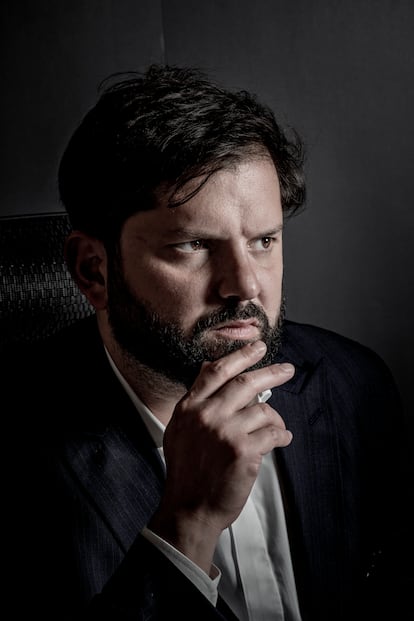
Boric assumed the presidency on March 11, 2022. Against all odds, he defeated the candidate of the iconic Communist Party in the left-wing primaries, and then Kast himself in the November 2021 elections. It was in the final throes of the pandemic and two years after the largest social uprising in Chile’s recent history, when Deputy Boric defied his party’s orders and joined in signing an agreement for peace and a new Constitution. This was the offer that the political class and Sebastián Piñera’s government presented to the public to institutionally channel the discontent. The first process to create a new Constitution, which was backed by the Chilean government, was rejected just a few months after Boric took office: “It was a great frustration. Not because of the final vote, but because of the lack of dialogue. I constantly wonder if we could have done more to facilitate that dialogue.” The second process, shaped by opposing positions from the far right, was also rejected. “The people of Chile were very wise in rejecting both texts, because in both processes those who had the majority tried to deny the minority. A country is not built like that.”
The process to draft a new Constitution not only shaped the course of the government but also dealt a blow to the expectations of many people. Analysts now cite it as one of the many factors that contributed to Kast’s victory. “Hope was dashed, and a kind of skepticism arose regarding politics as a transformative force. A return to the idea that, if they can’t transform things for the better, the least I demand is order. I think there was no capacity to convince the majority of the population that we could represent a desirable order. The most significant element in the election results was the issue of security. Despite passing more than 70 laws on this matter, and improving the conditions of the Carabineros [police force], we failed to gain sufficient credibility with the majority of the population. The left still doesn’t represent the desire for order. Order doesn’t have to be right-wing. Order is certainty, it’s stability. Nobody wants a disorderly country. And elections today are driven primarily by emotions. If in 2021 we managed to mobilize hope, now the right has managed to mobilize — and I don’t mean this disparagingly — fear of the other, of crime, of economic insecurity.”
— How do you explain that fear is a greater motivator than hope?
— Because hope was dashed during the constitutional processes, and our government, despite being a parliamentary minority, achieved transformations, but they were less heroic than those that had stirred the spirits of a certain segment of the population. Faced with frustration with a highly transformative project, a demand for order has arisen, one that is linked to real-world issues. Crime and migration are very real problems in Chile.
— And what reflection does all this leave you with?
— That democratic politics is not about heroism, but about consistency, responsibility, and a real transformation of people’s living conditions. I can give inflammatory speeches, find antagonists, promise anything, but if the quality of life doesn’t improve, it’s irrelevant.
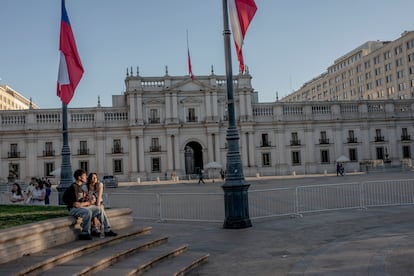
Boric asserts that when he arrived at La Moneda in 2022, there was “confrontation, a practically total disconnect” among Chileans, and that today there are certain points of consensus, such as the idea that the most effective public policies are those developed through social dialogue, and that growth is not incompatible with distribution, something that “it is positive that the left is embracing.” The Central Bank forecasts 2.4% growth for this year.
During his term, a law was passed establishing a 40-hour workweek (in a phased implementation), taxes were levied on large mining companies, the minimum wage was increased to the equivalent of approximately $585 (“the most significant increase in the last 20 years”), and a National Support and Care System was created that recognizes and supports individuals — generally women — who provide unpaid care. He also reformed the pension system, a long-pending matter. The government, which initially sought to eliminate the private pension fund administrators (AFPs) that manage Chileans’ savings, ultimately compromised, reaching a solution that injects solidarity into the system.
Meanwhile, the perception of insecurity has skyrocketed. According to a Gallup poll, Chile ranks sixth out of 144 countries where people feel least safe walking in their neighborhoods at night. Furthermore, the homicide rate has doubled in the last 10 years, partly due to the rise of transnational organized crime gangs, and the violence with which crimes are committed has terrified Chilean society.
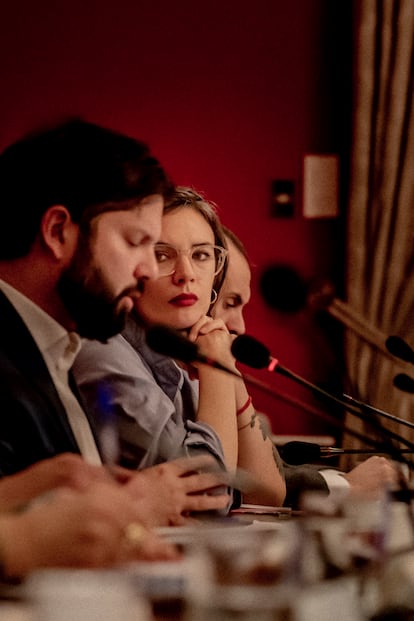
“Doubt must follow conviction like a shadow,” wrote Albert Camus in one of his articles for the French Resistance magazine, Combat. This phrase has become a kind of leitmotif for Boric, one he repeats so often that he apologizes to Nicole Vergara, his tireless press secretary, for having heard it so many times. “The people I distrust most are those who never doubt,” he reflects when questioned about a moderation in his views after four years in power, which he rejects: “One must constantly test one’s own reasoning against sound arguments. This can be done while remaining consistent and defending principles and political positions. I began my term as a person who defined myself as left-wing, and I am ending my term still defining myself as left-wing.”
Boric’s conception of the left has earned him international recognition, as well as criticism. He sees it as a political force that doesn’t thrive on assigning blame or resorting to grand narratives, but rather subjects itself to constant self-examination and a critical examination of its relationship with society. He sees it as a left that understands politics as an exercise in coherence and responsibility, more attentive to the real effects of its decisions than to heroic gestures or rhetorical purity. He sees it as a progressive movement that can only aspire to endure if it is capable of transforming people’s living conditions. Without self-criticism, consistency, and results, its place in history would become precarious. This conviction leads him to not hesitate when asked whether the government’s mistakes were decisive in the left’s electoral defeat and the rise to power — for the first time in the democratic era — of the far right.
— No, I don’t think there’s anyone to blame. This isn’t a collapse. It’s important that there be a review, because the struggle for hegemony isn’t static. If the left stops reflecting on itself, on what it claims to represent, it’s clearly dead. But I think it’s a mistake to distance itself and disown what has been accomplished.
— Many people believe that your legacy will be leaving the far right in power.
— I don’t like to talk about my legacy. I’m not concerned with what’s being said about Boric’s legacy, nor am I concerned with speaking about myself in the third person. I find it in very poor taste. We inherited a country broken in many ways, particularly in its social spirit, and we handed over a country in good shape. We restored confidence in ourselves as a nation, in our institutional processes. It was demonstrated that Chile resolves its problems through democracy, that through politics it’s possible to reach agreements that improve people’s quality of life. That’s an important legacy. Chile is a country in good shape, with many problems, with many difficulties, after having been on the brink following a very, very difficult social crisis.
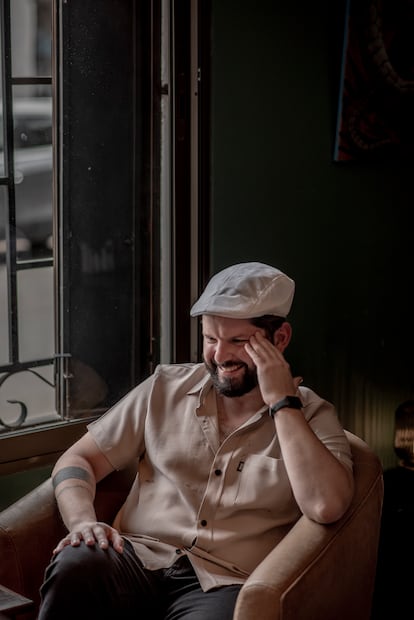
On December 14, just minutes after his nemesis’s victory was confirmed, Boric called Kast, a scene witnessed live by millions of Chileans. Another example of the institutionalism and “civic culture” that the still-president celebrates. “There is value in that republicanism. The opposition did not recognize Daniel Noboa’s victory in Ecuador, Jair Bolsonaro attempted a coup against Lula... Democracy is safeguarded at every moment,” Boric points out.
“Inhabiting the office” is a metaphor he has used on numerous occasions since assuming the presidency. “By inhabiting the office, I mean that it’s not filled by the person alone. Chile is a very presidential country, and one must adapt to certain customs that come with the position,” explains Boric, who is often mentioned for his look — atypical in a presidential ecosystem rife with prejudiced traditions — for not wearing ties, or for rolling up his sleeves to reveal one of his five tattoos. “But there are other things I do, such as my relationship with institutions, the Armed Forces; even the decor, keeping the portrait of [Chilean independence leader General Bernardo] O’Higgins [that hangs in his office]. People don’t just interact with Gabriel Boric; it shouldn’t be taken so personally. They interact with the President of the Republic,” he affirms.
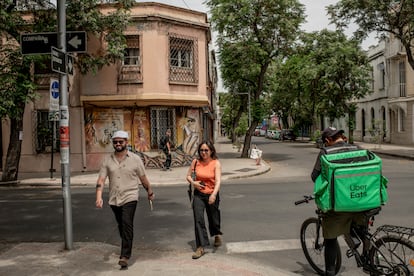
“I make a conscious effort not to see this as a personal experience, but as a collective responsibility. It’s an honor,” he adds during the second interview with EL PAÍS, also in October, at a café in Yungay, an unconventional neighborhood in Santiago, Chile, where he chose to live as president. He will soon move again, along with his partner and two children, to settle in the house he bought in San Miguel, a traditional middle-class area.
He arrives at the café wearing a cap, sunglasses, and a short-sleeved shirt. He orders a lactose-free coffee. He would like to stay after the meeting, just reading in peace, although on this occasion he will go home because his partner and daughter had a bad night. This doesn’t bother Boric: he’s never slept much, he reveals. The security detail surrounding him is practically imperceptible. Boric often rides his bicycle and tries to get lost in the city. It’s one of his hobbies, along with music, video games — he owns a PlayStation 5 — and spending time with his family. “I’ve never had it like this before,” he says about Paula and the children.
If there’s one thing he’s passionate about, it’s reading. Throughout his four years in office, he’s made sure to maintain that voracious appetite. During the first interview, on his desk are copies of El cerebro roto y la generación emergente (in English, The Broken Brain and the Emerging Generation), The Narrow Corridor: States, Societies, and the Fate of Liberty, and Secondhand Time: The Last of the Soviets. He identifies the latter, by Svetlana Alexievich, as one of the best books he’s ever read. For the second meeting, at the Yungay café, he’ll arrive with a book on education. And for the third, after Kast’s victory, he’ll pull Why Not Socialism?, by Gerald A. Cohen, out of his backpack.
At various points in the conversations, Boric insists that his ideological convictions remain intact, but what is now gone is the congressman Boric who, before coming to power, proclaimed that Chile would be the tomb of neoliberalism, given that it was its birthplace. “Such categorical and hyperbolic statements don’t mesh well with reality,” he concedes, although he maintains that “any progressive perspective in Latin America, where neoliberalism took hold so violently, must aspire to overcome it. I still believe this, and we are still working on it, albeit at a different pace than we would have liked.”
“When reality changes, while maintaining one’s principles, one must know how to adapt to that new reality, otherwise one will crash into a wall. Politics is not for martyrs or the obtuse. One must be flexible, skillful, and capable of adapting to circumstances. I am proud when people tell me that I have been consistent in the principles and values I defend. That necessarily goes hand in hand with having the capacity to change one’s mind, to be flexible and adapt to reality, not to try to adapt reality to abstract ideas. And to be persistent, at the same time, in believing that things can be changed, but not based on the premise that they are as I want them to be. Politics can change the world. But it is a long-term endeavor. One sees achievements after years of work.”
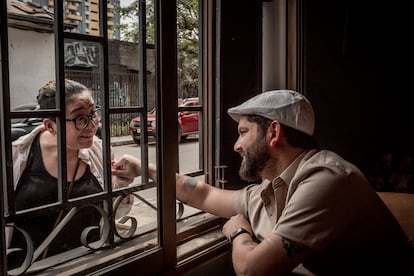
Boric is proudly from Magallanes. He returns to his homeland, as he calls the southernmost tip of Chile, which is also the southernmost tip of South America, whenever he can, and his wish starting in March is to combine life in Santiago with stays in Punta Arenas, where he was born and raised, although that implies, he jokes, a conversation with his partner rather than a statement in an interview: “I’m not going to let go of Magallanes; Magallanes is part of who I am.” The blue and yellow flag of the region adorns his cell phone case.
There, or rather from Magallanes, Boric began to learn about the world. His method was that of so many children in the early 1990s: he read Emilio Salgari, the adventures of Sandokan, and The Pirates of Malaysia: “I know Malaysia without ever having been there.” Before becoming president, he told the U.S. reporter Jon Lee Anderson that he thought he might get to see the world: he had traveled to Disneyland, to Europe, and to Palestine. He has indeed seen the world in recent years, but in many cases — like the day he drove around the Colosseum in Rome — it was from a van, not with the time and attention he would have liked. Paradoxically, it has been his foreign policy and his stance on the most sensitive issues for the left that have earned him the greatest acclaim outside of Chile these past years, and why many would like to see him in an international organization at the end of his term, something Boric categorically rules out: “I don’t want an international position.”
He is a leader who doesn’t hesitate to speak of genocide in Palestine and who condemned the invasion of Ukraine, but without a doubt, his has been the most outspoken stance a progressive politician has taken on Venezuela in recent decades. “It’s disheartening, after the lessons of the 20th century, to see that today, even on the left, there are those who repeat the same patterns,” he begins, during the first meeting in October, when asked about this particular situation within his ideological sphere. “Venezuela and Nicaragua are the epitome of the issue. The case of Ukraine is more complicated. Strangely, in Latin America at least, there were sectors that were unable to condemn Russia’s invasion of Ukraine, perhaps due to some kind of identification — I don’t know if it was nostalgic — between Russia and the Soviet Union, or perhaps because of the conflict between Russia and the U.S. What I saw was that one country was invading another sovereign nation with the intention of seizing its territory, violating international law. And that — regardless of the political affiliation of the current leader of Ukraine and the permanent leader of Russia — was wrong.”
“I feel completely at ease taking a very firm stance on Hamas terrorism and on the genocide perpetrated by the Netanyahu government; on Russia’s invasion of Ukraine and the human rights violations committed by the Chilean state against its own people during the dictatorship,” he continues before returning to the crux of many of his arguments. “One must have the same standard for judging the facts. Otherwise, one loses credibility.”
— You sympathized with Chavismo in its early days. What led you to change your position on Venezuela?
— There are many reasons, both theoretical and ideological, but for me, the most significant is the exodus. A country from which more than seven million people have fled… You can’t defend something like that. And seeing now, this past year, how they clung to power in the most illegitimate way, without any shame whatsoever, makes it clear to me that it’s a dictatorship. Our entire generation viewed Chavismo with great hope and enthusiasm in 1998. We also saw the Latin American integration that [Hugo] Chávez promoted, beyond the rhetorical excesses, someone who would stand firm against the United States. But then we realized that there hadn’t been a substantial economic transformation within Venezuela itself, that widespread corruption had taken hold, that poverty levels were extreme, and that all the freedoms that define a democracy had been violated.
This outspoken stance against Venezuela and Nicaragua made him a favorite target of Nicolás Maduro’s regime. However, he criticizes Trump’s operation to arrest the Chavista leader: “That a foreign state would attempt to exert direct control over Venezuelan territory, administer the country, and, eventually, as its president [Trump] indicated, continue military operations until imposing a political transition, sets an extremely dangerous precedent for regional and global stability.” Although Maduro never tolerated Boric’s words about tyranny, they have continued to resonate with other progressive leaders, such as those in Mexico, Colombia, and Brazil. “It damages progressive forces, yes, it does,” admits the Chilean president, who claims to understand “the logical reasoning behind these positions,” even though he does not share them, and that this does not prevent them from being allies in many other areas.
— And Cuba? Does it further confuse that stance?
— It doesn’t confuse me at all. Cuba is experiencing a very similar situation. Today in Cuba there are shortages of food and medicine, and transportation is difficult; a significant portion of the young people have left. It’s very clear that there is no democracy in Cuba; it’s a one-party regime, and there is no freedom of expression. From any perspective, that’s a dictatorship. The primary responsibility lies with those who govern Cuba, although the effects of the embargo cannot be denied.
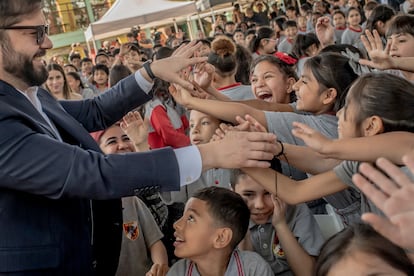
A few days before EL PAÍS’ meetings with the Chilean president, Boric went out to celebrate his younger brother Tomás’s birthday — he has another brother, Simón, a journalist — at a restaurant. At the entrance, a woman in her eighties greeted him — “let’s go, Mr. President” — and chatted with Paula, his partner. Boric overheard her say to the woman, “ask him,” and after overcoming her embarrassment, she told Boric: “I have some neighbors who are spreading rumors that you were in a psychiatric hospital and that they treated you like you were crazy.”
— Yes, I was in a psychiatric hospital and I’m not crazy.
Boric smiles when he recalls the conversation with the woman. The president voluntarily checked himself into a treatment facility in 2018 for three weeks due to obsessive-compulsive disorder (OCD) “that was very unbalanced.” At that time, they found the “alchemy of medications,” as he calls it. “A high dose that doesn’t affect my cognition at all,” he states. Starting in March, he says, he will undergo a review process. “Mental health is highly stigmatized. If I had broken my knee playing sports today, I would have surely needed surgery, and no one would question it. But if I have a disorder that is treated with medication, they say, ‘This crazy guy is unfit for office.’”
The natural way he speaks about mental health is also recognized beyond Chile’s borders. “I’m not ashamed of it. Being able to turn my personal experience into public policy and talk about mental health has been very liberating for many people. I’ve fully embraced this and I’m ready to fight against those prejudices. In Chile, significantly more people die by suicide than by homicide. And suicide is, let’s say, the tip of the iceberg, because there are a lot of other problems linked to mental health, not all of which are necessarily pathologies. Health, at the end of the day, isn’t just the absence of disease.”
— Could a victory for the far right mean a setback in public policies?
— It would be very difficult, if not impossible, for a government to take away the rights people have acquired after a long struggle. The people won’t allow it. Women, and society in general, would not allow any rollback on abortion in the three cases for any reason, or on universal guaranteed pensions. And it’s the same with mental health.
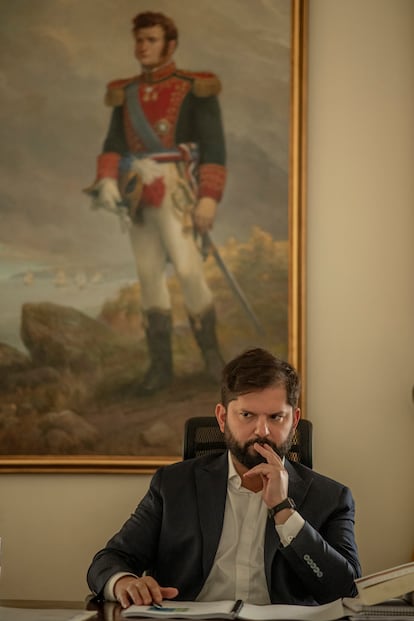
It’s December 18, 2025. Four days have passed since the crushing defeat in the elections. The pace at La Moneda doesn’t slow down. Boric delves deeper into political reflection than in previous conversations.
— How are you feeling? Angry, worried, nervous?
— Politically, we’re busy. We have very substantial differences regarding the model of society with which the right wing won. Our focus must be on regaining the majority. It’s not enough to feel good about one’s own ideas if they aren’t shared by the majority in society.
On March 11, Boric will bid farewell to La Moneda. It will definitely be a “see you soon.” The Constitution prohibits reelection, but it does allow for a second term after four years. He doesn’t say so, nor even hint at it, in almost four hours of conversation, but history speaks for itself: most of his predecessors since 1990 — the Christian Democrat Eduardo Frei, the socialists Ricardo Lagos and Michelle Bachelet, and the right-wing Sebastián Piñera — have sought to return, and in the case of the latter two, they succeeded.
In a Chile governed by Kast, what is clear is that Boric will not leave the country or politics, although despite repeated requests, he doesn’t want to provide many details about his next steps: “It’s healthy for me, as a former president, to stay out of the immediate spotlight for a while. I’m not going to be a commentator on the beginnings of the future government. Obviously, if there are lies or attacks, I will have to defend what has been done.”
Reflecting on what the future holds, Boric offers a nod of appreciation to the next president of Chile: “One of the things Kast did, running for the third time, was to visit every municipality. It’s not just about a right-wing wave in the world, or about what the government did or didn’t do. There’s also persistent work involved.”
At the same time, he acknowledges that the Broad Front he founded, when the institutional dispute began, somewhat neglected community work: “What interests me is grassroots work; we need to strengthen political parties, to connect with that sector of the population that is currently on the political periphery.” Boric emphasizes the importance of his political training and says he wants to organize volunteer work — inspired by the kind students carried out in Chile in the early 1970s — but with the challenges of the 21st century. “I’m interested in building community,” he adds. And, although he will have an office, he wants to dedicate time to traveling throughout Chile.
— So, it’s going to become a little like it used to be…
— I don’t know exactly what I’ll return to. What I do know is that I’m going to continue working to build a broad alliance between the left, the center-left, and the center. This is the profession I’m passionate about, and I’m going to keep working to improve the quality of life for the people of Chile from a position that remains to be seen. Those of us in politics are, by nature, nonconformists. Whenever we reach one goal, the next one immediately arises. It’s not like I’ll finish on March 11 and say, “That’s it, we did everything we had to do.” We’ve moved in the direction of building a fairer, more egalitarian, and more socially cohesive country, with a better distribution of wealth, but there’s still so much to do.
Boric also doesn’t want to speculate on what the opposition to Kast should look like. Firstly, because he believes it would be irresponsible to do so from his current position. “It depends a lot on the government’s behavior, but what I am clear about is that the opposition has to be democratic; it can’t just be about Twitter or political cliques, but rather it has to be intimately connected to the territory, to the people.” And he advocates dedicating time to it: “A coffee shop discussion isn’t enough. The left that only blames its adversary is doomed to fade away.”
Sign up for our weekly newsletter to get more English-language news coverage from EL PAÍS USA Edition









































