
Mexico’s Generation Z is growing up with precariousness, uncertainty and political distrust. And social media is their primary source of information
In a conversation with EL PAÍS, 10 young people between the ages of 16 and 26 describe their search for stability and security, in a country that they feel is increasingly hostile
The flag of the Straw Hat Pirates, from the Japanese anime series One Piece, is waved at Generation Z demonstrations. It symbolizes, in the words of the show’s fans, “freedom and justice.”
The word “freedom” is repeated as a yearning among those who attended the march on Saturday, November 15, in Mexico City. It was also repeated among the 10 young people interviewed by EL PAÍS. But what is this “freedom” that they so desperately seek? While it doesn’t always mean exactly the same thing for everyone, for these youngsters, it generally materializes in the form of employment, education, mental health, public transportation, housing and security — things that allow them to feel less vulnerable.
In less than a week, Mexico City has seen two protest marches (one much more successful than the other) that were organized on social media and described as targeting young people between the ages of 15 and 28. The actual turnout, however, was quite different, as most of the attendees were over 30. But the absence of those who were supposed to lead these mobilizations wasn’t due to a lack of youths: although the last census is from 2020, UN projections estimate that 38 million people in the country belong to Generation Z, or about a quarter of the Mexican population.
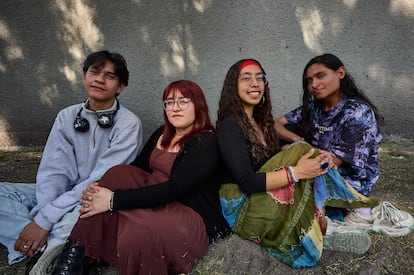
EL PAÍS interviewed 10 people between the ages of 16 and 26 — students, workers and residents of various parts of Mexico City and the surrounding State of Mexico (Edomex) — to learn about their concerns and how they feel about the country that they live in.
Their personal experiences differ widely: some commute for up to three hours a day on public transit, while others have precarious jobs. Some experience the anxiety of choosing a fulfilling career path, and others are frustrated about not being able to find work at all. However, they all share a similar list of the issues facing Mexico’s young people: an uncertain job market, the impossibility of owning a home, the feeling of living in an unsafe country, as well as a deep distrust of the political class.
There are also nuances: while those who attended the second march on November 20 place themselves ideologically in the center, those who rejected it say they are left-leaning, but nonpartisan. Some, like Bruno Trejo (Mexico City, 17 years old), try to stay abreast of the news, while others, like Javier – another 17-year-old from Mexico City – admit that their worldview depends entirely on the TikTok algorithm. Even so, they all agree that they’re reaching adulthood while facing more adverse conditions than previous generations.
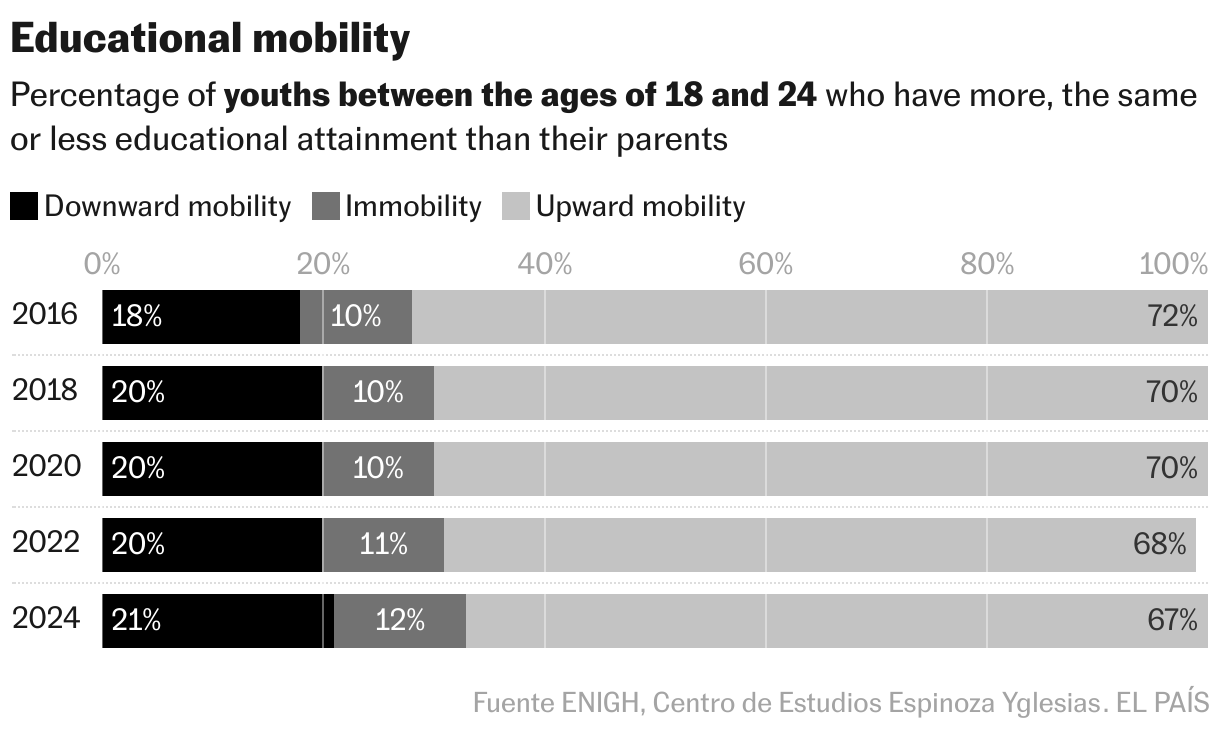
Most young Mexicans (seven out of 10) have a higher educational attainment than their parents. However, this percentage decreases every two years, according to the Espinoza Yglesias Center for Studies. Carla Arroyo (21), Dalay Ledezma (24), Aarón Morales (20), Alec Peñaloza (20) and Emilio Villalba (20) are all university students, and they attribute this decline to the fact that a degree guarantees them nothing. “I don’t see a good future. We’re a generation without opportunities,” Ledezma sighs. “I know my field of study pays very little. I don’t know what I’m going to do when I graduate,” Morales shrugs.
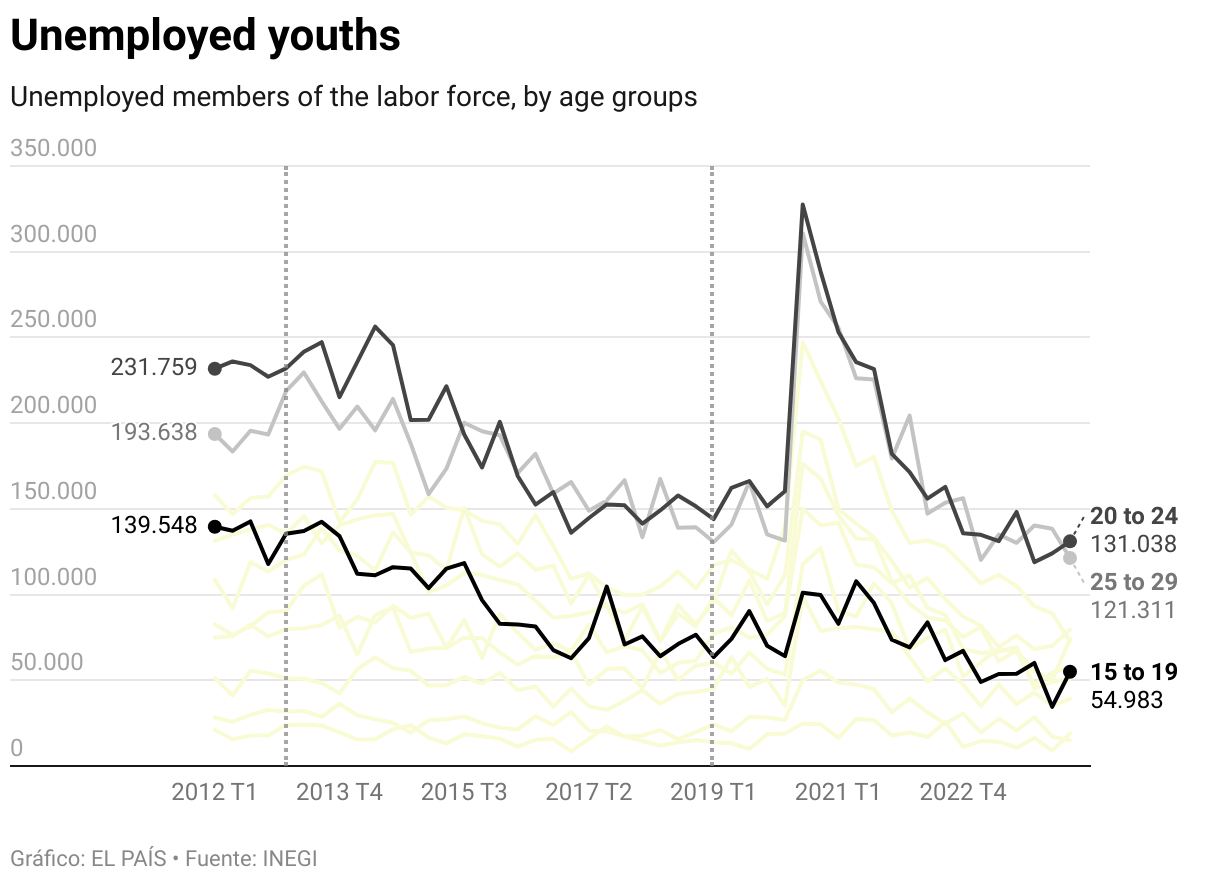
These youths view their professional and economic future with despair. For economically active young people in Mexico — especially those between the ages of 20 and 29 — unemployment is higher than in any other age group. Ledezma sums it up this way: “I’ll never be able to buy a car or a house. We think about becoming independent, [yet] we don’t see a future without roommates. Rent is unaffordable.” And it’s not enough to just have a job; the conditions that come with it are also crucial. “Before studying, I had a job and suffered from depression… working made [me feel] worse because, no matter how lousy I felt, I still had to produce. And it will be like this my whole life, with no opportunity to retire,” she laments.
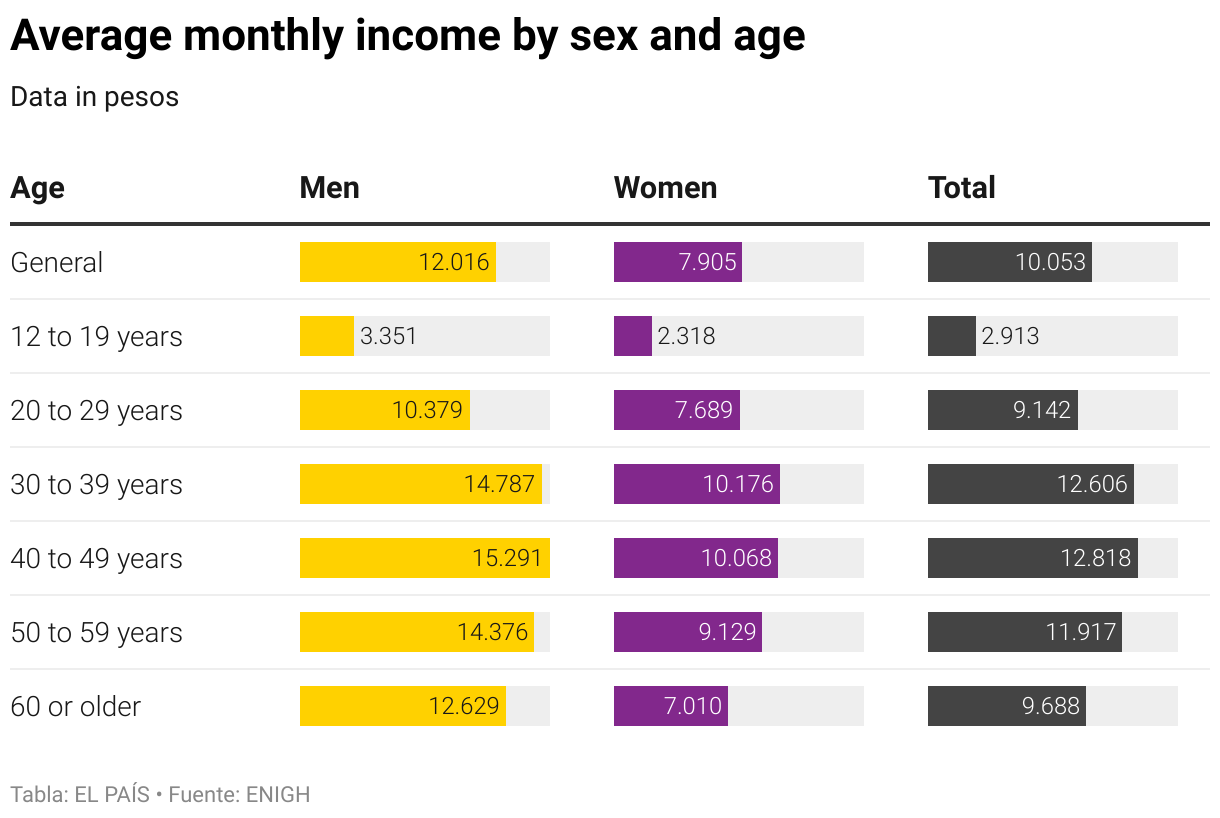
Members of this generation have the lowest earnings among the labor force, with salaries ranging from just under 3,000 pesos ($163) to 9,000 pesos ($490). Although the legal working age in Mexico is 15, informal employment leads to the participation of children and teenagers in the workforce. And, across all age groups, women and girls earn lower wages.
From ages 20 to 29, economically active young people suffer the most from unemployment among all workers in Mexico, far more than the 35-to-39 age group. Angélica Ochoa, 26, is experiencing this firsthand. She graduated with a degree in International Relations and has been looking for work for months: “I’m saving up for a postgraduate degree, otherwise I’ll never be able to work.”
“It’s very frustrating, she adds. “Not having a job is depressing.”
Most of those interviewed by EL PAÍS doubt that they can ever afford to live independently, let alone aspire to own property. Arroyo, from the Mexico City borough of Coyoacán, sees that gentrification will affect his future. “Rent keeps going up and up. The Americans come and everything goes up,” she laments. Bruno Trejo, although he’s younger, is no more optimistic about the situation: “I’m worried about my job prospects, housing… whether I’ll ever be able to buy anything.”
Alec Peñaloza, a student, assures EL PAÍS that this isn’t a fatalistic view. “My concerns about whether I’ll have a job, whether I’ll be paid well, or whether I’ll be able to be independent are valid right now. You don’t need to graduate to be worried about the situation in the country.”
Generation Z is disillusioned with politics. Each year, they move further to the left, with a clearer trend among women, who are asserting themselves slightly more than their male counterparts. However, none of those interviewed declared themselves to be supporters of any Mexican political party, not even those who marched.
Arroyo shares this disaffection with political parties, although she identifies as left-leaning. “It would be a mistake to simply say ‘I’m with MORENA’ (the ruling party). None of [the political blocs] look out for our well-being. There’s ill will among us toward all the leaders,” she asserts.
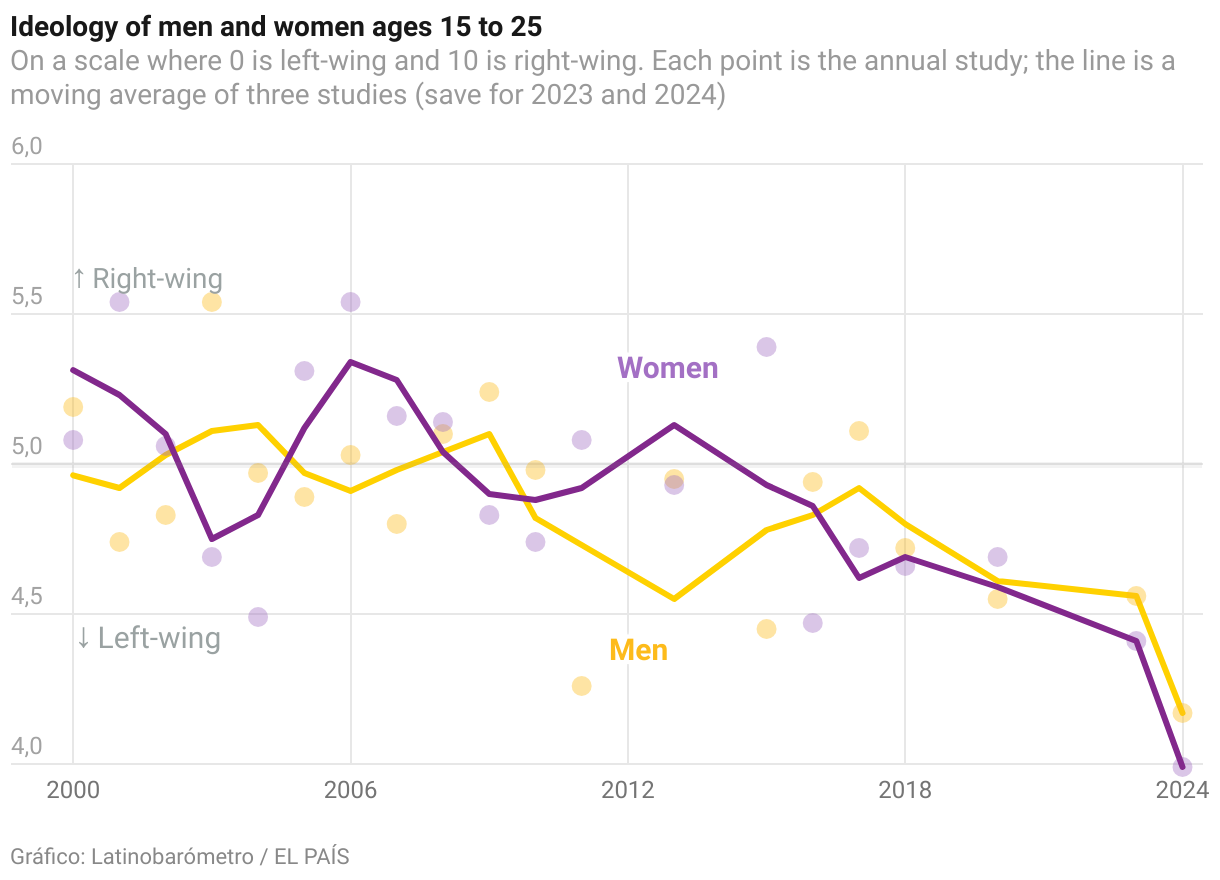
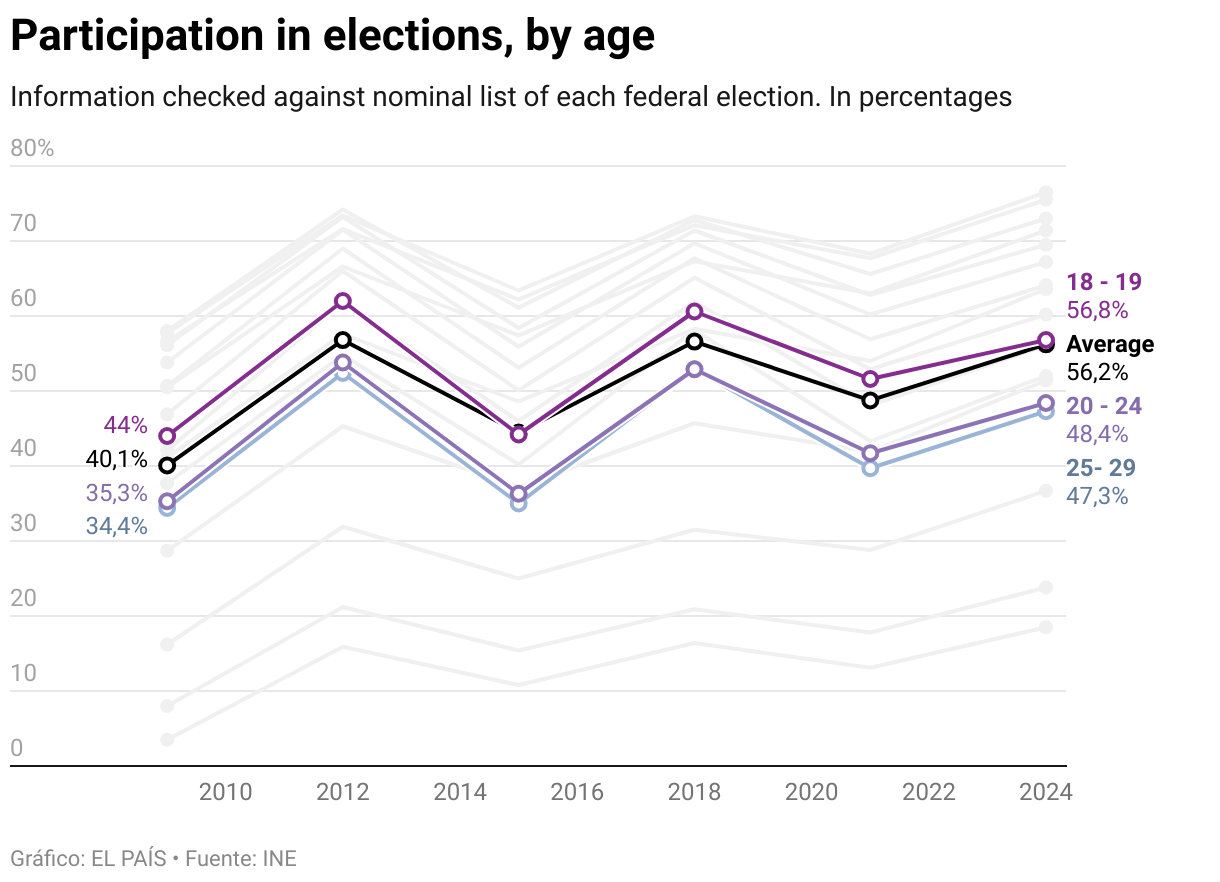
While most young people voted for President Claudia Sheinbaum if they were eligible to do so back in 2024, they don’t show a clear interest in national politics. Of the five young adults interviewed by EL PAÍS who voted last year, all cast invalid ballots.
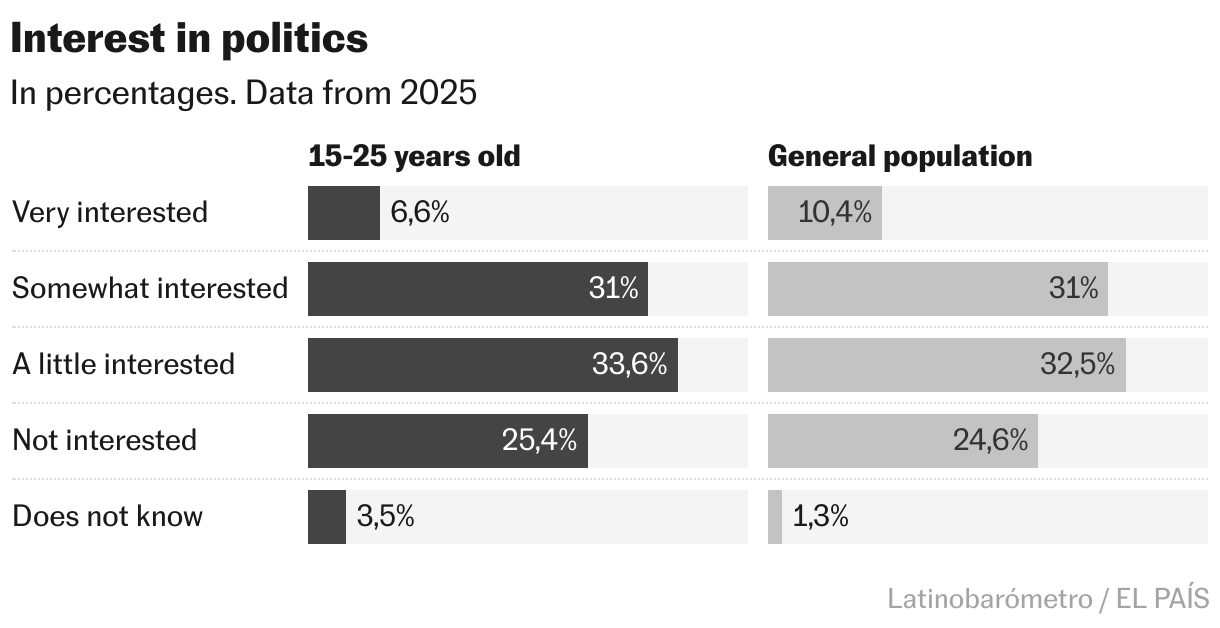
Young people say that they’ll exercise their right to vote when the time comes, but confess that politics seems distant and predictable to them. “All politicians lie and steal,” Javier summarizes. He’s a 17-year-old factory worker. Generation Z has voted slightly less than the average for the population, with the exception of 18- and 19-year-olds, who tend to be more likely to go to the polls.
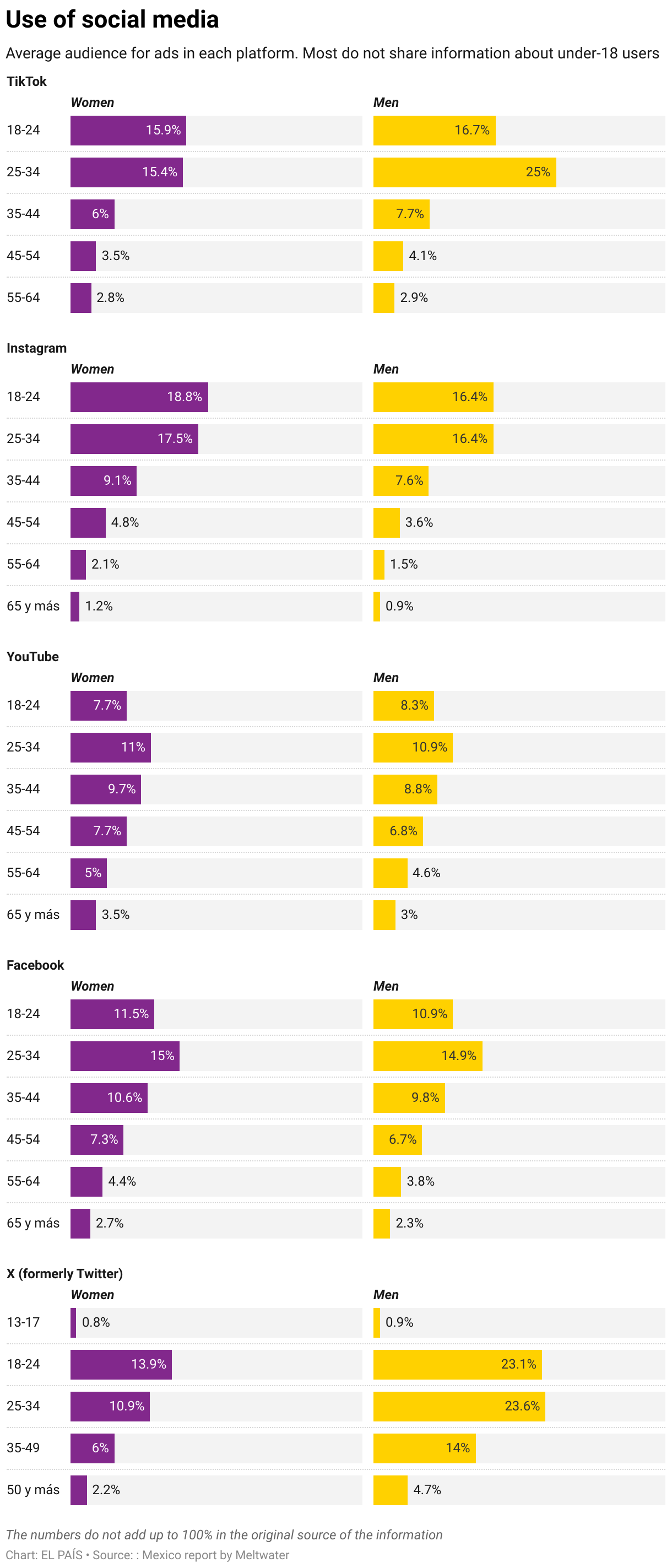
The young people surveyed spend between four and nine hours a day in front of a screen. They use seven different social media platforms, although TikTok is the favorite, followed by Instagram. The algorithm dictates what they know about Mexico and the rest of the world. All but one confesses to feeling misinformed.
“I don’t know how to differentiate between fake and real news. I just listen and that’s it,” Javier admits. Morales acknowledges that the information affects him: “Seeing chaotic news makes me anxious, so I prefer to ignore it.” Trejo reflects on his screen time: “I spend a lot of time [on social media] and it’s really just junk content.”
Peñaloza is surprised when he considers how many hours he spends on his phone each day. “With the amount of time I spend on screens, I should be better informed.”
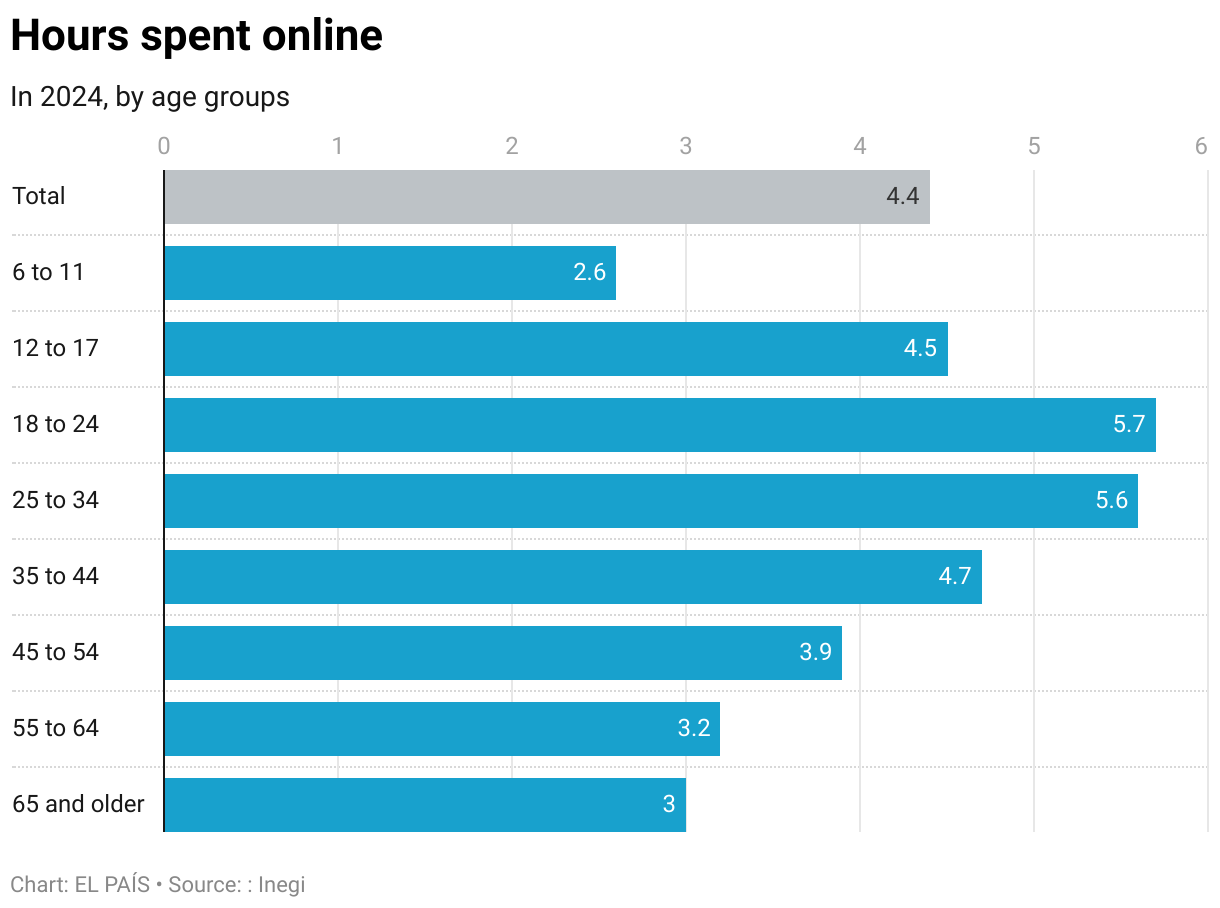
Mexico’s youth have a stronger presence on platforms like TikTok and Instagram, although they tend to interact across most of the available options. Social media platforms typically withhold data about minors, in order to protect their privacy. However, the behavior of young adults between 18 and 28, who make up the majority of this generational group, is well understood. Some networks, such as Twitch and Discord, aren’t included in these studies, but sites like Resourcesera indicate that, globally, Discord users spend approximately three to four hours per week on the platform, while 41% of users are between 18 and 24 years old.
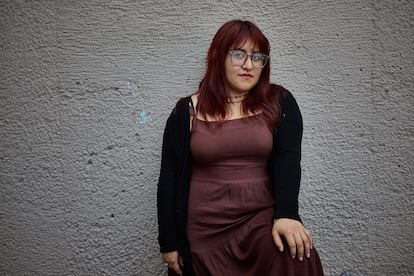
Of the 10 young people interviewed by EL PAÍS, nine say they suffer from anxiety or depression. For some, this is their primary concern. “Mental health is what worries me the most. The internet distances us from reality [...] I would like to see a social security reform, so that everyone has guaranteed mental health care,” Ledezma affirms.
Morales, for his part, shares a plea: “We don’t want to play the victims, but we’re being forced into vulnerability. We just want [there to be] empathy and some understanding of our social context.”
Morales details what he sees as the biggest problem that has defined his generation. “I was born during Felipe Calderón’s presidency (2006-2012), surrounded by violence. We were raised with a fear of going out, of protesting, of raising our voices. [Mexico] has never been peaceful for us. What worries me most is the drug trade.”
Insecurity emerged as a topic of concern in all the testimonies, although it’s particularly pronounced among those who attended the Generation Z demonstration on November 20. Among its vague demands, the march called for action against the safety crisis that’s plaguing the country.
Eighteen-year-old Diego believes that security is the most important issue. “We have the right to live without fear of being killed.” Sixteen-year-old José, who marched alongside Diego, adds: “We live in a narco-state. I’m marching because I’m tired of living in fear.”
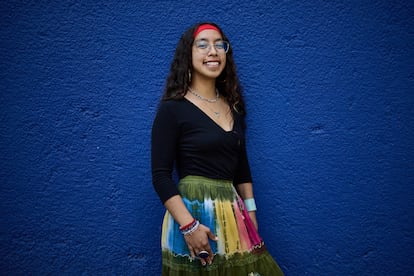
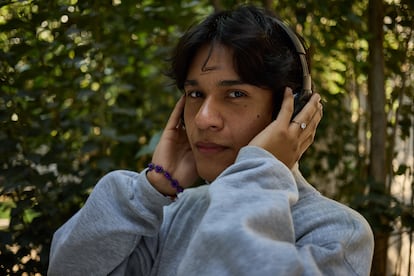
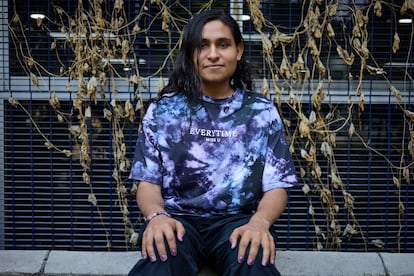
For his part, Emilio Villalba, who resides in Chalco, a city in the State of Mexico, expresses a concern that, for him, is the most important one at hand. “It takes me ages to get to the university. It takes me at least two hours, sometimes three. And I spend 60 pesos a day [on transit]. I’m worried about losing so much of my life just commuting.”
Collectively, the testimonies portray a generation that’s growing up amidst long school days, complicated commutes, low wages and a digital world that shapes how they access information and connect with reality. With nuances and contradictions, the 10 young people interviewed express the same observation: becoming an adult in Mexico means living in a country where the promise of stability seems increasingly distant.
Sign up for our weekly newsletter to get more English-language news coverage from EL PAÍS USA Edition









































