
Mexico’s biggest fortunes seek certainty outside the country
Thousands of family assets will be in the hands of millennial and Gen Z entrepreneurs in the coming years, far more inclined to invest abroad and move away from the industrial tradition
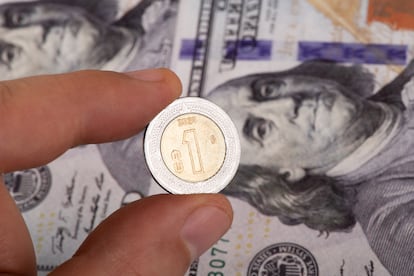

Mexican capital is changing hands and hence its destiny. As the largest wealth transfer in recent history gains momentum, younger heirs are diversifying and moving away from the industrial model that built their grandparents’ fortunes, instead directing their investments towards international markets. This silent but sustained shift occurs in parallel with the loss of confidence and the economic slowdown in the country, and threatens to accelerate the lack of productive domestic investment.
In Mexico, there is a dissonance between the weakening of the economy and the increase in wealth: while wealth is advancing at a double-digit rate, GDP is lagging behind. According to UBS bank, the average wealth per adult in the country has grown 150% since the 2008 financial crisis. And in 2025 alone, a year marked by the uncertainty generated by the trade war with the U.S., most Mexican business fortunes worth at least $400 million grew, led by those of Carlos Slim, 86, and Germán Larrea, 72, with a combined growth of 38%, according to the financial information service Infosel.
On the other hand, the GDP result at the end of the year was disappointing with growth of just 0.8%. Moreover, the first quarter of 2026 has seen a contraction of 0.8% triggered by austerity policies. Meanwhile, the flow of Mexican assets to destinations beyond its borders totaled around $25 billion last year, from direct investment and portfolios of bonds and shares, all of which combined to show sustained growth, according to the Bank of Mexico.
Firms such as the US-based BAI Capital are capitalizing on the growing interest of Mexican investors sinking their money into in other markets, offering schemes that combine real estate investment with access to permanent residence. “Capital is repositioning,” says Juan Carlos Eguiarte, general manager of the firm in Mexico. “This is not a theory, it is an active repositioning of global capital. Wealthy families in Latin America, and in Mexico, are making decisions right now. They are moving assets from unstable jurisdictions to markets with clearer rules,” he adds.
With offices in Mexico, Taiwan and soon China, the company is seeing investments moving to Texas, Florida and California as investors seek the protection of the dollar as a safe haven, access to a capital market with greater liquidity and, above all, legal certainty for its operations, amid the instability generated by the judicial reform in Mexico and the review of the USMCA in industrial plans. “They are also looking for something very important: succession planning, which is known as the Great Wealth Transfer phenomenon,” he says, referring to the hundreds of trillions of dollars that will be passed from the hands of baby boomers, who are approaching 80, to younger generations, such as Gen X, millennials and Gen Z.
This transfer is particularly relevant for Mexico due to the weight of family wealth in the economy, and it is this that is modifying investment preferences. Various studies estimate that about 90% of companies in Mexico are family-owned and that a relevant proportion of capital is still concentrated in the first or second generation. Younger millionaires are more open to global diversification and less conservative instruments, such as cryptocurrencies, real estate investment funds, tech-biased stocks, and baskets of assets such as ETFs (exchange-traded funds). According to a survey by investment firm Natixis, millennials are more inclined towards sustainable investments (32%) and nearly a quarter (24%) invest in cryptocurrencies.
Aversion to risk
This re-routing of resources, together with a sustained fall in gross fixed investment (GFI), which measures how much an economy invests in its productive capacity, together with the departure of buyers of Mexican debt, is taking its toll on the economy. Due to its closeness geographically to the U.S. and its commercial relationship with its neighbor, Mexico has managed to maintain its relative manufacturing advantage as the main supplier of goods to the world’s largest consumer. This has boosted its exports and foreign direct investment (FDI), which grew by 10.8% in 2025, becoming a lifeline regarding performance. However, the crumbling of infrastructure, security — both criminal and regulatory — and basic services has limited the expected nearshoring boom. In January 2026, the IFB showed an annual decline of 2.2%, a negative trend that has lasted 17 consecutive months, according to data from the National Institute of Statistics and Geography (Inegi).
“The fact that waves of capital are not entering reflects a great aversion to risk in the Mexican economy,” says Gabriela Siller, director of Economic Analysis at Grupo Financiero Base. The balance of the holding of government securities in the hands of residents abroad, such as bonds or Treasury certificates (Cetes), has stabilized at about 1.7 trillion pesos ($97.1 billion), after seven months of decline last year. However, Siller warns that the risk of capital flight persists in the face of greater global aversion due to the war in Iran and a deterioration in the perception of Mexico, associated with growing debt and tighter public spending. Siller adds that it is estimated that 70% of tax revenues are directed at social programs, the financial cost of the debt and contributory and non-contributory pensions.
“The Mexican economy has also fallen into a trap of stagnation, and this does not help,” Siller adds. Analysts’ forecasts suggest that Latin America’s second-largest economy will grow below 2% by the end of the year, reflecting a GDP with less capacity to absorb new capital and offer returns. “What any investor is looking for, even talking about fixed assets, is a good combination of risk and return. Faced with greater risk, obviously, they stop investing,” he says.
Sign up for our weekly newsletter to get more English-language news coverage from EL PAÍS USA Edition









































