
Gabriel Rabinovich, biochemist: ‘My dream is to never have to tell any patient that there’s nothing more we can do’
The Argentine scientist, who discovered molecular switches that regulate the immune response, is a senior researcher at the new CaixaResearch Institute in Barcelona
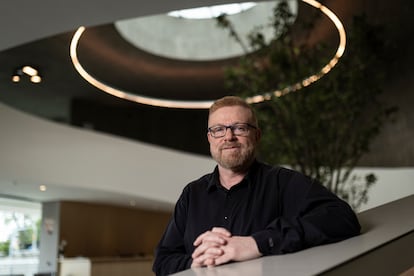

It all started in the retina of a chicken. The career of biochemist Gabriel Rabinovich, 57, discoverer of a kind of molecular switch that regulates the immune system, took its first steps there, in a biological chemistry laboratory, shortly after graduating, how to manufacture antibodies in rabbits against proteins from the chicken retina.
That was far from the career path he had envisioned, having been fascinated by immunology since university. But he was late to secure a position in the lab where he wanted to do his thesis, and ended up in another one “at the end of the hall” where they were experimenting on chicken retinas. That twist of fate ended up “saving my life,” he says now: there he met his first mentor and laid the foundations for what would become a long and fruitful scientific relationship with galectins, the proteins that have defined his career.
Rabinovich discovered the functions of galectin-1. He called it “the sweet case of Dr. Jekyll and Mr. Hyde”: on the one hand—the positive side—this protein helps the immune system return to normal after reacting to a threat because it can shut down the lymphocyte response when the danger has passed; but on the other hand—the negative side—this molecule is also used by tumors as a counterattack mechanism to kill and eliminate lymphocytes and evade the immune response. The discovery, in the early 2000s, was revolutionary and paved the way for exploring new therapies for autoimmune diseases and cancer.
“The immune system needs to maintain a delicate balance. In certain pathological situations, it goes one way or the other. So it needs to be fine-tuned,” the scientist emphasizes. His fascination with immunology is palpable in every word.
Three decades after those initial experiments with chicken and rabbit retinas, Rabinovich is still working with galectin-1, preparing experiments to modulate this molecular switch in diseases such as multiple sclerosis and cancer. The biochemist joined the CaixaResearch Institute in Barcelona last year, a new research center specializing in immunology, established by the La Caixa Foundation and officially inaugurated two weeks ago. The scientist speaks to EL PAÍS in the center’s brand-new facilities, at the foot of the Collserola mountain range.
Question. Does this duality of some molecules, this Dr. Jekyll and Mr. Hyde, often happen with the immune system?
Answer. Constantly. No protein is inherently good or bad. Galectin-1 is just one example of what happens: mechanisms that suppress autoimmune diseases are co-opted by tumors and microbes as evasion strategies, allowing them to escape. Nothing is 100% good or bad. It all depends on the context. Tell me who your friends are, and I’ll tell you who you are: depending on the scenario and the other players involved, proteins play a role.
Q. Your research aims to design therapies for tumors that are resistant to immunotherapy. This therapeutic strategy has been revolutionary, but it doesn’t work for all patients or types of cancer. How do you interpret this?
A. Immunotherapy was revolutionary. It has improved the lives of many people. But in this modulation of the immune system, there are many variables, and we need alternative, multifunctional approaches because tumors have multiple ways of escaping. In my opinion, galectins play a role that will increase the chances for resistant patients. My biggest dream is that we will never again have to tell a patient that there’s nothing more that we can do, and that we will instead have more options to offer them.
Q. Is that dream realistic?
A. It’s a utopia. I don’t know if it will happen, but I would like to create opportunities, even if only for a group of patients who see galectin or antigalectin therapies as a possible solution for their illness.
Q. In 2014 you said that in 20 years cancer would be a chronic disease. You have eight years left.
A. It’s very difficult to predict the future. What I meant was that with immunotherapy, some tumors would become chronic, and that has already happened. In many cases, we were even able to start talking about a cure. When I started working in immuno-oncology, that word was taboo. Now there are patients who go into remission, and after a while, we talk about them being cured; and there are diseases that become chronic because immunomodulators keep them in check; they don’t cure them, but they control them.
The most realistic way to describe it is that we are now fine-tuning the response of different diseases. This is far more than what we had 10 or 20 years ago.
Q.The scientific battle against cancer seems like an eternal cat-and-mouse race. Are we condemned to live together?
A. The immune system has become accustomed, for example, to keeping many pathogens, such as herpes, at bay. Undoubtedly, tumor cells are constantly growing in our bodies, and we are eliminating them: there are transformed cells that are eliminated because we have a competent immune system and we are constantly removing them. And that is what will happen if we keep our immune system healthy, competent, well-nourished, and free from undesirable environmental exposures…
Q. It’s somewhat impossible to control all those variables.
A. But we can prepare ourselves against threats that we don’t know when they might occur, because we mustn’t forget that tumors exhibit uncontrolled proliferation due to mutations that mostly arise randomly. The point is that if the immune system detects them early, we won’t even know we had them. The immune system is helping us in all our processes. The key is: within what we can control, to manage it as best as possible.
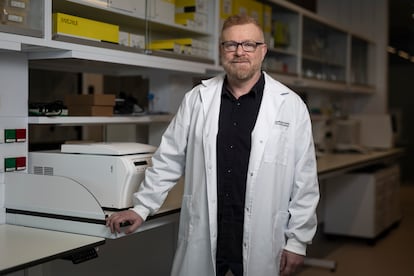
Q. One of the main lines of research at the CaixaResearch Institute will be the impact of the exposome on the immune system—that is, all the environmental factors to which we are exposed. What do you expect from this connection?
A. Each person is born into a specific microenvironment, and the immune system reacts to any stimulus. From diet, which alters the microbiota and modulates how lymphocytes are kept in check, to environmental pollutants: it is known that, in the face of pesticides and other contaminants, our immune system deteriorates or changes, to the point that it cannot defend us against tumors or certain types of inflammatory responses or infections.
Q. Is the immune system still a mystery to science?
A. Absolutely. We need to move beyond the original concept that the immune system is a defensive system [of the body]. It’s a system of homeostasis, or tissue balance. Its function is to maintain tissue physiology, not just to act when there are threats. It tries to modulate how our digestive system, our kidneys, our cardiovascular system, our brain all function.
Today we know that we are much more microbes than human cells: in our microbiota, we have tens of trillions of bacteria and fungi that are constantly keeping our activated immune system in check, because otherwise, what incentive would the immune system have to be constantly patrolling? By keeping it activated, we keep it alive. The immune system is circulating throughout our cells and tissues, trying to sculpt the balance of our organs. And that is its physiological function.
Immunologists began studying disease; now we want to study health, how the immune system contributes to health, not only because it defends us against microorganisms or tumors, but also because it modulates physiology, tissue architecture and repair, and cellular aging. The immune system performs countless tasks beyond simply patrolling.
Sign up for our weekly newsletter to get more English-language news coverage from EL PAÍS USA Edition









































