
The march against gentrification in Mexico brings political tension with the US to the streets
Mexican authorities are ignoring the latest provocation from the U.S. Department of Homeland Security, while urging the local population not to indulge in xenophobic attitudes
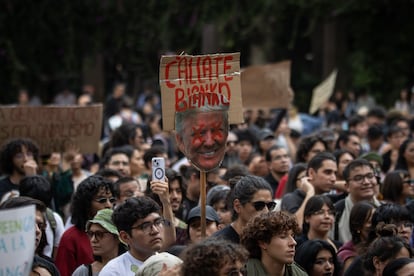
The political tug-of-war between the Mexican and U.S. governments has finally spilled onto the streets of Mexico City, where hundreds of youths gathered this Friday for a march against gentrification. The protest against a trend that is affecting urban centers and driving a large portion of the poor and local population out to the periphery was imbued with the added tensions that have been a hallmark of the bilateral relationship lately. The suspicious truce that both countries maintained last week ran into the anti-American slogans raised by some of the protesters, and which met with a swift response north of the Rio Grande. The Department of Homeland Security poured all its irony into its reply on its official X account: “If you are in the United States illegally and wish to join the next protest in Mexico City, use the CBP Home app to facilitate your departure,” a reference to the digital platform used by irregular migrants to prepare for self-deportation from the country.
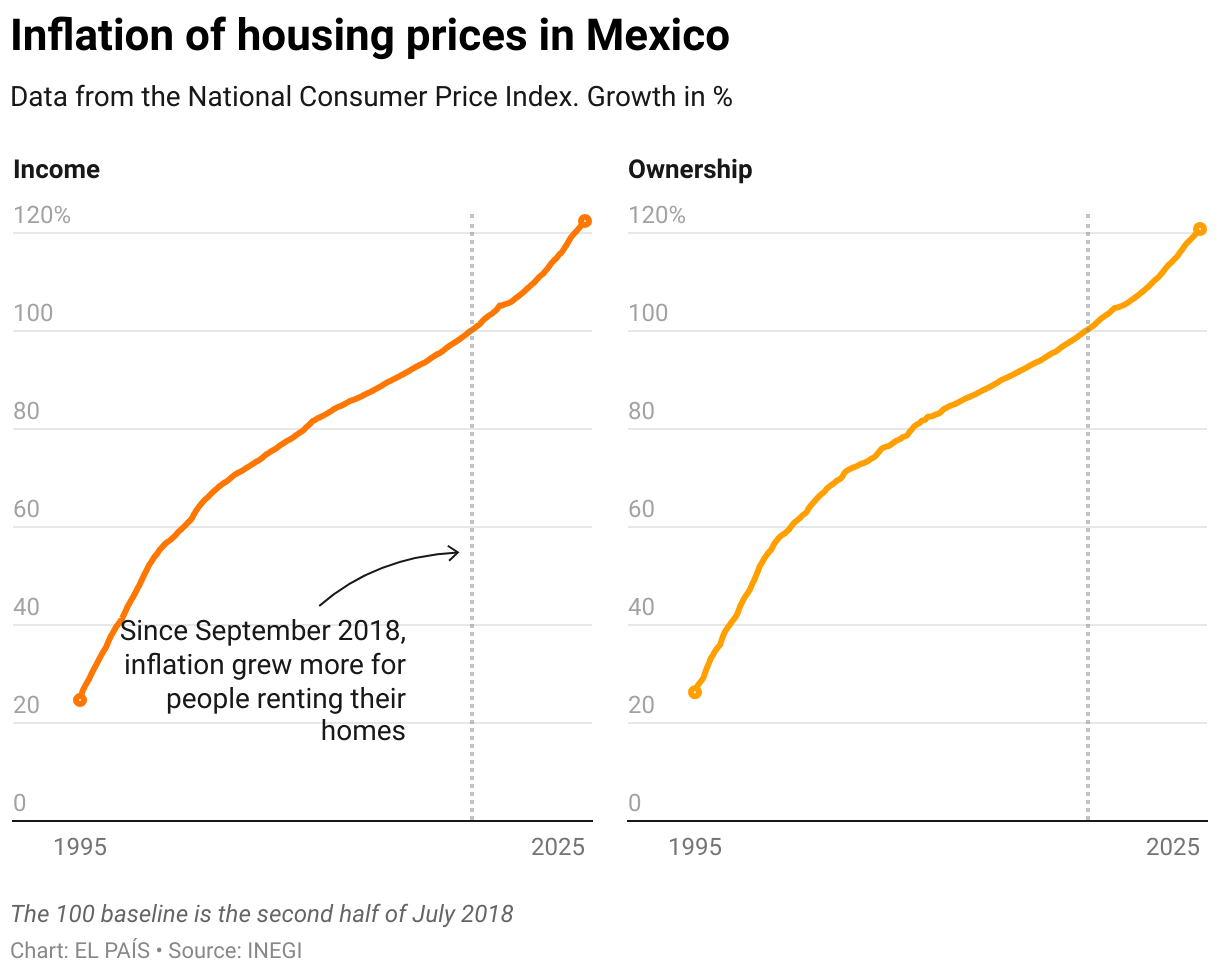
The provocation was met with the usual restraint from Mexican President Claudia Sheinbaum, who on Monday avoided addressing the DHS remark and instead focused on condemning the xenophobic slogans heard at the protest. “We are a country open to the world, supportive, fraternal. That’s how our people are, and that’s how we must be,” she said after criticizing the use of a “legitimate” demand like the fight against gentrification to call for the expulsion of other nationalities. The Mexico City government joined in the condemnation. “If we are saying that the attitude of the United States government toward our fellow Mexicans is not right, we cannot act the same way,” César Cravioto, the capital’s Secretary of Government, said by phone, describing the DHS social media message as “frivolous.”
This Monday, the local government convened an “informative meeting” for residents of the central neighborhoods of Colonia Condesa and Colonia Roma, known for their high density of American and European immigrants. “We want to begin creating these forums to find the best way for those who want to continue living in the city to do so, and for economic factors not to be the determining issue for who lives or doesn’t live in Mexico City,” the official stated.
Everything points to an attempt to quickly contain a conflict that could spill over into the social sphere before the political one, where diplomacy prevails over any hint of confrontation. “Trump’s strategy has always been to provoke, and once you respond, he subdues you. The Mexican government learned that very well during the Republican’s first term,” explains Pía Taracena, an international affairs expert at the Universidad Iberoamericana. Hence the “low profile” of the Mexican authorities, this expert points out, in the face of a narrative that is almost framed as a “war of words”: “These provocations sometimes seek to escalate things, and they can’t escalate any further.”
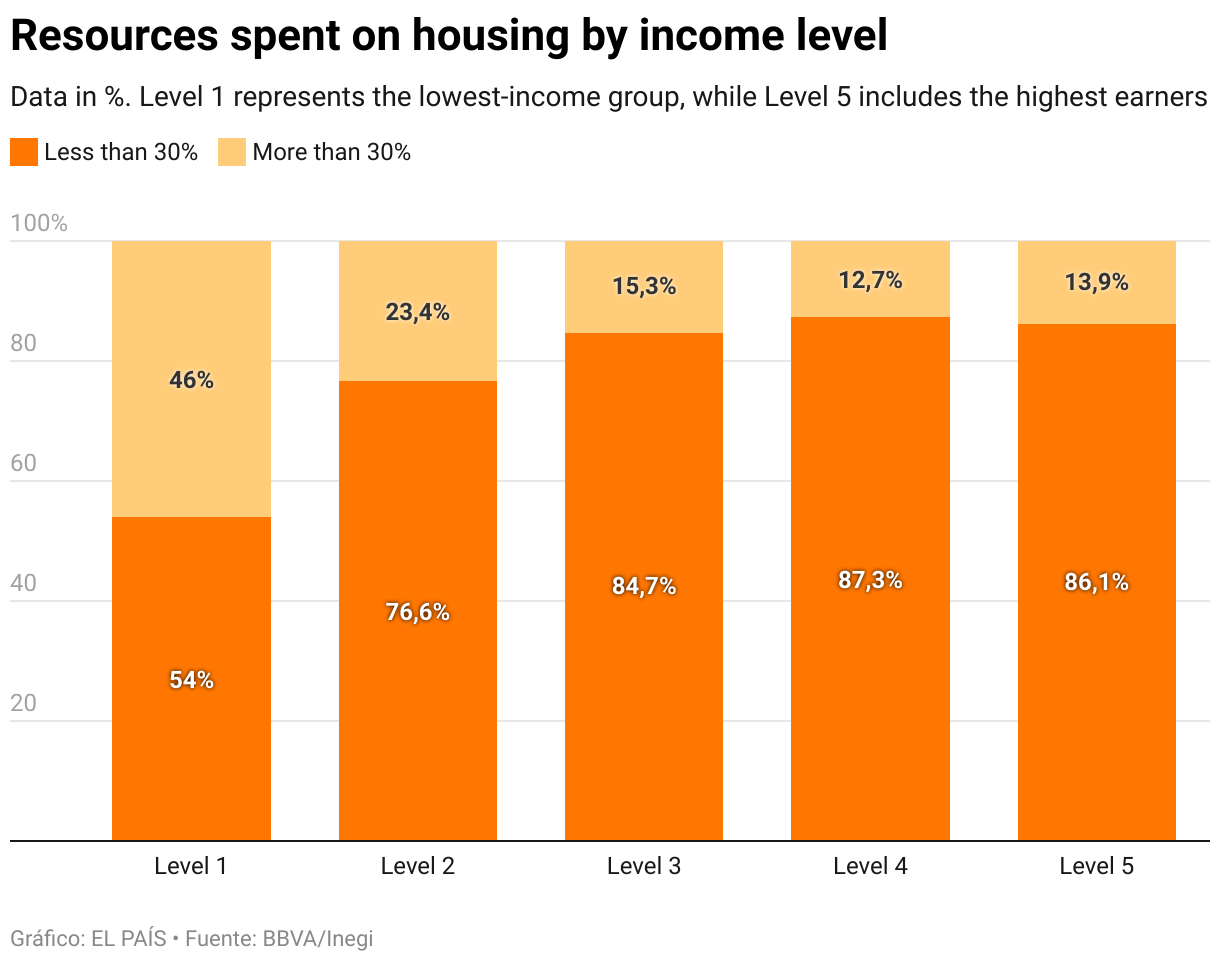
In the social arena, where diplomacy takes a backseat, the issue becomes a little more complicated. Tariffs, immigration raids, and verbal attacks from the U.S.president have taken their toll and are compounding the already pronounced social inequalities in the country. “The housing conflict permeates these other social conflicts between Mexicans and Americans, which means that, when they meet in everyday life, in public spaces, it also becomes a symbolic, political, or social issue,” says Carla Escoffié, a lawyer specializing in housing rights.
“We can’t understand the debate taking place in Mexico right now without understanding these two problems that are emerging separately, but are meeting and intertwining,” she says, giving the example of an encounter a Mexican acquaintance recounted with an American citizen wearing a MAGA (Make America Great Again) cap, the slogan under which Trump’s supporters rally: “These types of conflicts are very tense today.”
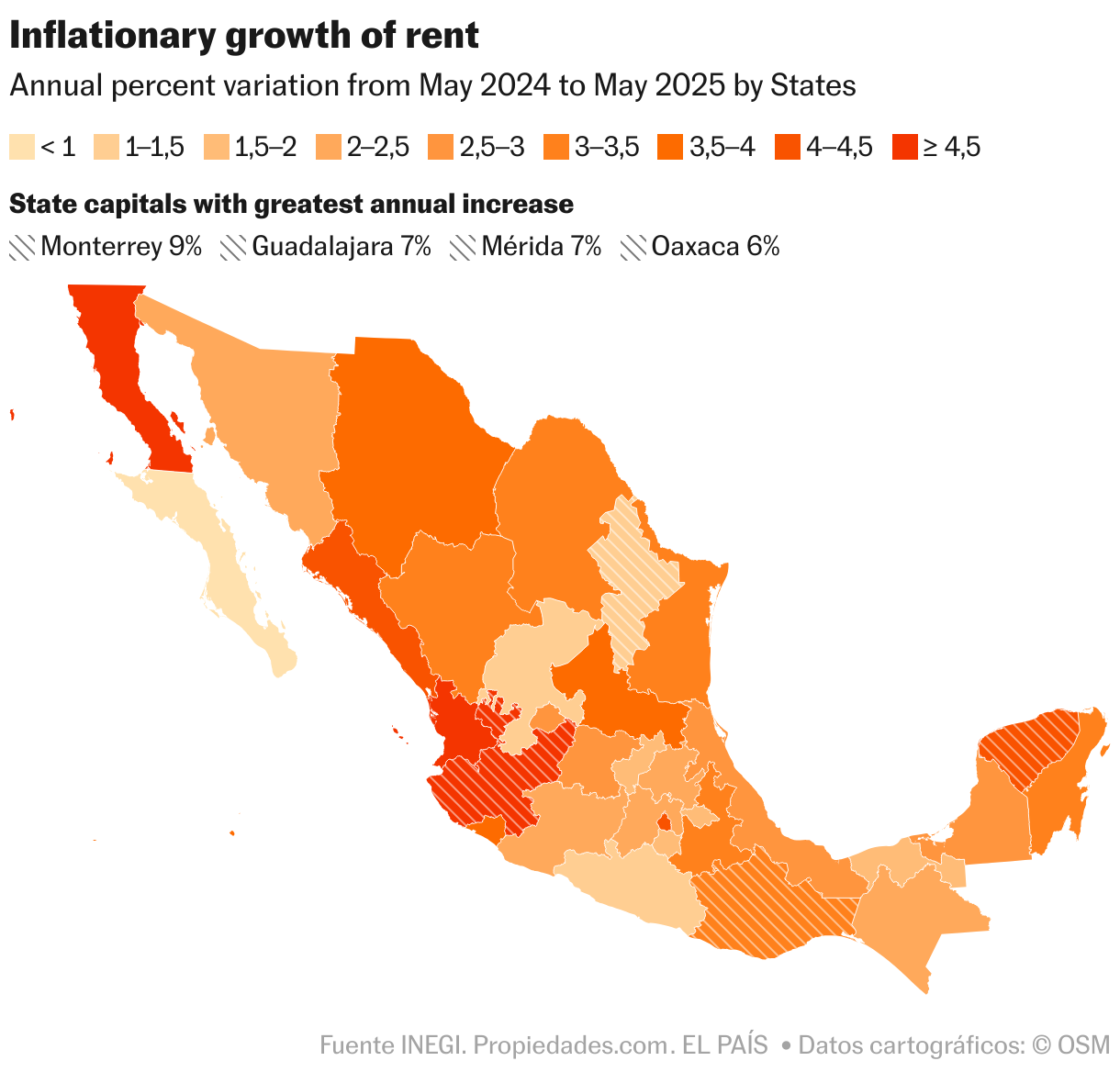
This adds a layer of complexity to a larger issue that doesn’t have an easy solution. The severe housing crisis Mexico is experiencing, which includes the problem of gentrification, takes on different forms in each city across the country. It doesn’t manifest itself the same way in Tijuana, explains Escoffié, where the proximity to the border is causing the dollarization of rents, as it does in Oaxaca, where the situation is closely tied to tourism.
In Monterrey, she adds, the discussion revolves around real estate speculation and other dynamics that have little to do with the so-called digital nomads, professionals with high purchasing power who earn their salaries in their home countries’ currencies but work from anywhere, such as Mexico City, where rents have steadily risen in recent years. It’s a phenomenon that affects large and small cities alike, says the lawyer: “Valladolid, a small city in Yucatán, is a very critical case. Airbnb is having a very strong impact.”
The challenge for the Mexican authorities is now multiple. On the one hand, they must prevent tensions now spilling onto the streets from bouncing back into the political sphere, a scenario that César Cravioto is ruling out. On the other hand, they will have to calm the growing social friction that threatens to shake the relative harmony between nationalities that has defined the capital to date. Finally, they will face the most important challenge: addressing a housing crisis that requires an urgent solution for many of the country’s urban residents, who cannot afford another year of rising rents. Friday’s demonstration also clearly illustrated this point: behind political tension there is almost always a dramatic social inequality.
Sign up for our weekly newsletter to get more English-language news coverage from EL PAÍS USA Edition









































