
US warns foreign ‘influencers’ ahead of World Cup: creating content on a tourist visa is illegal
New regulations from the Trump administration require these individuals to apply for a visa that allows them to work legally in the country


As the start of the World Cup draws near, the United States government has set its sights on foreign influencers. Immigration authorities have warned that individuals entering the country on a tourist visa may not use their stay to produce content intended to generate income on YouTube, TikTok, Facebook or other online platforms — a practice that for years has been common among digital creators worldwide.
The message arrives at a critical moment, just ahead of one of the planet’s biggest sporting events, which will draw hundreds of influencers eager to document the experience for millions of followers. It is unclear what impact these new restrictions announced by the Trump administration will have. To date it is unknown whether they have already been enforced.
“Coming to the United States with the sole purpose of creating content (as an influencer), thereby generating earnings from the United States while in the country, is considered work and requires the appropriate visa,” says a joint statement from U.S. Customs and Border Protection and the Department of Homeland Security sent to EL PAÍS. “People who enter the United States under a visitor program and receive income from a U.S. source would be violating the conditions of their admission status.”
The tourist visa (B-2) allows entry to the United States for leisure, vacations, family visits or medical treatment, but prohibits engaging in work activities or receiving income derived from work performed on U.S. soil. It also does not authorize staying beyond the time granted by the authorities. Violating these conditions can result in visa cancellation, deportation and restrictions on future travel to the country.
For content creators, one alternative is the O-1 visa, aimed at people with extraordinary ability in fields such as the arts, business, science or sports. Under certain conditions, this visa allows professional paid activities, including brand collaborations, promotional tours and the production of content for commercial purposes.
A government source told EL PAÍS that the Trump administration plans to tighten inspections at airports and border crossings for Mexican influencers and those from other countries who use a tourist visa to “work” and generate large earnings. The source, who requested anonymity because they were not authorized to speak publicly, said the goal is to “protect American jobs.”
“Their own videos give them away,” the source said, alluding to dozens of foreign creators who have even documented how they obtained a visa at a U.S. embassy and then traveled to various U.S. cities to film content for their YouTube channels and digital platforms.
This activity can generate millions in revenue and some influencers have audiences larger than traditional media, thanks to the rise of platforms like YouTube and TikTok. The most popular ones earn additional income through advertising, sponsorships, brand deals and by supporting political campaigns.
Meta, owner of Instagram and Facebook, as well as YouTube and TikTok, did not respond to requests for comment on the new measures.
The FIFA World Cup is shaping up to become one of the digital phenomena of the year and represents a golden opportunity for digital creators. Seventy-eight of the tournament’s 104 matches will be played in the United States, spread across venues such as Los Angeles, New York, Miami, Dallas, Houston, Seattle, Atlanta and San Francisco.
Influencers expelled
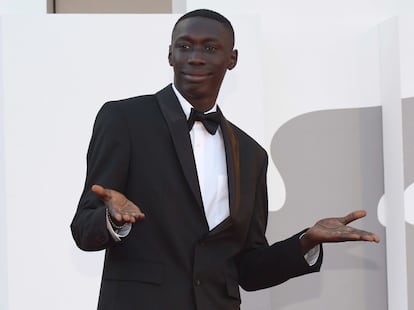
Alarms went off within the Trump administration, according to the source interviewed by this outlet, after the arrest of Khaby Lame, one of TikTok’s biggest stars and among the most followed digital creators in the world, with more than 160 million followers on the platform. The Senegalese-Italian influencer was arrested in Las Vegas, Nevada, in June 2025 for remaining in the U.S. after the authorized period of his visa had expired. He was later released and voluntarily left the country to avoid a formal deportation order, a penalty that would have barred him from returning for several years. Lame, 26, rose to global fame during the Covid pandemic thanks to his silent videos and characteristic facial expressions.
Another case that drew authorities’ attention was that of the Venezuelan national Leonel Moreno, known on social media as the “migrant influencer.” The young man came under government scrutiny after posting TikTok videos in which he allegedly encouraged illegal behavior, such as occupying abandoned homes and taking advantage of public assistance programs. Moreno had an open asylum case but stopped attending mandatory check-in appointments with U.S. Immigration and Customs Enforcement (ICE). “I didn’t cross the Rio Grande to work like a slave,” he said in one of his videos, while displaying $100 bills that he said came from government aid programs. Authorities deported him in March 2025.
For Vance Owen, an entertainment-industry lawyer in Los Angeles, these immigration measures still leave questions about their scope and enforcement. After all, what concerns the government is tax evasion, the attorney believes. “Technology moves faster than laws and perhaps we are seeing a situation in which tax laws, federal laws, are adapting to this new situation of influencers because they didn’t exist before the internet. It’s something new and some tax laws are 100 years old or older. We are seeing a clash between technology and old laws.”
Owen is worried about how these new regulations would be applied, since he considers the internet a free field. “How can a country put a rein on a business that is global? I have more questions than answers,” he says.
The lawyer thinks there may be exceptions if, for example, a tourist records a video that goes viral and then begins gaining millions of followers on social media. “That wouldn’t violate the law because they came in good faith, they weren’t an influencer and their fame arose out of nowhere,” he explains. “I think they’re trying to fit something old to something new and sometimes that shoe doesn’t fit that foot.”
Sign up for our weekly newsletter to get more English-language news coverage from EL PAÍS USA Edition









































