
Questions linger following the deaths of four Mexicans at an ICE facility in California
With the deaths of Alberto, Ismael, Gabriel and José Guadalupe, the Adelanto detention center now holds the record for the highest number of migrant deaths in ICE custody along with Krome in Miami


His skin was the first sign that something was wrong. Alberto Gutiérrez Reyes’s face changed color, turning a worrying yellow that alarmed the men who shared a cell with him at the Adelanto, California, immigrant detention center. Fatigue, loss of appetite, listlessness and isolation followed. The Mexican national, who had been in U.S. Immigration and Customs Enforcement (ICE) custody for only a few weeks, even stopped going out to the yard. “One day I told him: Beto, you’re not well. I’m going to take you out so we can call the medics,” recalls a migrant who lived with him. According to his account, Gutiérrez Reyes repeatedly asked to be seen by a doctor, but no one came. “When we finally took him out, his arm started to go numb and he fainted.” He was rushed to a nearby hospital. He never returned. Two days later, he was dead.
“He was completely neglected,” says this migrant, who agreed to be interviewed by EL PAÍS on condition of anonymity. He remembers trying to ease Gutiérrez Reyes’s pain with painkillers he bought with his own money in Adelanto. His death, he says, exposed a fear shared by many detainees. “It was shocking because you realize the care you receive there isn’t good. They limit your communication with your family so they won’t know you’re sick. If something happens to you, no one finds out.”
The list of Mexicans who have died in Adelanto does not end with Gutiérrez Reyes. During President Donald Trump’s second term, three other migrants from Mexico — Ismael Ayala Uribe, Gabriel García Avilés and José Guadalupe Ramos Solano — also died in ICE custody while detained at Adelanto. Their families maintain there were deficiencies in the medical care they received. Mexico’s Ministry of Foreign Affairs has demanded a thorough investigation into the circumstances surrounding these deaths. The U.S. government, by contrast, rejects claims of negligence.

A facility plagued by complaints
With the deaths of Alberto, Ismael, Gabriel and José Guadalupe, Adelanto has the highest number of migrant deaths in ICE custody during Trump’s second term. It shares that figure with Krome North in Miami, Florida, where four people have also died since January 2025, according to a tally by the University of California, Los Angeles (UCLA). Nationwide the problem is larger: a total of 54 people held in immigration detention centers have died since January 2025, a figure approaching a worrying historic record.
Without commenting specifically on the deaths of these four Mexicans in Adelanto, the Department of Homeland Security (DHS) says that despite an increase in the detained population at several ICE facilities, it has maintained medical care standards that are even “superior” to those in federal prisons. “For many undocumented immigrants, this is the best medical care they have ever received in their lives,” the agency said in a statement sent to EL PAÍS. The DHS also says that, as of May 29, the mortality rate in custody was 0.008%. “There has been no sudden increase in the number of deaths,” it emphasized.
GEO Group, the private company that operates Adelanto and several migrant detention facilities, has a long record of allegations including medical negligence, excessive use of force, overcrowding, sexual abuse, unsanitary conditions and inadequate food. Adelanto has been the focus of many of those accusations since it opened in 2011, and several were highlighted again in a ruling by a Los Angeles judge, who ordered ICE to guarantee detainees basic services such as access to potable water, adequate food and proper medical care.
Those deficiencies were also documented by inspectors from the California Attorney General’s office, who visited the facilities in July 2025, when they were receiving a wave of migrants arrested in immigration enforcement actions across Los Angeles. “Medical and custody staffing levels were insufficient to meet the needs of the large number of people held at Adelanto,” the report states. The document adds that migrants complained they “could not access requested medical appointments nor receive necessary and timely medical treatment, even in cases of medical emergency.”
Alberto Gutiérrez Reyes
Born in Veracruz, he earned a living building houses in Los Angeles and was 48 years old. Border Patrol agents arrested him on January 9 in Echo Park, a predominantly Hispanic Los Angeles neighborhood, as he was on his way to work. ICE says it placed him on its watch list because of an old conviction from 16 years earlier related to bodily injury against his spouse. The agency moved him to Adelanto on January 12.
The initial medical evaluation did not identify, according to the file released by the agency, conditions requiring urgent care: he had mild throat redness, cold symptoms, and slightly elevated blood pressure and glucose levels. His vital signs remained, for the most part, “within normal limits,” the report says.
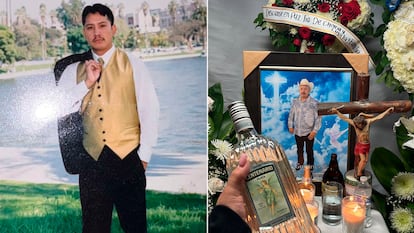
ICE also states that upon intake Gutiérrez Reyes did not report any serious illnesses. But those who lived with him describe a deterioration that, they say, became evident over several weeks. “He exercised with us, went to the yard, took his medicine, we shared food,” recalls the migrant who was with him in Adelanto. That man says that as the Mexican’s health worsened they repeatedly requested medical attention for him.
ICE’s file indicates that during February Gutiérrez Reyes reported nasal congestion, sore throat, fever, cough, body aches, dizziness and difficulty swallowing. The agency says he “received treatment” for those symptoms. Patricia Martínez, his widow, told Telemundo that her husband initially described discomfort that did not seem serious. “At first he was fine and a few days later he told me it was just a cough,” she said. “On the rainy Thursday they took him out to the yard for an hour to walk and exercise; when he came back in he felt ill.”
On February 25, his cellmates saw him in a condition that prompted them to seek help. They escorted him to the entrance of his unit to ask a GEO guard for assistance. There he lost consciousness. He was taken to Victor Valley Global Medical Center, where he was admitted for chest pain and difficulty breathing. Doctors performed a blood transfusion because of low hemoglobin levels. The next day he had an altered mental state and suffered a seizure. Lab tests revealed abnormalities in kidney function and blood clotting. According to ICE’s report, in the early hours of February 27 he suffered cardiac arrest and, after 41 minutes of struggling, he died.
“I don’t know what happened; to be told overnight that my husband had died is not fair,” Martínez lamented in the interview with the Spanish-language network. “What we want is justice, for him and for those who are still in there.” The widow says neither ICE nor GEO notified her directly of her husband’s death. It was the Mexican Consulate in San Bernardino that called to inform her of the bad news.
Inside Adelanto, the migrant who shared a cell with Gutiérrez Reyes says detainees did not receive an explanation either. They began to suspect when a guard came to the Mexican’s cell to collect his belongings and told them in a low voice: “He’s not coming back.”
José Guadalupe Ramos Solano
On the afternoon of March 25, 2026, a custody officer found José Guadalupe Ramos Solano, a 52-year-old Mexican, slumped on his bunk and unconscious, according to ICE’s file. It was the second serious medical emergency recorded in just over a month at the Adelanto detention center. An hour later Ramos Solano died at a nearby hospital. “They could have saved him,” his widow, Antonia Tovar, told Al Jazeera. “They killed him because instead of helping, they did nothing.”
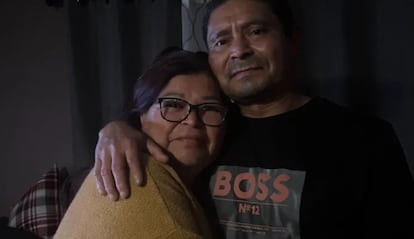
Minutes before his condition deteriorated, Ramos Solano had spoken to his wife by video call for the last time. A native of Guanajuato, he came to the United States in the mid-1990s. For nearly three decades he had no run-ins with the law until May 6, 2025, when police arrested him for drug possession and theft.
On February 23, 2026, ICE agents detained him during a raid and the next day he was transferred to Adelanto. The initial medical assessment identified several conditions: diabetes, hyperlipidemia and hypertension. However, medical staff determined his vital signs were “mostly normal,” except for high blood pressure and elevated glucose levels. “He received continuous medical attention while in custody, including daily medication to treat his conditions,” ICE said in a statement.
For his family, how his health deteriorated so quickly remains unclear. Just 29 days after arriving at the facility, Ramos Solano was found unconscious in his cell. Paramedics performed resuscitation maneuvers before transferring him to Victor Valley Global Medical Center, where an emergency physician intubated him and continued efforts to save his life. At 6.29 pm he was pronounced dead.
Tovar told Al Jazeera that her husband complained about the food and conditions inside the detention center. He said his clothes smelled bad and the food was insufficient. “He felt like an animal, like a dog,” she told the outlet. “Totally alone.”
Gabriel García Avilés
This 56-year-old Mexican spent just over six hours at the Adelanto detention center. He arrived in the early hours of October 15, 2025 and by 11.00 am had been taken to a medical facility after exhibiting tremors, difficulty walking and disorientation. Although a nurse initially recorded vital signs “within normal limits,” a later assessment found elevated blood pressure and pulse, plus symptoms consistent with alcohol withdrawal, according to ICE’s file.
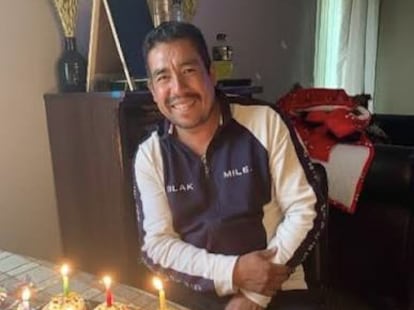
While under medical care at Victor Valley Global Medical Center, García Avilés “appeared confused and uncooperative, though with stable vital signs,” the report says. However, his condition worsened in the following days. Between October 22 and 23 he developed low blood pressure, altered mental status and changes in heart rhythm. He became unresponsive to stimuli.
Medical staff intubated him, began resuscitation maneuvers and moved him to intensive care. On the afternoon of October 23 his heart rate fell again. According to ICE, cardiac arrest caused by alcohol withdrawal ended this migrant’s life.
“We didn’t have the chance to speak to him again nor did we receive any call explaining why he had been taken to the hospital,” his daughter, Mariel García, wrote on a webpage she created to request help with funeral expenses. “My father was a very cheerful person and always kind to everyone. His absence has left a void in our hearts. There are no words to describe the pain we feel.”
Ismael Ayala Uribe
He arrived in California at age four and never returned to Mexico. He was 39. He made a living working at a car wash in Fountain Valley, where he worked for 15 years. On August 17, 2025, Border Patrol agents came to the business and arrested him.
Ayala Uribe had been protected under DACA, the program created by the Obama administration to prevent deportation of those who crossed the border as children. He obtained that status in 2012, but four years later the government denied his renewal. It is unclear why, although he had been arrested in 2016 for driving under the influence. Without DACA he faced another DUI charge in 2019, according to ICE.

He entered the Adelanto detention center on August 22, where he stayed for just under a month. The initial medical assessment detected no serious conditions, other than “slightly elevated blood pressure.” Everything changed on September 18 when he reported severe pain near his anus. He was prescribed painkillers, but they were not enough. Three days later the pain had spread to his left buttock and the epigastric region. He also had vomiting, sweating, tremors and nausea, while an electrocardiogram showed “irregular” results, according to the medical record released by ICE.
Ayala Uribe was taken to Victor Valley Global Hospital, where he was diagnosed with low blood pressure and an abscess in his left buttock. Doctors considered surgery to drain it. However, in the early hours of the following day he developed hypotension and tachycardia, suffered respiratory arrest and was moved to intensive care after resuscitation efforts. All efforts failed: a cardiac arrest ended his life, according to ICE.
But Ayala Uribe’s family rejects that account. They visited him every weekend in Adelanto and say they noticed a progressive decline in his health, according to a statement posted on GoFundMe. “Apparently he did not receive adequate medical treatment,” his relatives say. “That led to his death.”
Sign up for our weekly newsletter to get more English-language news coverage from EL PAÍS USA Edition









































