
National Guard shooting reignites the debate over immigration and troop deployment
President Trump has ordered stricter immigration policies and deployed 500 more soldiers to Washington
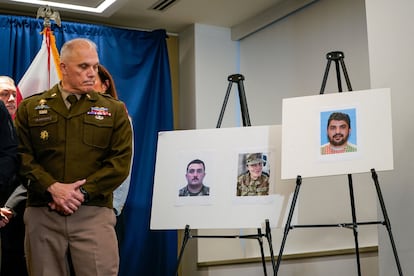

The shooting of two West Virginia National Guard members by an Afghan man in Washington, D.C., has reignited the debate over immigration policies and the role of the military deployed in some U.S. cities. Last Wednesday, shortly after 2:00 p.m., 29-year-old Rahmanullah Lakanwal opened fire on several National Guard members patrolling the streets of Washington. The attack occurred on the eve of Thanksgiving near the busy Farragut West Metro station, frequented by tourists and federal employees due to its proximity to the White House. Two National Guard soldiers were critically wounded: 20-year-old Sarah Beckstrom died last night after being shot twice, once in the chest and once in the head; her comrade, 24-year-old Andrew Wolfe, is still fighting for his life after undergoing surgery.
Lakanwal was immediately arrested by police after an exchange of gunfire in which he was wounded. He is an Afghan refugee who entered the United States on September 8, 2021, as part of a program to repatriate personnel who had worked with U.S. authorities during the war against the Taliban. According to State Department data, Operation Allies Welcome — approved during the administration of Democratic president Joe Biden — helped some 76,000 Afghans travel to the United States to avoid falling into the hands of the Taliban, who seized control of the country after the chaotic withdrawal of U.S. troops. Many of them worked with the CIA or the U.S. military on high-risk security missions or assisted diplomats as translators and interpreters.
Most had to undergo rigorous vetting by U.S. security agencies to rule out concerns about their backgrounds and confirm they had no ties to the Taliban. This process has been one of the main points of criticism from President Donald Trump and his allies, who have repeatedly insisted that it allowed Taliban fighters to slip through. Although efforts were made to provide all necessary security guarantees, the investigation carried out by Republicans in Congress reveals some shortcomings due to the speed of the admissions process.
Refugees who passed the vetting process were granted a permit allowing them to reside in the United States for two years with temporary status. More than 40% of those admitted to the program were eligible for Special Immigrant Visas (SIVs) because they took great risks to defend the United States or were relatives of those who did, the Department of Homeland Security explained to several U.S. media outlets on Thursday.
Upon arriving in the United States, Lakanwal settled in Bellingham, a small town north of Seattle, where he lived with his wife and five children. After his two-year temporary visa expired, he applied for permanent asylum in December 2024. His request was approved on April 23 of this year, three months after Trump took office, according to State Department sources consulted by CNN.
Trump and his team moved swiftly on Wednesday after learning the identity of the attacker who targeted the members of the National Guard. They quickly criticized the Biden administration for allowing Lakanwal into the country and used the case to push for tougher immigration policies. They ordered a suspension of the review of Afghan immigration procedures and a reassessment of the permits of those already living in the United States. According to AP, this raises the possibility that the settlement rights of Afghan allies who worked with U.S. forces could be restricted.
“[Lakanwal] was flown in by the Biden administration in September 2021 on those infamous flights that everybody was talking about,” Trump said Wednesday night in an extraordinary, pre-recorded address following the shooting in the nation’s capital. “Nobody knew who was coming in, nobody knew anything about it. His status was extended under legislation signed by President Biden, a disastrous president, the worst in the history of our country,” he added before a shocked nation on the eve of Thanksgiving, one of the most cherished holidays for families.
“This attack highlights the fundamental national security threat facing our nation. Twenty million unknown and unvetted foreigners from all over the world, from countries that you don’t want to even know about. No country can tolerate such a risk to our very survival,” the Republican president added during his speech, exaggerating the figures.
After the shooting, the government stopped processing all immigration applications from Afghan citizens “pending further review of security and vetting protocols,” U.S. Citizenship and Immigration Services (USCIS) said on X. “We must now reexamine every single alien who’s entered our country from Afghanistan under Biden and we must take all necessary measures to ensure the removal of any alien from any country who does not belong here or add benefit to our country,” Trump added in the video recorded Wednesday.
Some supporters of the repatriation process warned on Thursday of the risks now faced by those who escaped the Taliban. “I don’t want people to leverage this tragedy into a political ploy,” said Shawn VanDiver, president of #AfghanEvac. “We aren’t going to be tricked. One man’s lunatic behavior mustn’t be used to vilify a whole community, especially one that stood by us for so long,” he wrote on social media.
The immigration policy promoted by Trump is one of the most controversial issues at the start of his second term in the White House. He has ordered the U.S. Immigration and Customs Enforcement (ICE) to pursue and deport undocumented immigrants. These enforcement actions have sparked large protests in cities such as Los Angeles, Chicago, and Boston. So far this year, ICE has participated in more than 60,000 immigrant arrests. In addition, Trump has ordered a review of the cases of 200,000 refugees admitted during Biden’s term and is ending the Temporary Protected Status (TPS) granted to political refugees, affecting tens of thousands of people from Venezuela, South Sudan, Syria, Afghanistan, and other countries.
Trump also ordered a comprehensive review of green card holders from high-risk countries on Thursday, according to a post on X by Joseph Edlow, head of U.S. Citizenship and Immigration Services. “At the direction of @POTUS, I have directed a full scale, rigorous reexamination of every Green Card for every alien from every country of concern,” he wrote on the social network.
Trump went one step further in a post on his Truth Social platform on Thursday: “I will permanently pause migration from all Third World Countries to allow the U.S. system to fully recover, terminate all of the millions of Biden illegal admissions.”
The National Guard on the streets
The other controversial issue is the presence of National Guard troops on the streets of some U.S. cities, coincidentally all governed by Democrats.
In early August, Trump issued an order to deploy approximately 2,600 National Guard troops to Washington, D.C., in response to what he described as a “crime emergency.” The National Guard is a military force under the command of the governors of each of the 50 states. Its members are reservists — they are volunteers who work or study and are only deployed in specific situations, such as natural disasters or large-scale civil unrest.
Soldiers typically patrol in small groups. They walk the streets and public spaces, especially near subway stations. The National Guard’s role is to deter crime, and while its members cannot make arrests, they have assisted in immigration raids ordered by the White House.
Trump boasts that there is less crime on the streets of Washington, D.C. after the deployment of troops, contrary to official statistics from the city’s police department.
The deployment of these troops has drawn criticism from Democrats and numerous federal officials in the capital. Washington’s Attorney General Brian Schwalb sued the Trump administration over the deployment, according to the Associated Press. A federal judge ordered the troops to withdraw and the mission to be shut down. He has given the government until December 11 to comply with the order and to appeal the decision.
Some army officials have also expressed concern about the risk the deployment could pose to troops, according to the AP. It “presents an opportunity for criminals, violent extremists, issue motivated groups and lone actors to advance their interests, given the prominence of locality, and expected media coverage for the mission,” an internal memo states.
Despite criticism over the deployment of troops in cities, Trump ordered an additional 500 National Guard troops to Washington on Wednesday, following the shooting. The city’s mayor, Muriel Bowser, expressed her opposition to the deployment. “These young people should be at home in West Virginia with their families,” she stated.
In a video recorded on Wednesday, the Republican president also referred to the Somali community in Minnesota — where nearly 90,000 Somalis live, the largest such community in the country — even though they had nothing to do with the incident: “An example is Minnesota, where hundreds of thousands of Somalians are ripping off our country and ripping apart that once great state. Billions of dollars are lost and gangs of Somalians come from a country that doesn’t even have a government. No laws, no water, no military, no nothing, as their representatives in our country preach to us about our Constitution and how our country is no good.”
Trump’s words reflect the White House strategy of toughening immigration policies on any pretext, without sufficient justification.
Sign up for our weekly newsletter to get more English-language news coverage from EL PAÍS USA Edition









































