
How the Trumps seek to expand their real estate empire in Europe
Protests in Albania have put the spotlight on the megaprojects Jared Kushner is promoting in the country, but the US president’s family has racked up investments and controversies elsewhere on the continent
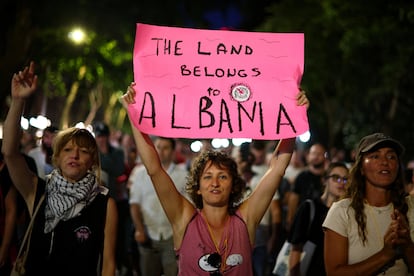
An uninhabited island and a peninsula with beaches of exceptional beauty. A paradisiacal, largely undeveloped tract of land. Cooperation from local authorities and billionaire investors. On paper, the strategy devised by Jared Kushner — Ivanka Trump’s husband — to develop two exclusive luxury destinations on the coast of Albania looked like a masterstroke. Thousands of Albanians, however, had other plans.
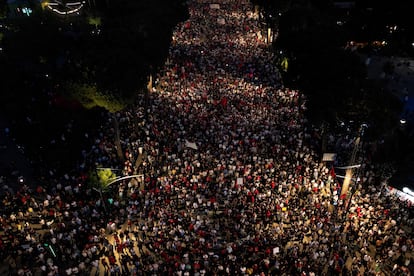
The flamingo revolution, as the protests that have confronted the son-in-law of the U.S. president and his partners over the past two weeks have come to be known, has cast doubt on the future of the luxury tourism developments tied to the Trump family — valued at more than €4 billion — and has increased pressure on Albanian Prime Minister Edi Rama.

All eyes are now on Albania, a small country of under three million people. But it has by no means been the only destination to attract the U.S. president’s circle. Since his return to the White House in January last year, the Trump Organization, the conglomerate behind the family empire, has announced more than a dozen high-end real estate projects worldwide. That already exceeds the number the company pursued during the entirety of the magnate’s first term (2017–2021).
In Europe alone, the newly announced investments — in Albania, Romania, Georgia and Serbia — amount to billions of euros. If completed, they would add to two luxury hotels in Scotland and another in Ireland that have been part of the family’s holdings since before Trump launched his political career in 2015. In addition, two towers in Turkey have an agreement to use the president’s brand, although they are neither owned nor developed by his family.
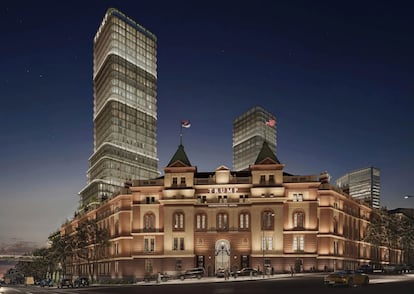
The Trumps, however, are not placing their bets on Paris, Rome or the Greek islands. The family’s latest projects, formally run by Eric and Donald Trump Jr. since their father returned to power, have been in places like Tbilisi, Bucharest, and Belgrade. Governments in the region expect that skyscrapers and exclusive resorts will trigger an avalanche of investment to jump-start their economies. “Albania needs super-luxury like the desert needs water,” Rama told the Financial Times last year.
After Trump’s first term in the White House, Kushner capitalized on the relationships he built as an adviser and the president’s right-hand man to secure deals for Affinity Partners, his investment fund founded in 2021 with Saudi and Qatari capital. The heirs’ sudden interest in destinations such as Eastern Europe and the Caucasus has raised concerns in the United States about possible conflicts of interest.
“You cannot be a diplomat and a financial pawn of the Saudi monarchy at the same time,” Democratic lawmaker Jamie Raskin criticized in April, two months after Kushner was named special envoy for peace in Gaza, where Trump has toyed with the idea of turning the Palestinian enclave into a luxury tourist resort.
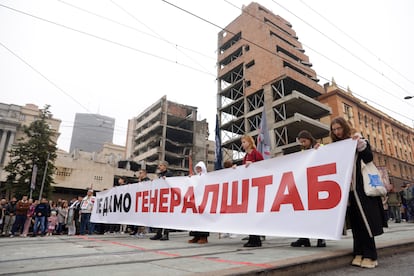
Across the Atlantic, the megaprojects have faced huge resistance from people denouncing corruption among local officials, irregularities in negotiations and irreversible environmental damage. The mass protests in Albania and Serbia — where Affinity Partners last year announced a €750 million investment to build a Trump Tower — are evidence of that.
“One morning we woke up and saw heavy machinery entering the area,” says Alexandër Trajçe, director of the PPNEA association, which has documented the installation of fences and construction camps on the Zvërnec peninsula, where more than 10,000 hotel rooms are planned on virtually untouched land. The mistreatment of protesters by the security guards guarding the area sparked Albania’s flamingo revolution, Trajçe, one of the organizers, says. “There was no public consultation, no environmental impact assessment and no normal procedures,” the activist states. “People have put aside political divisions and said ‘enough.’”
Strategy shift
After winning the 2024 election, the Republican sent mixed signals. On the one hand, he said he would step away from the Trump Organization to draw a line between politics and business. But he complained that his critics did not acknowledge the safeguards he put in place during his first presidency regarding the management of his companies.
From his second term, the conglomerate that manages the family empire launched a much more aggressive campaign and has closed a dozen foreign deals, among them the construction of Trump Tower in Tbilisi, Georgia’s capital, announced this year. It is a 70-story skyscraper that aims to be the country’s tallest building, with an estimated investment of about €1.7 billion, although only a fraction of the capital comes from the president’s family.
The effort appears to be part of a broader strategy. In April last year, Donald Trump Jr. visited Hungary, Bulgaria and Romania to cultivate contacts and promote U.S. business investment on the continent, despite holding no official position.
Trump’s presidency has changed the rules of the international political game, and he boasts of running his country as if he were the CEO of a large corporation. As criticism grows over his habit of mixing business and politics — in cases such as Venezuela guardianship and peace talks with Iran — the president and his family have rejected any suggestion of conflicts of interest or corruption.
Dominik Massicotte of the Centre for International Security and Economic Strategy in London notes that one possible motive behind the Trumps’ interest is that tourism is growing in the region. He also points out that regulation is often less strict and labor cheaper than in the West. At a crossroads between Europe, Russia, and the Middle East, the Caucasus has also sparked major geopolitical interest among powers. “The Trump Organization is positioning itself in a region that could become increasingly strategically and economically important over the next decade,” he says by email.
The researcher adds that the Trumps have built powerful contacts that have opened doors for them. One is Bidzina Ivanishvili, who was prime minister when the magnate’s company announced a 2012 project in the city of Batumi that never materialized. Ivanishvili is the founder of Georgian Dream, the ruling party, and the country’s richest businessman. In 2024, at the end of the Joe Biden administration, the United States imposed sanctions on Ivanishvili for his authoritarian practices in power and ties to Russia.
In return, Georgia projects the image that it is “open for business,” Massicotte says. This is not an agreement with Washington but with the U.S. president’s family company. That ambiguity offers advantages for a country traditionally within Russia’s sphere of influence: it provides a certain “validation” that it is an attractive destination for Western investors without risking its relationship with Moscow, the specialist notes.
From Bucharest to Transylvania
The story appears to be repeating itself, albeit with some nuances, elsewhere on the continent. The Trump Organization announced in July last year the launch of Trump Tower Bucharest. According to SDC Imobiliare, its Romanian partner, the idea is to replicate the model of Chicago’s Trump Tower, a 92-story skyscraper.
The tower planned for Romania’s capital would be considerably more modest, around 30 floors, although its backers hope to make it one of the most exclusive residential complexes in Eastern Europe. The initiative is still in development and, for the moment, the size of the investment has not been disclosed. This newspaper contacted the Romanian developer, without receiving a response.
It is also not the first time Trump or his circle have tried to invest in the country. In 1994, five years after the communist regime fell, the New York magnate offered $1.75 billion to buy the current Palace of the Parliament, the world’s second-largest administrative building after the Pentagon. Romanian authorities ultimately rejected the offer. A decade later, Trump returned with plans to buy land in Bucharest to build a tall tower. The financial crisis, however, thwarted that project.
In March, The New York Times revealed that the Trump Organization has an ambitious project in Cluj-Napoca, a city of about 400,000 people at the foothills of the Carpathians. Although it has not been officially presented, the city council has already approved an initial phase of the development and Bloomberg reports the investment is about $500 million. The complex would include a tower and more than 10,000 homes as part of a project known as Transylvania Smart City, promoted by the local authorities themselves.
“It doesn’t matter if the company is associated with Trump, the project complies with current law,” says Iulia Persa, spokeswoman for the local government, insisting everything is at a very early stage. The development is not without controversy because it is near a medical waste landfill and a Roma community settlement, which has prompted criticism of the city council as the project’s promoter rather than much focus on the U.S. president’s family’s involvement.
Unlike in other countries, neither initiative has generated significant controversy. One reason is that 51% of Romanians have a favorable view of the U.S. president, according to a Gallup poll in February.
Present and future
In Serbia, protests and a legal scandal involving a government minister who authorized the project prompted Kushner to back away from his Belgrade plans last year. In Albania, protesters of the flamingo revolution also hope to halt Trump family-linked projects in the country’s protected areas and force the resignations of Rama and opposition leader and former prime minister Sali Berisha.
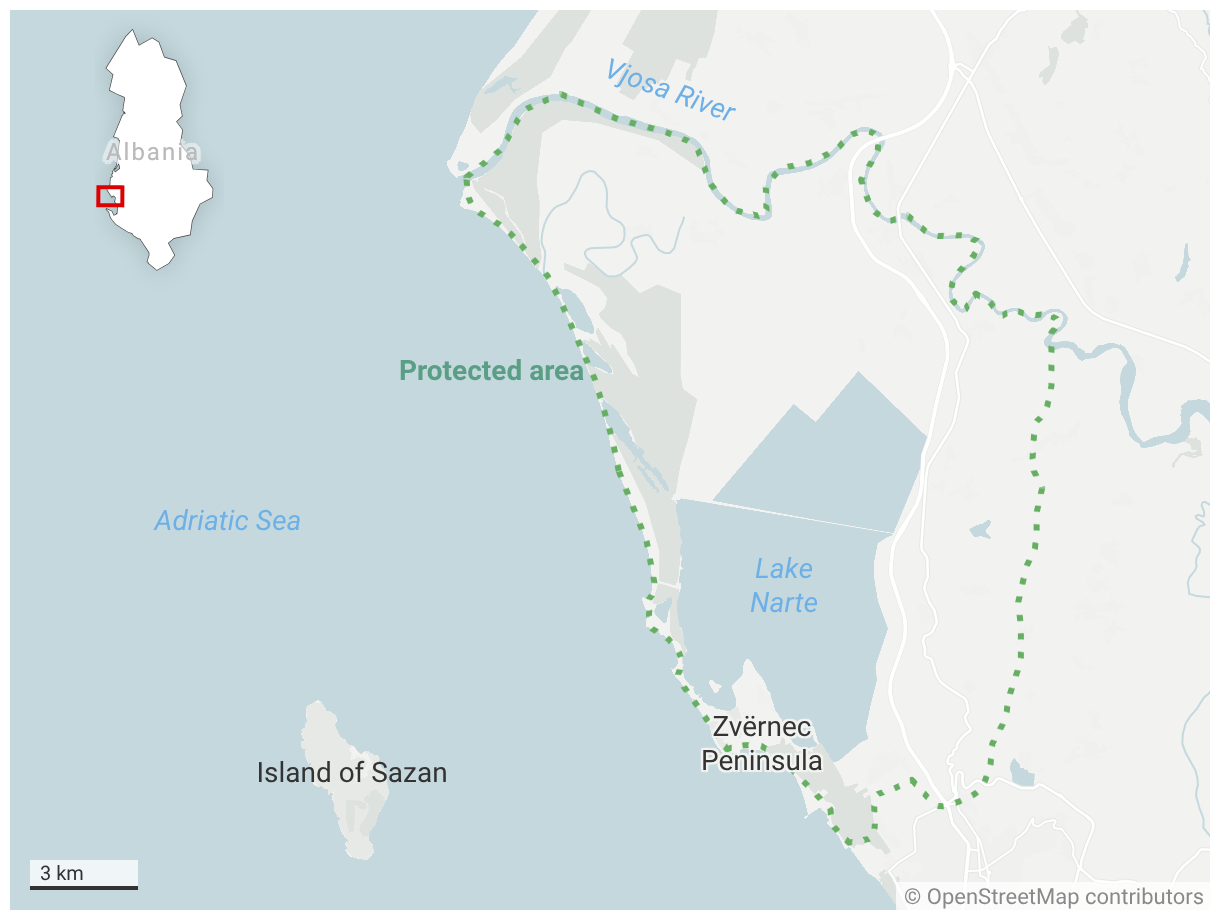
“It’s sad that the rich think they can buy every beautiful place they see,” says 26-year-old protester Denisa Kasa as she walks the Zvërnec peninsula, where Kushner’s project threatens about 280 species, including the flamingos that gave the protests their name. The PPNEA activist says the most important thing now is not whether Trump is behind it but ensuring this and similar projects do not come to fruition. After being accused by the Albanian government of being “anti-American” and promoted by “foreign agents,” many responded by waving U.S. flags at demonstrations.
And although the focus of the protests has shifted toward local politics at the expense of environmental slogans, environmentalists have already managed to halt construction work in the wetlands of that protected area, one of southern Europe’s last wild ecosystems. “We are fighting for the future, but also for the present and the past, so they don’t take away the lands where we live,” Kasa says. While Trump’s circle maneuvers to conquer Eastern Europe, the flamingo revolution prepares to take the streets again. The next chapter is yet to be written.
Sign up for our weekly newsletter to get more English-language news coverage from EL PAÍS USA Edition









































