
USSR 2.0, Trump’s deals, and other power struggles in the Caucasus
Armenia seeks to distance itself from Russian dominance in a regional context where multiple actors are vying to assert their influence

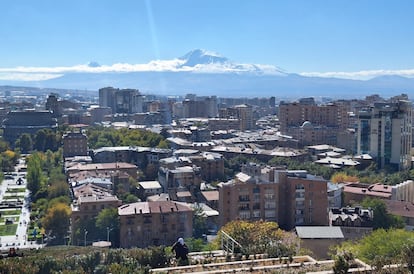
From the top of the hill at the Cascades complex in Yerevan, on a crisp autumn morning, the gaze is hypnotized by the majestic beauty of Mount Ararat, rising to the south of the Armenian capital, in Turkish territory. The echo of millennia-old myths reinforces its magnetism.
But the view also encompasses key elements of the current power dynamics in the Caucasus: Russia with its imperial ambitions, the United States with President Trump’s thirst for deals, the European Union with its hopes and doubts about enlargement, Turkey with its aspirations as a regional power, and China with its connectivity interests. One can also perceive the signs of the turbulent path of Armenians seeking democracy and looking toward Europe, in a world changing at a dizzying pace amid immense uncertainty.
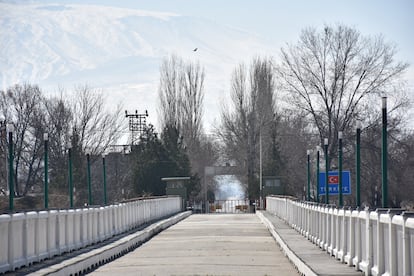
At the foot of the extraordinary mountain, in the valley running along its eastern flank, lies one of the world’s most complex border crossings: within a tiny area, the territories of Turkey, Iran, Azerbaijan, and Armenia meet. Azerbaijan and Armenia have been embroiled for decades in a bitter conflict that now seems to be moving toward resolution.
It is a nerve center where Christianity and Islam converge, and where there is significant geoeconomic interest in connecting Europe with Central Asia (with all its energy resources) or China (with its extraordinary commercial potential) without passing through Russia or Iran, two states that, for different reasons, inspire little trust.
Geopolitical tension in the Caucasus region
Territorial conflicts and key infrastructure in the area
That tangled web of border tensions speaks volumes. Despite the tentative thaw, Armenia’s borders with Turkey and Azerbaijan remain closed. The first frontier is patrolled by Armenian forces as well as troops from Russia, a former imperial power in decline that maintains forces in the Caucasus country and resists letting it go. On the border with Azerbaijan, however, a civilian EU mission conducts patrols.
But it was the United States that helped mediate the conflict between Armenia and Azerbaijan after Azerbaijan’s successful seizure of Nagorno-Karabakh, an enclave within Azerbaijani territory previously controlled by Armenians. It was able to achieve this through hard power, with an agreement brokered by President Donald Trump at the White House in August. The pact represents an extraordinary boost to Washington’s influence in the region, with the potential to cement its role as peacemaker through the development of a lucrative economic corridor — transport, pipelines, cabling — stretching further east. To flatter the U.S. president, it has been dubbed TRIPP: the Trump International Peace and Prosperity Path.
Armenia as a key link between Europe and Central Asia





Along the geographic axis between the Cascades hill in Yerevan and Mount Ararat lies an airbase where Russian military forces still retain the right to deploy troops. As a symbol of their persistent yet waning presence, local reports recount that one August night, near the base, an old MiG-29 — perhaps being transported for retirement — slid off its trailer and crashed into a utility pole. Local residents filmed and shared videos on social media of the astonishing and grotesque sight of a MiG sliding into the streets of Yerevan. Moscow has lost its former power here, having to redeploy forces to Ukraine — but it has not disappeared.
The view from the hill offers further clues: the construction cranes dotting Yerevan’s skyline. They are a sign of a rapidly growing economy (around 5% GDP growth this year, and 6% in 2024) and of other factors, likely including the rising real estate demand driven by two waves of migration: one, Russians fleeing Russia after Vladimir Putin launched the large-scale invasion of Ukraine; the other, citizens of Nagorno-Karabakh fleeing en masse when, in 2023, Azerbaijan skillfully took advantage of a favorable international context to reclaim the Armenian enclave within its territory. Russia, traditionally Armenia’s protector, was distracted by Ukraine and displeased with the Armenian government —which emerged from the 2018 revolution — as it seeks to move away from Moscow’s sphere of influence.
These are just a few glimpses of the complex trajectory of Armenia and the Caucasus. Below are some key insights gathered during a study trip funded by the Polish NGO Impact — which focuses on Central and Eastern Europe — during which conversations were held with about 15 sources. These included the Armenian foreign minister, the head of the National Security Council, the president of the National Assembly, the special envoy for relations with Turkey, other Armenian politicians, the EU ambassador, the leader of the European patrol mission, and representatives of civil society. The conversations were conducted under confidentiality to allow for a more candid exchange in a highly sensitive context. This trip follows a previous one to Georgia last year.
Russia
The Armenian government is pursuing a policy of deepening relations with the EU and the United States while cautiously distancing itself from Moscow. The awareness of Russia’s lingering leverage is matched by the perception that most Armenians want to move away from the Kremlin. In 2013, 83% of Armenians considered Russia their country’s main ally, according to the Caucasus Barometer; by 2024, that figure had fallen to 14%.
Russia’s assets are numerous. Although significantly reduced due to the demands of the war in Ukraine, the Kremlin still maintains a military presence in Armenia; it holds a key avenue of influence through the pro-Russian regime in Georgia, a crucial trade transit country for Armenia, given the ongoing closure of borders with Azerbaijan and Turkey (and it has already begun issuing warnings in this regard); it has valuable allies within Armenia, such as the local Church, opposition parties, and oligarchs; it controls energy instruments, for example operating Armenia’s only nuclear plant, as well as commercial ones, with trade still vital for the country; it also has leverage over the large Armenian diaspora in Russia; and, of course, it possesses a hybrid warfare arsenal, ranging from sabotage to electoral interference.
Thus, Armenia is taking steps to distance itself — such as freezing its participation in the Collective Security Treaty Organization (dominated by Russia), ending Russian border-control operations at Yerevan airport, and diversifying arms imports — but doing so with great caution.
There is a widespread sense in Armenia that everything depends on how the conflict in Ukraine unfolds, which one source described as Russia’s main attempt to create a “USSR 2.0,” to rebuild a Russian empire. The perception is that, for now, Russia is overstretched and cannot focus on other areas, but if it achieves its objectives, it would return to impose its dominance. Playtime would be over, and the USSR 2.0 goal would be pushed forward. Every country in the region that has sought a democratic, independent path with closer ties to the West has faced war: Georgia, Ukraine, and Armenia, in the form of Russia’s tacit consent to Azerbaijan’s offensive in Nagorno-Karabakh. Armenia’s situation, however, is different because it does not border Russia and does not aspire to join NATO.
The image of the MiG embedded in the streets of Yerevan is a symbol of Russia’s diminished presence in the country. Armenians joke about the scarcity of Russian forces, saying that the guards at the airbase perimeter are pilots on their days off. Yet the bear still has claws, and its astonishing ability to consolidate a brutal pro-Russian authoritarian regime in Georgia — a country with strong European ambitions — is a lesson few underestimate.
United States
Washington has made a significant leap in its regional influence, relying on two key pillars of its current foreign policy: President Trump’s peacemaking drive — perhaps motivated by the dream of winning the Nobel Peace Prize — and his interest in opening the way for business, whether from his own circle or more broadly from American companies. The U.S. intervention to establish a path toward peace between Armenia and Azerbaijan is repeatedly described as decisive by the sources consulted. There was undoubtedly a prior, independent diplomatic effort, and Trump’s own understanding of the matter is questionable — he has repeatedly confused Armenia with Albania — but the push from the White House has been crucial.
The process, like many others, is far from complete. Nevertheless, some results are already tangible. U.S. oil company Exxon recently signed two energy agreements with Azerbaijani authorities, one of them in August in Washington, coinciding with President Ilham Aliyev’s visit for the White House peace agreement. Furthermore, U.S. companies are expected to play a key role in developing TRIPP, a transport, energy, and cabling corridor passing through Armenia that will connect Azerbaijan with its enclave within Armenian territory, Nakhchivan. This corridor will be a key component of a new connectivity network in the region.
European Union
Many in the Caucasus long for EU integration. According to a recent EU survey, up to 74% of Georgians would vote in favor of joining, yet the country is moving in the opposite direction. Under Bidzina Ivanishvili, Georgia is slipping toward authoritarianism — with severe repression of the opposition — and into Russia’s orbit. In Armenia, pro-European sentiment is also strong, and in this case the government in power is allowing steps toward closer ties.
These efforts, however, face enormous obstacles. First, there is fatigue, internal doubts, and institutional dilemmas regarding further enlargement. Next, there is Armenia’s difficult path to meet the required standards. And also relevant is the fact that its neighboring country is moving in the opposite direction.
The most viable mechanism for rapprochement is visa liberalization. Both sides are working on it. A positive signal on this before the elections scheduled for next year would be a huge boost for the current government. But it is doubtful that the technical work could be completed by then. Another consideration is whether they might use it to send a political signal regardless.
A significant factor, of course, is Europe’s interest in Azerbaijani gas, which accounted for 4.3% of total imports in 2024. While a limited share, it is of great importance, particularly for certain countries.
Geopolitically, the EU possesses undeniable soft power and plays important roles in Armenia, through funding, support against hybrid warfare campaigns, and the aforementioned border monitoring mission with Azerbaijan. Yet, it is a toothless projection. There is no “European MiG” here, not even enough power to crash into urban infrastructure, nor the leverage to force two countries to sit down and sign an agreement.
Despite many efforts, the strategic corridor will be developed more by the United States than the EU. Former European Council president Charles Michel worked on the matter for years, and, as one source put it, Azerbaijan simply said “thank you” and nothing more. Then Trump arrived, and they sat down to sign. Similarly, despite the many efforts and strong pro-European sentiment among citizens, Putin has managed to secure Georgia on his side through skillful hybrid tactics.
Turkey
Ankara is experiencing a tangible increase in its regional influence, gradually consolidating its position as a middle power, with a near-nonaligned character despite formally being part of NATO. Several recent events have worked in Turkey’s favor, such as the fall of Syrian leader Bashar al-Assad — and the resulting weakening of Russia and Iran — the pacification of the Kurdish PKK conflict, and, without a doubt, Azerbaijan’s victory in Nagorno-Karabakh, as it shares very strong ties with the country.
Precisely that bond, along with several Azerbaijani instruments of influence, has so far prevented Turkey from reopening its border with Armenia, a key goal for Yerevan as it would break its near isolation, eliminate any formal rationale for the continued presence of Russian forces, and create a much stronger connection with Europe. Yet Ankara is hesitating.
Although smaller than Turkey, Azerbaijan wields several levers of pressure. These include emotional ones, linked to cultural, linguistic, and religious ties; economic factors, from energy exports to Azerbaijani capital investments; and political dynamics, from the relationships between leaders to the significant role of the Azerbaijani community in Turkey. It is worth noting that Turkey’s Recep Tayyip Erdoğan won the 2023 presidential election in the second round by a narrow margin. Crucially, the candidate who came third in the first round, with 5% of the vote, was of Azerbaijani origin and encouraged his supporters to vote for Erdoğan in the runoff.
China
Beijing does not play as prominent a role in Armenia as other powers, but it is not passively observing developments in the Caucasus. Its involvement is evident in the project to develop a deep-water port in the Georgian town of Anaklia and in the signing of a significant strategic cooperation memorandum with Azerbaijan, which some interlocutors describe as the most independent actor in the region.
Azerbaijan is undoubtedly a rising power, as recently illustrated by Putin’s strikingly formal apology — very unusual for him — to President Aliyev over the downing of an Azerbaijani commercial plane. Putin launched into a long apology with notable body language, while Aliyev remained impassive. This was followed recently by Baku’s angry reaction to damage caused to the Azerbaijani embassy in Kyiv by a Russian missile.
China, for its part, is operating quietly behind the scenes. As one Armenian source noted, Beijing approaches politics differently: when it acts, at first it is barely noticeable, and only later do you begin to see its influence.
Above all these maneuvers by major and middle powers rises the magnificent Mount Ararat.
Sign up for our weekly newsletter to get more English-language news coverage from EL PAÍS USA Edition









































