
NASA’s Lori Glaze: ‘Artemis 2 is a test flight. Many critical systems will be tested for the first time’
One of the top officials at the space agency explains to EL PAÍS the major milestones of the first manned mission to the Moon in more than 50 years, and the possibilities of aborting it if there are serious problems
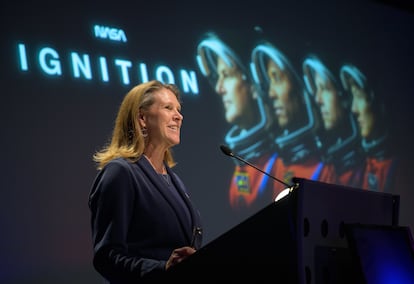

Lori Glaze is a physicist, an expert in planetary volcanology, and acting associate administrator at NASA. She speaks to EL PAÍS at the Kennedy Space Center, a few steps from the iconic hangar where its rockets are built and repaired. To the right, about five kilometers away, the SLS — the most powerful rocket in history — points toward the sky. It is scheduled to launch on Wednesday with the four astronauts of the Artemis 2 mission, the first crewed trip to the Moon in more than 50 years.
Question. What’s going through your mind in these moments before the launch?
Answer. I think of the thousands of people who have worked on this mission, on this rocket, and on this spacecraft. We are all ready to send the four crew members on their first orbit around the Moon. The countdown began this Monday. The teams will make the final preparations on the launch pad. We are ready.
Q. The astronauts on the mission are in quarantine. Are you allowed to visit them?
A.Yes. With all precautions and masks, of course. Right now they’re in a building near the Kennedy Space Center headquarters, where they have all the space they need to live these days. There’s a team of assistants with them, also in quarantine, making sure they have everything they need, from food to the opportunity to exercise and medical assistance if necessary.
Q. This is the first time many critical systems are being tested. Isn’t that risky?
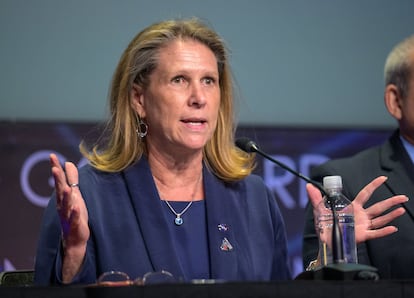
A. Remember, this is a test flight. Many systems will be tested for the first time. The most critical is the Environmental Control and Life Support System, which keeps the crew safe and sound during this 10-day journey. We’ve done a lot of testing to make sure it will work. There are redundant systems in case the primary one fails. And we also have plenty of options to send them back home if needed. During the first 24 hours after launch, we’ll be testing all of these systems while the Orion capsule orbits the Earth, which allows us to bring them back if something goes wrong.
Q. Are there options to abort the mission after the engines boost at full power to take them to the Moon?
A. Once we’ve done that, called the translunar injection, we can still turn around, fire the engines, and return to Earth if necessary. That possibility exists for the first 24 hours after the injection. After that day, the safest thing for the crew is to continue the journey to the Moon and return after turning around, unless there’s something extremely critical.
Q. How does the Artemis 2 mission connect with the colonization of the Moon?
A. Our goal is to have the capability to send humans to the Moon regularly, at least twice a year, perhaps more. In the next decade, we expect to have several habitable bases on the lunar surface where astronauts can stay. It will be as commonplace as the current trips to the International Space Station [the only permanently inhabited outpost in space, orbiting the Earth at an altitude of about 400 kilometers].
Q. That project depends on companies like SpaceX and Blue Origin. Are they ready to make it a reality?
A. SpaceX has built its own launch pad for Starship from here. Both SpaceX and Blue Origin are working diligently on the development of their lunar landers. They have especially accelerated their efforts in recent months to achieve a lunar landing in 2028. We have also announced a new mission in 2027 that will allow us to test certain components of the landers without having to go to the Moon, such as approach maneuvers and even docking with their spacecraft and ours in Earth orbit.
Q. The Apollo 8 mission of 1968, the previous mission to orbit the Moon, took place during the worst year of the Vietnam War. Artemis 2 is happening now with the United States embroiled in war with Iran. What would you like this mission to contribute?
A. This mission is a beacon of hope for the entire world. It should show that the United States and our international partners can do amazing things if we work together. I hope it has nothing to do with war. Our alliances are strong, and we’ve been preparing for this for a long time.
Q. Is NASA’s plan still to have a woman walk on the Moon for the first time?
A. We’re going to choose the best crew, but if you look at our astronaut corps, you’ll see there are many options to choose from.
Q. Will President Donald Trump be attending the launch?
A. I don’t know. Of course, we invited him.
Sign up for our weekly newsletter to get more English-language news coverage from EL PAÍS USA Edition









































