
Why oil has been at the center of Venezuela-US conflicts for decades
The relationship between the two countries is once again marked by the energy wealth of the Caribbean nation
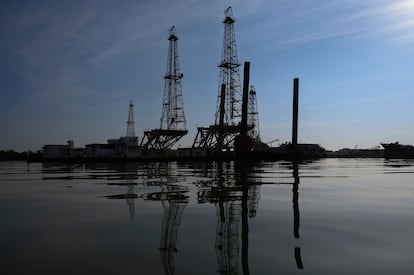

The strikes ordered by U.S. President Donald Trump on Caracas and the capture of Nicolás Maduro have marked a turning point in Venezuela’s contemporary history, which has been defined by its oil wealth and relationship — sometimes symbiotic, often strained — with the United States. With Venezuela’s oil reserves taking center stage, Trump has promised to revive the country’s ailing hydrocarbon industry. He plans to leverage massive U.S. investments, opening a new front in the political battle in Venezuela, which has now entered an unprecedented phase.
True to his transactional style, Trump has said that the costs of the military operation against Maduro and his wife, Cilia Flores, will be covered by the proceeds from the South American country’s vast oil reserves, which account for 17% of the world’s total, according to data from the Organization of the Petroleum Exporting Countries (OPEC). Trump said that Washington will control Venezuela until there is an orderly transition, while outlining plans for the country’s economic recovery using Venezuelan raw materials.
In a press conference from his Mar-a-Lago residence about the attack, Trump said: “We’re going to have our very large United States oil companies — the biggest anywhere in the world — go in, spend billions of dollars, fix the badly broken infrastructure, the oil infrastructure.”
“Oil is the single most powerful variable that has drawn Venezuela into virtuous or vicious cycles,” says José Manuel Puentes, an economist and professor at IESA and associate professor at the IE Business School in Madrid, speaking from Caracas. “And yet, even though we know that in the medium term there will be a perfect substitute, oil continues to generate extraordinary potential. Saudi Arabia is soaring to 20,000 feet with the 10 million barrels it is producing, while Venezuela has more reserves than Saudi Arabia. Reactivating production, of course, with the help of foreign capital and international companies like Chevron, Repsol, Shell, or BP, could be the driving force behind the Venezuelan economy.”
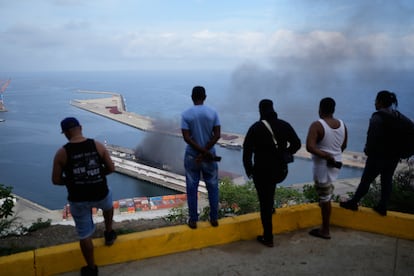
Chevron is the only U.S. company licensed to operate in Venezuela, which is also subject to complex sanctions that prevent it from trading crude oil and derivatives on the international market.
Puentes recalls that the United States has played a leading role throughout Venezuela’s more than century-long oil history. Much of that involvement came in the form of strategic alliances. When Venezuela became an industrial crude producer in 1914, the U.S. gradually emerged as its main trading partner and buyer. It began with an early venture by Standard Oil, the Rockefeller conglomerate, on the western shore of Lake Maracaibo, and later became a fuel supplier to the Allies during World War II. Even after the nationalization of the industry in 1974, contracts and laws continued to largely account for the positions and interests of U.S. companies, which also brought technology and their business practices to Venezuela.
When Hugo Chávez came to power in 1999, Venezuela was exporting nearly 3.2 million barrels of oil per day (bpd). Most of it was sent north, particularly to refineries on the Gulf Coast in Texas and Louisiana, which were well-suited to receive and process heavy crude like Venezuelan oil. A series of legal changes initiated by Chávez in 2007, aimed at giving the state majority control of production projects and their royalties, triggered international lawsuits, led by ConocoPhillips and ExxonMobil, which are still seeking compensation for the loss of their initial investments.
Chávez, and later his successor Maduro, have used these contentious episodes as a rallying cry in the historic battle for Venezuelan crude. However, corruption and mismanagement of facilities by the state-owned Petróleos de Venezuela (PDVSA) have played a significant role in the collapse of oil production and the local economy, which is highly dependent on crude.
Economic crisis
The South American country’s gross domestic product (GDP) has shrunk dramatically over the past two decades. Between 2014 and 2020 alone, it suffered seven consecutive years of contraction, coupled with five years of hyperinflation between 2017 and 2021, leaving the country with a GDP comparable to that of the Dominican Republic. Even so, “Venezuela remains very attractive because no one else has more oil,” says Puentes. “Of course, it needs to create a stable political and economic environment, with respect for institutions, the rules of the game, and concessions. If there is a political change, that could happen,” the economist adds. “I regularly meet with different international oil companies, and they are salivating over Venezuelan oil.”
However, despite the country’s 300 billion barrels of oil reserves, more cautious experts point out that the long-awaited financial recovery will not be easy or immediate. Most of that crude is extra-heavy, difficult to extract, and more expensive to process. Furthermore, while millions of Venezuelans were glued to their screens on Saturday to witness what many considered impossible — a handcuffed Maduro arriving in New York, where he will face drug trafficking charges — it remains unclear who wields true political, economic, and military power in the country. Although Trump stated that his security forces are prepared for a second military intervention, the Chavista leadership in Caracas continued to recognize Maduro as their leader.
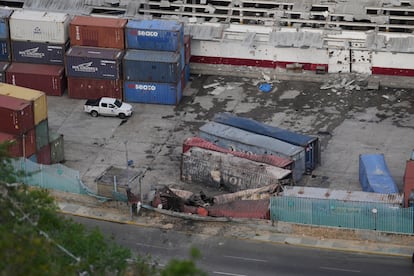
For many, Venezuela’s dependence on a single sector and its sluggish productivity began to worsen in 2002, when, faced with a strike in the oil industry that limited his ability to govern, Chávez laid off half of PDVSA’s workforce and restructured the relationship between the state and private companies. He thus transferred control of extraction fields, refineries, and distribution facilities to PDVSA.
According to José Ignacio Hernández, head of public debt markets at Aurora Macro Strategies in Boston, “Due to the arbitrary policies implemented in Venezuela since 2002, the oil industry is destroyed.” “Proof of this is that production is less than a third of what it was when Chávez was elected in 1998. Several conditions are needed to revive the industry: first, tens of billions of dollars in capital investment. Some estimate $100 billion in the coming years. Second, political stability. And third, the rule of law and guarantees of property rights to attract international investment. Even with Nicolás Maduro out of power, none of these conditions are met,” says Hernández, who also served in the interim government of opposition leader Juan Guaidó.
“On the other hand, we need to qualify that oft-repeated phrase that says ‘Venezuela has the largest oil reserves in the world.’ Those reserves are not certified, and Venezuela stopped investing in exploration a long time ago. Extracting the oil that is underground is going to take time,” he argues.
Critics of Trump — both domestically and internationally — remain concerned about whether the “safe transition” the U.S. president speaks of includes guarantees for Venezuela’s energy sovereignty and benefits for its people, impoverished and victims of one of the largest migration crises in modern history.
“There are still many scenarios to consider. We can look at Venezuela’s history and recognize that even before Maduro and Hugo Chávez, Venezuela was a rich country, but one where that wealth wasn’t redistributed equitably,” Puentes adds. “In the 1970s and 1980s, neighborhoods were built, hillsides were settled, the dispossessed and excluded were left behind — and that was the result of a flawed development model that created a ‘Saudi-style’ Venezuela: a powerful middle class that shopped in Miami on weekends, but with large majorities marginalized. Hopefully we have learned the lesson, and as we turn that black gold into wealth, we can distribute it equitably."
Sign up for our weekly newsletter to get more English-language news coverage from EL PAÍS USA Edition









































