
Brute Force in Venezuela
The United States’ military intervention against Maduro’s authoritarian regime violates international law; an immediate de-escalation is needed for a democratic and peaceful solution
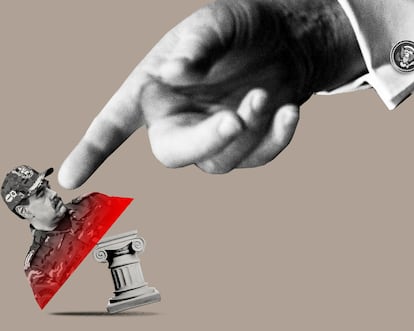

The capture of President Nicolás Maduro following a U.S. military operation in Venezuela that violates international law opens a dangerous scenario. The risk at this moment is twofold. On the one hand, there is the attempt to portray a military operation as synonymous with democratic liberation. On the other, chavismo may use the foreign intervention and the capture of its leader as a pretext to close ranks, further militarize the country, and justify limitless repression under the banner of national defense. Neither narrative withstands serious scrutiny. Violence, wherever it comes from, does not build institutions or restore rights.
Donald Trump’s decision caps a year of impulsive, personalistic foreign policy that ignores multilateral norms. Trump is not acting here as a guarantor of democracy, but rather placing force above the rule of law. Other powers will take note of these new rules as they look at Taiwan or Ukraine. Pointing this out is not a defense of the Venezuelan regime, but a warning: democracy is not exported by missile strike, nor imposed from the air —much less when invoked by someone who has repeatedly shown contempt for institutions.
That drift became even clearer when Trump himself stated that the United States would “run” Venezuela until there is a “safe transition,” effectively assuming control of the country without once mentioning Venezuela’s democratic opposition. This claim is unacceptable. There is no legitimate transition under foreign tutelage, nor any possible democracy when a country’s future is managed from outside as a protectorate.
Added to this political ambition is another, no less alarming: the announcement that U.S. companies will take over Venezuela’s oil industry to “make money,” reinforcing the perception that the intervention is not aimed at restoring rights, but at managing power and wealth. Even if the reconstruction of devastated infrastructure is invoked, this amounts to the forcible external appropriation of natural resources, blurring the line between aid, investment, and economic domination.
These are hours of confusion regarding the true leadership of the Venezuelan regime. But any hypothetical transition will only be legitimate if it is peaceful, orderly, and negotiated. In that regard, the decision by opposition leader María Corina Machado not to call people into the streets amid military escalation, but instead to urge patience and restraint, points in the right direction. It is not a sign of weakness, but of political responsibility from someone who won the 2024 elections with Edmundo González as the candidate. There are no lasting shortcuts. Latin America knows all too well the consequences of solutions imposed by force. Condemning the military operation does not legitimize Maduro, an illegitimate president after years of electoral fraud, repression, the dismantling of the separation of powers, and persecution of dissent.
The immediate priority must be urgent de-escalation and the rejection of any further military action, as Trump has threatened. The international community —starting with Europe and the countries of the region— must be consistent: condemning any violation of international law while at the same time clearly recognizing where democratic legitimacy resides in Venezuela today. This problem is not circumstantial or tactical; it is called authoritarianism, corruption, and drug trafficking. Respect for international norms and the demand that the mandate expressed at the ballot box by Venezuelans a year ago be honored are not incompatible goals. In fact, they are inseparable.
For chavismo, this moment marks a historic turning point. The most responsible course for those who still sustain the regime is to renounce violence and accept that the cycle has run its course. Citizens have already spoken at the polls. Allowing democracy to prevail does not mean surrendering to a foreign leader or submitting to an external agenda, but recognizing that no political project can be sustained indefinitely against its own people.
Amid confusion and dueling propaganda, one certainty should not be lost: there will be no democracy without rules, and no rules without restraint in the use of force. Immediate de-escalation is the indispensable first step. The next is to open a transition process that respects the electoral result of July 2024, truly closes the chapter of authoritarian chavismo, and returns to Venezuelans something they have been denied for far too long: the possibility of deciding, without fear and without tutelage, the fate of their country.









































