
From Hungary’s Orbán to Chile’s Kast: How Trump helps turbo charge the far right
The forces of the radical, populist and nationalist right have moved from the fringes to center stage, and they are expanding globally with an organized network that challenges the liberal consensus
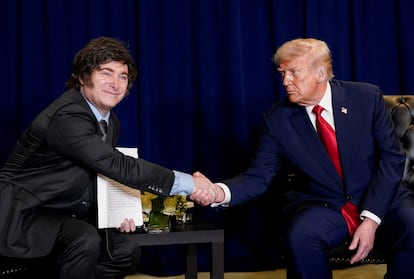
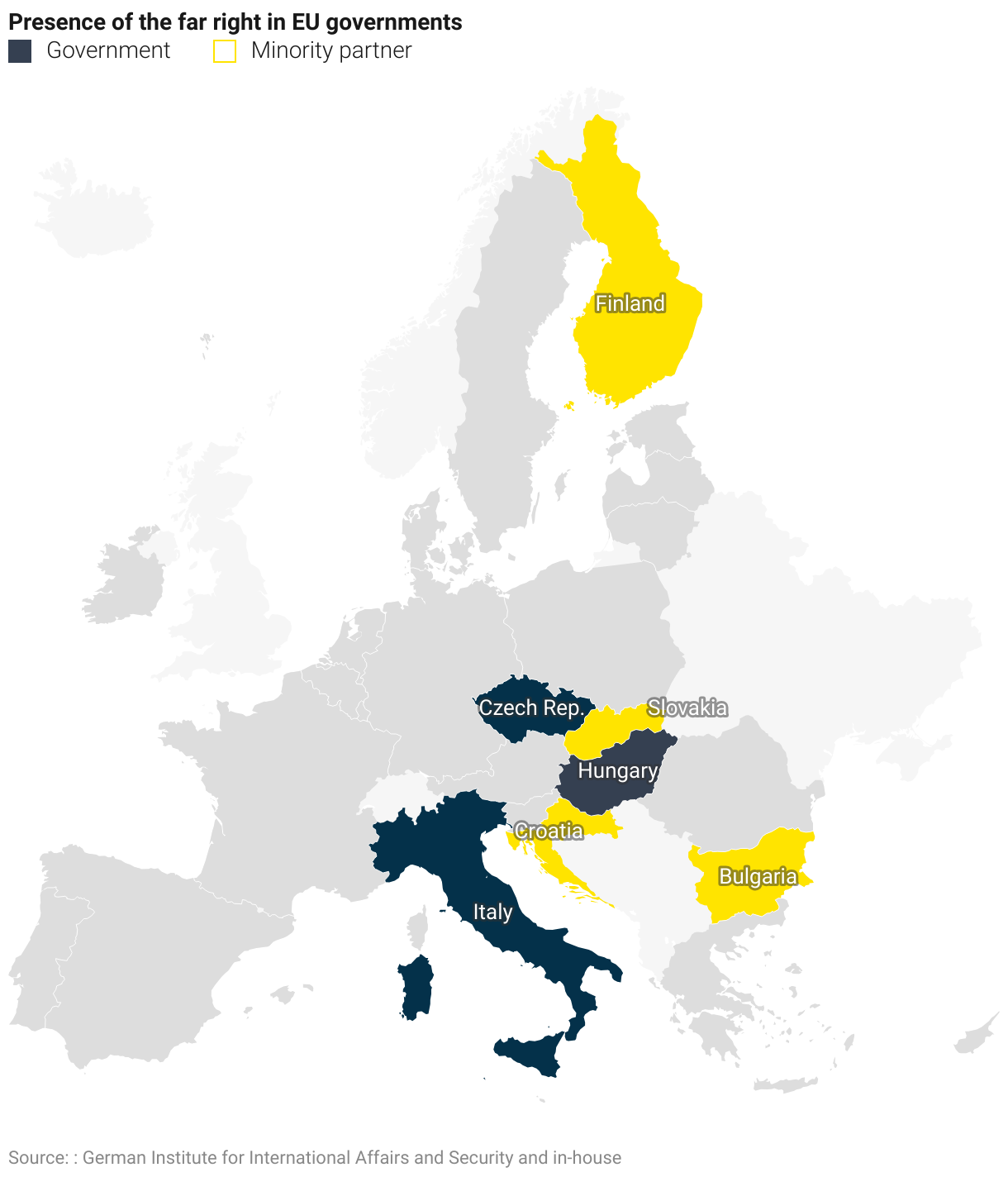
The global far-right movement is conquering new turf and gaining new shares of power around the world. Radical right-wing parties and movements are more connected and organized than ever before. In South America, José Antonio Kast, an avowed Pinochet admirer, has just won the elections in Chile. In Europe, the trend has become institutionalized, with the direct or indirect presence of the far right in one in three governments. The extremists have the support of the United States, which has the EU in its sights. What used to operate from the margins has morphed into authoritarian leadership, confrontational rhetoric and a challenge to the liberal consensus.
The planet is experiencing “a veritable global wave of autocratisation”, according to the report 25 Years of Autocratisation: Democracy Trumped?, by the Swedish University of Gothenburg’s V-DEM Institute. The world now has 88 democracies compared to 91 autocracies, “which is a radical change from last year,” according to the report. Liberal democracies have become the least common type of regime globally. Almost three out of four people, or 72% of humanity, now live in autocracies, the report points out. The data does not suggest a cyclical anomaly, but a shift in the global political balance that is only gaining momentum. Radical right-wing nationalist, authoritarian, and populist ideology is on the rise around the world — from the Sanseito party in Japan to Recep Tayyip Erdogan’s Turkey to Narendra Modi’s India.
In Europe, Viktor Orbán has led 15 years of ultra-conservative government in Hungary, and Italy’s Giorgia Meloni has consolidated her power in Italy, a country where getting to the end of a term in office is an exceptional feat. In Europe’s strongest economies, extremists are on the rise. Alternative for Germany (AfD); Marine Le Pen’s National Rally; and Nigel Farage’s Reform UK, lead the majority of polls in Germany, France and the UK.
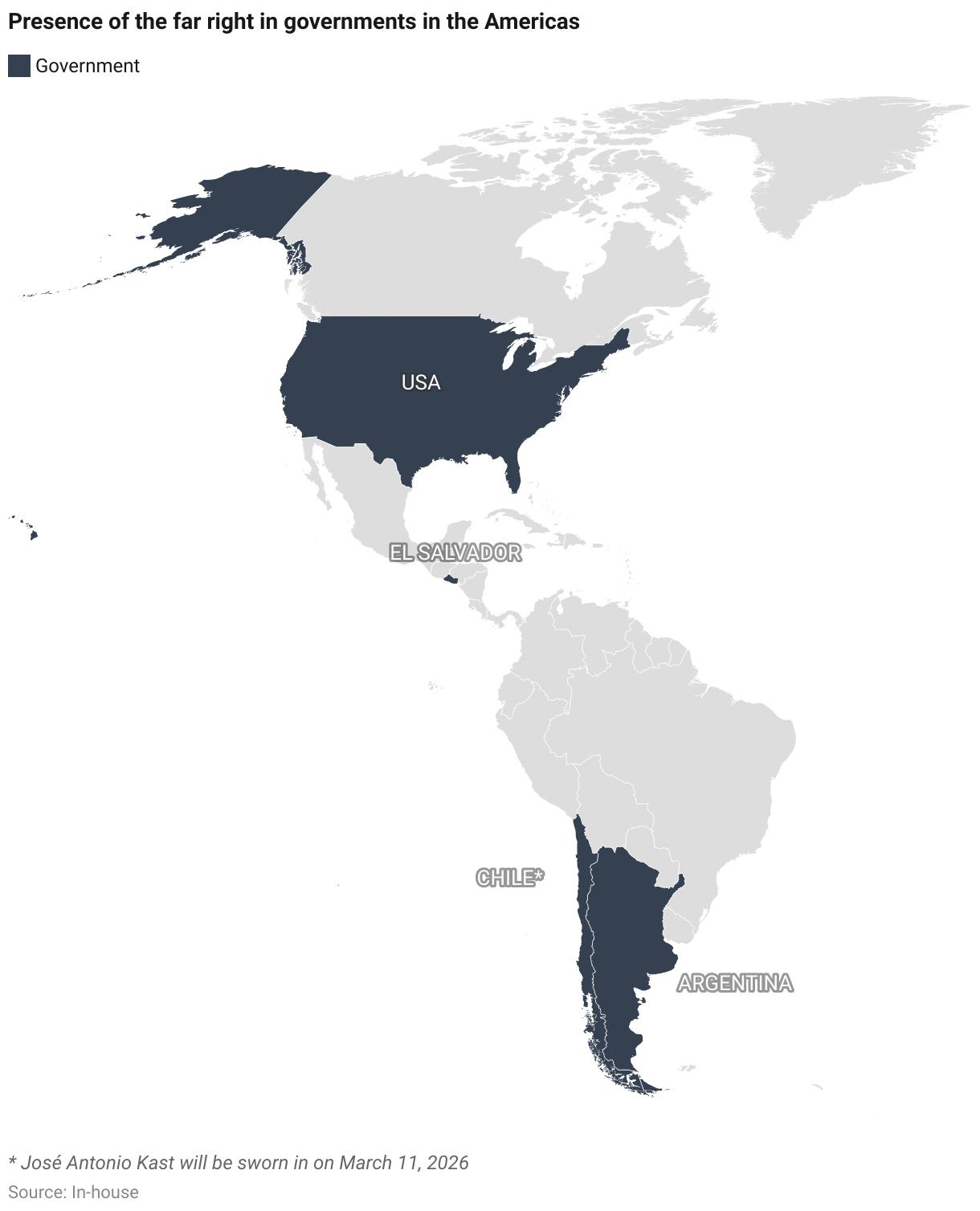
In America, the reactionary MAGA movement has taken over the Republican Party, with President Donald Trump as its supreme leader. In the rest of the continent, ultranationalist forces are also gaining ground.
Success factors
To explain the success of these parties, we must look at all the crises that have occurred in recent years, according to Gilles Ivaldi, a professor at Sciences Po in France who has been studying these movements in Europe for 40 years. These crises include the financial crisis of 2008, the refugee crisis between 2015 and 2016, the Covid pandemic of 2020 and the war in Ukraine that began in 2022 and rumbles on. Ivaldi identifies crises as catalysts that mobilize resentment against political elites and immigrants. Inflation, the housing crisis and job insecurity exacerbate the pervading discontent.
Ivaldi observes “multiple layers of resentment” that are compressed into four or five fundamental elements of the far right’s rhetoric. The rejection of immigration and everything associated with it – Islam, multiculturalism and ethnic diversity; economic insecurity; law and order; opposition to green policies; and the defense of traditional values against abortion, LGTBI+ rights and everything considered woke.
Aurelien Mondon, a professor at the University of Bath in the UK, believes these movements “aim to exclude certain marginalized communities, which they use as scapegoats to divert attention from the power they themselves hold.” The author of Reactionary Democracy: How Racism and the Populist Far Right Became Mainstream, he questions the far right narrative: his research shows that, when citizens are asked about everyday problems, immigration does not appear as a priority issue. Security, migration and identity politics appear to be a “construction from above” peddled by the reactionary elites, Mondon tells EL PAÍS.
Trumpism in Latin America
In Latin America, the emergence of the far right dates back to 2019, when Jair Bolsonaro in Brazil and Nayib Bukele in El Salvador took office as presidents. The wave continued with the election of Javier Milei in Argentina in 2023, and now with Kast in Chile. The trend is usually explained as a response to the failure of left-wing and center-left governments, dominant during the first decades of this century but weakened by economic, political and social problems, including the fall in international commodity prices and corruption scandals.
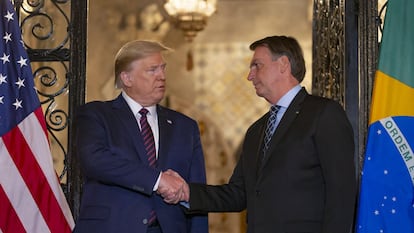
“The representatives of the radical right in the region are heirs to Donald Trump’s first term in the White House [2017-2021]. They all recognize themselves in Trumpism and align themselves with the U.S.,” says Argentinian sociologist Ariel Goldstein, author of The Authoritarian Reconquest. How the Global Right Threatens Democracy in Latin America.
“The phenomenon is based on a geopolitical issue, related to the rivalry between the United States and China and America’s desire to regain power in its so-called backyard. That is why Trump’s return to the White House breathes new oxygen into the Latin American radical right,” Goldstein points out. Evidence of this lies in Trump’s financial bailout of Milei last October, when the Argentinian president’s economic plan was capsizing, and the crippling tariffs imposed on Brazil in a bid to get Bolsonaro released from prison after being sentenced for staging a coup.
Although they share ideas and form a regional bloc, there are clear discrepancies between the Latin American far right and the conservative and center-right forces that govern Ecuador, Bolivia and Paraguay, for example. But there are also marked differences within the radical right.
On the one hand, there is the most reactionary, nationalist and religious branch, led by Bolsonaro and Kast. On the other, there is the burgeoning self-described “libertarian liberal” far right, with an agenda focused more on the reduction of the state’s presence and the benefits of the free market, which is Milei’s terrain. “They’re two different big families,” Goldstein says, “but they dialogue with each other and work in tandem.”
What they have in common is the promotion of heavy-handed policies to combat crime, and an anti-feminist rhetoric. The rejection of immigration is also present but less so, except in the case of Kast. “For demographic and cultural reasons, the problem of immigration is one of the main differences between the Latin American radical right and those of Europe and the United States,” Goldstein observes.
International networks
Each party adapts its reactionary agenda to its national and regional circumstances, but the links between them are increasing as is the exchange of ideas. As Zsuzsanna Végh, an expert on the radical right at the German Marshall Fund think tank explains, there are several levels of collaboration. At the highest level is the connection between parties, which crystallizes in the parliamentary groups in the European Parliament. “They are still divided, but the core is definitely the Patriots for Europe group. Although, of course, there are links with the European Conservatives and Reformists and with the Europe of Sovereign Nations,” she tells EL PAÍS by telephone.
The far right also relies on “a growing network of non-partisan organizations and think tanks that play a role in facilitating connections, not only between parties but also between intellectual groups,” she says. The network’s center of gravity, driven by Orbán’s party Fidesz, has moved from Hungary to the U.S. with Trump in the White House.
The great MAGA event, the Conservative Political Action Conference (CPAC), has been exported to Europe and Latin America, with editions in Hungary, Poland, Argentina, Mexico and Brazil. Lisa Zanotti, a researcher at the Central European University in Budapest and a member of the Millennium Nucleus for the Study of Politics, Public Opinion and Media in Chile, also highlights the Viva events held by Spain’s far right Vox party, which seek to strengthen ties with Latin America. The Evangelical Church is also key in the expansion of the radical right in countries such as Brazil and the United States, says Zanotti.
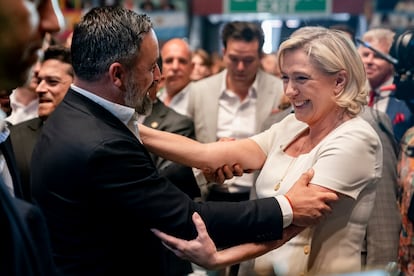
These more internationally coordinated far-right elites also rely on an ecosystem of like-minded media outlets such as Fox News in the U.S. and CNews in France, which help them connect with their growing audiences. And then there are the tech oligarchs such as Peter Thiel and Elon Musk, who, besides providing money and support for Trump’s 2024 campaign (more than $260 million) and for the AfD in Germany, also control the powerful social media platforms, fertile ground for disinformation.
Cordon sanitaire
While these platforms go a long way to explaining the rise of far right forces around the world, experts also flag up the responsibility of traditional parties, many of which have normalized radical rhetoric by absorbing it into their own agendas. Anti-immigration positions have resulted in a hardening of policies in countries such as the UK and Germany. Zanotti also points to the failure of the center-right and left to respond to “people’s material needs.”
The direct collaboration between the traditional right and the far right is one of the “most concerning” developments, contributing as it does to the legitimization and institutionalization of options that were unthinkable just a few years ago. “Trump took over the Republican Party, which is a traditional conservative party, and turned it into a far-right player,” Ivaldi told EL PAÍS.
In Europe, this phenomenon is observed in the weakening of the cordon sanitaire – a strategy of political parties to refuse to cooperate with others they deem unacceptable. This trend is increasingly evident in the European Parliament and in countries such as France. In Spain, it is evident in alliances such as those of the conservative Popular Party and far-right Vox in regional and municipal governments.
The recent release of the U.S. National Security Strategy, a strategic document that lays out the country’s priorities in terms of security and defense, alludes to helping the expansion of the far right in Europe. The document warns that the Old Continent risks “civilization erasure” and blames the EU and its liberal supranational institutions. Determined to rescue Europe from this fate, the documents says the US must “cultivate resistance” within the continent to “Europe’s current trajectory.”
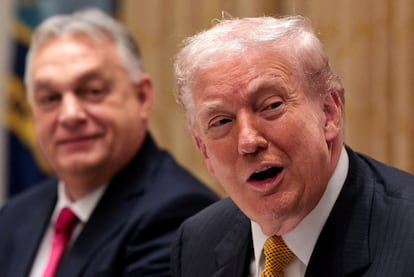
Trump and his administration have already supported radical forces in recent elections: AfD in Germany, Law and Justice in Poland, Alliance for the Union of Romanians in Romania. The EU is no longer just afraid of interference from Moscow, but also from the U.S., supposedly its greatest ally.
Analysts are not optimistic. The problems on which the radical right feeds are not contextual but structural, as Ivaldi points out, and issues such as immigration, economic inequality and insecurity and climate change “are going to be on the agenda for many years to come.” For Végh, the rise of the hard right has not yet peaked. “While all is not lost, the situation is expected to get worse before it starts to improve,” she says. The resilience of institutions, democratic forces and citizens will be key to containing it.
Sign up for our weekly newsletter to get more English-language news coverage from EL PAÍS USA Edition









































