
Alleged mastermind of arms trafficking ring supplying military hardware to Mexican organized crime arrested in Madrid
Petar Mirchev, a Bulgarian linked to Viktor Bout, the ‘Merchant of Death,’ was detained at the request of the United States for negotiating with the Jalisco New Generation Cartel
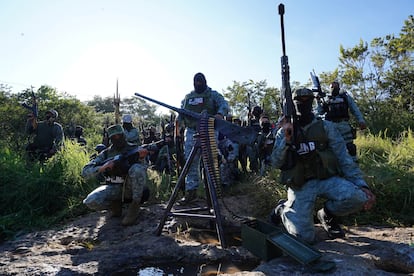

Weapons of war manufactured in Bulgaria are supposedly sold to equip African armies but are instead diverted to Mexico, ultimately ending up in the hands of the Jalisco New Generation Cartel (CJNG), currently the most dangerous and violent drug trafficking organization in Mexico. In recent months, the United States has dismantled an alleged arms trafficking ring supplying the Mexican cartel, with one of its key locations in Madrid. The alleged mastermind, Bulgarian citizen Petar Dimitrov Mirchev, was located in the Spanish capital. U.S. authorities have linked him to Viktor Anatolievich Bout, the Russian arms trafficker known as the “Merchant of Death.”
Mirchev was arrested in Madrid on April 8 by the Central Operative Unit (UCO) of the Spanish Civil Guard at the request of the DEA, which had classified him as a “priority target.” The Ministry of the Interior has not yet provided any information regarding the operation and Mirchev remains in custody awaiting approval from the Spanish High Court for his extradition to the United States, according to judicial sources. The U.S. Department of Justice accuses the Bulgarian and three other individuals, all of whom reside in Africa, of three counts of conspiring to traffic cocaine and weapons and of providing military equipment to an criminal group — the CJNG — which Washington designated as a terrorist organization in February. If convicted, the suspects face sentences ranging from 10 years to life in prison.
Specifically, the U.S. classifies Mirchev, 60, as “an international trafficker based in Bulgaria who has been involved in arms trafficking for approximately 25 years.” In this case, it accuses him of having held several meetings with representatives of the Mexican cartel since September 2022 to “organize, coordinate, and participate in illegal arms transactions, avoiding detection by international and U.S. law enforcement.” Washington authorities conclude that “the CJNG intended to use these weapons to promote the illegal trafficking of large cocaine shipments to the United States.” The CJNG, the most powerful of the Mexican drug trafficking groups, hires former Colombian military personnel to train hitmen and manufacture explosives.
The “four letters,” as it is known in Mexico, is now arguably the most powerful cartel in the country following the arrest of Ismael “El Mayo” Zambada, the leader of the Sinaloa Cartel, who is imprisoned in the United States. His arrest sparked a war in Sinaloa between his successors and the sons of Joaquín “El Chapo” Guzmán, which is bleeding both factions dry and littering northern Mexico with corpses. Amid this chaos, the leader of the Jalisco-based group, Nemesio Oseguera Cervantes, known as “El Mencho,” one of the most-wanted fugitives by U.S. authorities, has risen to the forefront, reports to Carmen Morán from Mexico.
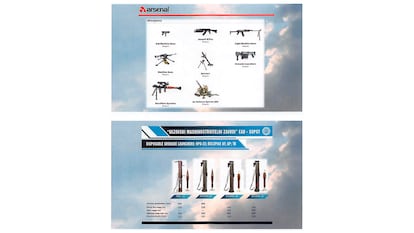
In meetings with members of the CJNG, Mirchev allegedly carried brochures detailing the weapons he was offering, ranging from assault rifles, rocket launchers, and grenades to night vision equipment, Dragunov sniper rifles, antipersonnel mines, and anti-aircraft systems. To execute the alleged agreement reached with the CJNG, the Bulgarian allegedly recruited the three other suspects identified by authorities in Washington. They are Kenyan Elisha Odhiambo Asumo, Tanzanian Subiro Osmund Mwapinga, and Ugandan Michael Katungi Mpeirwe, the latter a former high-ranking official in his country’s government. They were allegedly tasked with obtaining the necessary documentation to simulate the export of arms to various African countries, including false End User Certificates and Delivery Verification Protocols (EUC and DVP, respectively), documents used in international arms transactions to prevent them from being diverted to the black market.
In fact, they had already falsified one of these documents authorizing the alleged export from Bulgaria to a Tanzanian company of 50 AK-47 automatic assault rifles with their respective magazines and ammunition, which were to be used “exclusively” by the Tanzanian army, which, however, never received them. The DEA has located various payments linked to this first batch of weapons, including one made in November 2023 by Mirchev of nearly $38,000 from a U.S. bank account to that of a Bulgarian arms manufacturer.
According to the investigation, these 50 AK-47 rifles were actually an initial test shipment, leading to the subsequent shipment of the bulk of the material. In fact, the DEA indicates that, in October 2024, Mirchev allegedly offered his contacts in the cartel sophisticated military anti-aircraft weapons, including four ZU-23 systems, valued at around $700,000 each and capable of shooting down low-flying targets such as helicopters, according to the alleged trafficker. He even compiled a list detailing a proposal for military equipment valued at around $63 million.
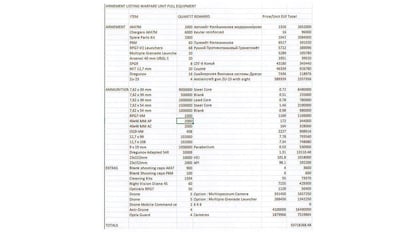
If the CJNG agreed, Mpeirwe and Mwapinga — who received a 2% commission — were allegedly to provide new documents for arms imports from African countries, including one covered by an alleged arms deal between Russia and Uganda. However, this part of the operation was thwarted on April 8 when Mirchev was arrested in Madrid; Asumo in Casablanca, Morocco; and Mwapinga in Accra, Ghana. The latter was extradited to the United States on July 25. The last suspect, Mpeirwe, remains at large.
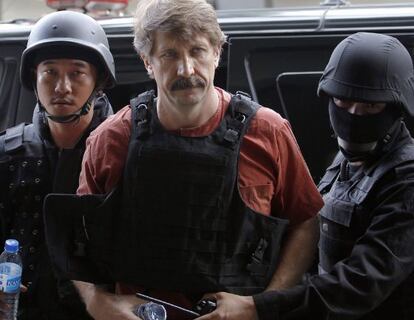
The U.S. Department of Justice notes that Mirchev “was previously involved in arms supplies” to Viktor Bout, who was arrested in Thailand in 2008 and extradited to the U.S. two years later, where he was sentenced to 25 years in prison. Bout, a former Soviet army officer, was accused of trafficking arms to dictators and conflict zones in Africa, South America, and the Middle East since the 1990s. Following his arrest, Moscow supported the alleged trafficker: in December 2022, when war had already broken out in Ukraine, the Kremlin secured his release by exchanging him for American basketball player Brittney Griner, convicted in Russia for possession of marijuana oil.
Since Donald Trump returned to power, the United States has constantly threatened Mexico with tariffs if it fails to curb drug trafficking, particularly fentanyl, which is responsible for thousands of deaths annually in the U.S. Mexico, in turn, has responded by urging Washington to control arms trafficking: 74% of the illegal weapons entering Mexico come from its northern neighbor, nearly 200,000 high-powered firearms each year, among which the AK-47 is a favorite of Mexican criminals.
Sign up for our weekly newsletter to get more English-language news coverage from EL PAÍS USA Edition









































