
‘El Mayo’ Zambada: The fall of the shadowy leader of the Sinaloa Cartel who sparked the Culiacán war
The arrest of the drug lord marks its first anniversary, while the Mexican State bleeds due to the fight initiated by his henchmen against the sons of his former partner, Joaquín ‘El Chapo’ Guzmán

Until a year ago, Huertos del Pedregal was a place of parties and living the dream. This private development in northern Culiacán, Sinaloa, had about 20 rural lots, at least half of which were rented out for gatherings of all kinds. Fireworks were common in the skies every weekend, and residents reported excessive noise from live music and, occasionally, even gunshots in the air. “Now no one comes,” says Ana Becerra, a resident who rented out her lot for celebrations. “The venues are deserted, and we’re not recovering, even if we lower the price.”
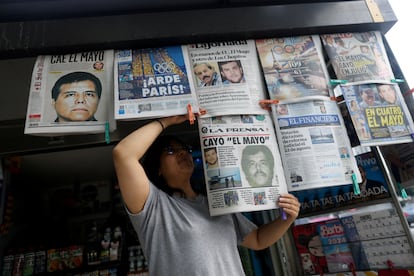
Huertos del Pedregal became firmly entrenched in the popular imagination exactly a year ago, when details began to emerge about the capture of drug lord Ismael “El Mayo” Zambada. The shadowy boss of the Sinaloa Cartel over the course decades, Zambada appeared at an airfield on the U.S. side of the border on July 25, 2024, as if by magic. Everyone was taken aback. Had El Mayo handed himself in? Had he perhaps reached some kind of cooperation agreement with the United States authorities? The cloud of speculation dissipated as the days passed, revealing a somewhat different reality: the specter of betrayal.
According to a letter he sent from captivity, El Mayo had been the victim of a trap, a setup organized by his own godson, Joaquín Guzmán López, son of his longtime partner, Joaquín “El Chapo” Guzmán. According to the kingpin’s version, he went to Huertos del Pedregal that day, summoned by his godson, who had asked him to mediate in the conflict between the governor, Rubén Rocha of the ruling Morena party, and the powerful local politician Héctor Cuén. Rocha and Cuén had clashed over how to appoint the new rector of the Autonomous University of Sinaloa and hadn’t reached an agreement. A referee of the criminal underworld, Zambada seemed the ideal choice to weigh in.
Already well over 75 years old, the aging drug lord arrived at the meeting shortly before 11 a.m., accompanied by four bodyguards. There, he saw Cuén, his godson, and his gunmen… “They took me to another room that was dark. As soon as I set foot inside, I was ambushed. A group of men assaulted me, threw me to the ground and put a dark-colored hood over my head,” the drug trafficker recounted in the letter. They then loaded him into a van, took him to a nearby runway, and put him on a plane. “Joaquín took off the hood and tied me to the seat with cable ties,” he adds. Three hours later, the plane landed in Texas.

The case of El Mayo’s alleged kidnapping remains open in Mexico, as do the crimes committed around it, such as Cuén’s murder — which Sinaloa authorities attempted to portray as a random attack at a gas station hours later that same day — or the disappearance of two of the bodyguards who attended the meeting with El Mayo. Meanwhile, Huertos del Pedregal is experiencing its own decline. It has become a ghost town, with waterless pools and worn-out thatched huts, abandoned to the elements because there is no way to raise money for their maintenance.
Prisoners or dead
The fall of El Mayo has marked the end of an era in Mexico, not so much because of the ensuing internal war, which has pitted his henchmen against the faction led by El Chapo’s sons in a seemingly endless battle. The criminal leader’s capture closes a chapter of nearly 40 years, which began after the murder of DEA agent Enrique “Kiki” Camarena in Guadalajara in 1985. Whoever masterminded the murder, the brutal attack on the U.S. agent landed the drug lords of the time in prison. And although some eventually emerged, such as Rafael Caro Quintero, they didn’t last long.
El Mayo was one of the leaders of the next generation, who grew up in the shadow of Caro Quintero himself, Ernesto Fonseca, and Miguel Ángel Félix Gallardo, the “Boss of Bosses.” Zambada and his generation — the Carrillo Fuentes, the Beltrán Leyvas, the Guzmán Loeras, the Arellano Félixes — are from Sinaloa, like their predecessors, some from the Badiraguato mountains and others, like him, from the vast network of camps that guard Culiacán to the north and south. El Mayo is the most veteran of all, and although the media has portrayed the now-defunct Sinaloa Cartel as a horizontal organization, Zambada ruled more than anyone else. At least at first.
“They are men of honor, they are men of law, they are men of blood, they are men of their word. You won’t find betrayal with those people. Those who betray die. They all hold power together; they know that their power, their great power, lies in unity.” These are the words of Zulema Hernández, collected by Julio Scherer in his book Cárceles (Prisons). Hernández was Chapo Guzmán’s girlfriend during her years of incarceration in Puente Grande prison (Jalisco) in the late 1990s. The woman’s words speak to the present, and also to previous decades, because unity has been more of an exception over all these years.
El Chapo escaped from prison in 2001, the famous Hollywood story of the laundry cart. It is unknown whether this version is true or false, but his escape triggered a genuine attempt to bring order to the national drug trade. Almost all journalists and writers who have studied the subject speak of several meetings during that time, culminating in one that same year in Cuernavaca. In attendance were El Mayo and El Chapo, Vicente Zambada Niebla, the former’s son, who years later would become a witness for the U.S. justice system; Alfredo Beltrán Leyva, El Chapo’s cousin; and Vicente Carrillo Fuentes, a notorious trafficker known for his ability to smuggle drugs north of the Rio Grande by air.
According to journalist Alberto Najar, the objective was “the restructuring of the organization throughout the country for drug trafficking, transport, and storage,” that is, to determine where each one was working and with whom, so as not to step on anyone’s toes. That worked partially. El Chapo and El Mayo strengthened their relationship, and the Beltráns and Carrillos followed suit. But the Arellanos, who apparently hadn’t attended the meeting and had secured a foothold in Tijuana, soon began to protest. The war continued, unity evaporated, and the passing years only opened more fissures. El Chapo feuded with the Beltráns, and also with the Carrillos, and the former allied themselves with Gulf-based cartels.
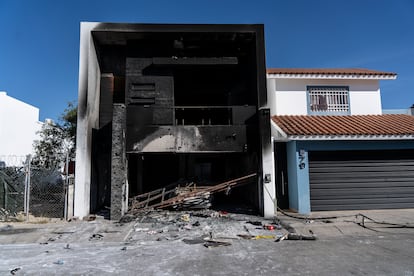
From that generation, not a single capo remains at large. All are imprisoned or dead, except for one of El Chapo’s brothers, Aureliano “El Guano,” who always went his own way. The war continues, now led by some of his heirs, a new generation of traffickers, addicted to social media and propaganda, who have taken Culiacán and the surrounding area as their battlefield. In these 10 and a half months of war, Sinaloa has already recorded 1,600 murders and 1,800 missing persons. In addition, more than 100 roadblocks have been documented, more than 50 homes and businesses have been burned, and at least 3,000 families have been forced into rural areas.
Mayo milk
In the Las Quintas neighborhood, one of Culiacán’s most traditional areas, the metallic skeleton of a new building stands dormant on an otherwise deserted lot. Few residents are unaware that the Santa Mónica factory, a dairy, once operated there, part of the Zambada clan’s network of legitimate businesses. In the few interviews he has given, El Mayo has always presented himself as a man of the countryside. Despite the accusations against him for murder, forced disappearance, torture, drug trafficking, arms trafficking, money laundering, and a long list of other crimes, he has always maintained that he is a farmer and rancher.
For many years, the glasses of milk that arrived on the tables of thousands of children in Sinaloa came from the Santa Mónica factory. Few people thought that the industry was actually hiding a money-laundering operation, something that became known in the 2000s. Through legal disputes, the kingpin’s family tried to revive it in a different factory, without much success. As of last year, bottles of Mayo milk could still be found in some Culiacán stores, remnants of a fallen empire, a decline parallel to the criminal enterprise of the family patriarch, now in prison in the U.S.
The shadow of El Mayo lingers in Culiacán. There are people who swear they once ate in restaurants in the Las Quintas neighborhood and were locked in, with the blinds drawn and a tense atmosphere accompanied by men taking cell phones and cameras when the boss entered, who at the end of that brief culinary kidnapping paid the bill in exchange for their silence. There are others who live in the ranches south of Culiacán who say that El Mayo was present every patron saint’s day at the region’s churches to privately celebrate the Virgin of Guadalupe, the Virgin of Candelaria, or Saint Francis, a faithful, devout man accustomed to praying for his children, his wives, and his businesses.
Sign up for our weekly newsletter to get more English-language news coverage from EL PAÍS USA Edition









































