
Attack on Iran raises tensions in energy markets and signals sharp price increases
Analysts expect crude oil prices to rise to $85 per barrel due to the blockade of the Strait of Hormuz, and above $100 if the conflict escalates
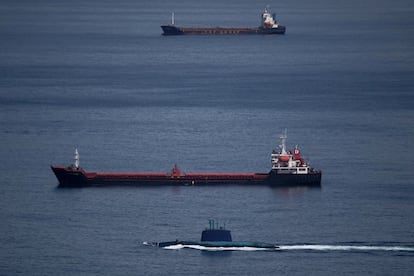

“Conflict in the Middle East” has already become something of a classic topic in geopolitics after decades of instability that periodically shake energy markets. The relative calm in the final months of 2025, following several turbulent years caused by Russia’s invasion of Ukraine, came to an abrupt end at the beginning of the year after Donald Trump’s intervention in Venezuela, and has now received the final blow with the major attack by the United States and Israel to topple the Iranian regime.
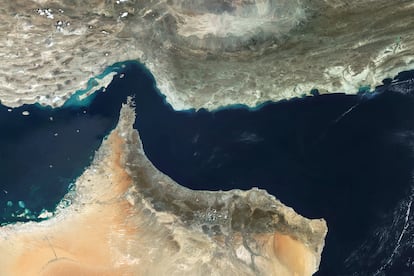
The blockade of the Strait of Hormuz — partial or total, it remains to be seen — will trigger sharp price increases as soon as markets open on Monday as it as a crucial energy corridor through which one fifth of the global oil and gas market passes. The duration and scope of that blockade are crucial for estimating its impact on prices. For now, markets are expected to react sharply to the sudden increase in geopolitical risk, with the size and duration of the price rises depending on how the situation unfolds.

Defense and security analysts believe that Iran does not have the capacity to block the Strait of Hormuz in the medium term. The United States has already announced that it will escort cargo vessels wishing to cross. In the short term, however, no one is expected to risk using this route, and that will lead to higher freight rates, transport-related costs and insurance, some shortages of crude oil and gas and, therefore, a sudden rise in prices.
If the closure of the strait lasts only a few days, the price spike is likely to fade quickly, as countries would draw on their strategic reserves to stabilize the market. All the more so if Iran were to strike energy infrastructure in other countries. As the days go by, alternative routes to Hormuz will be sought, and there could be rapid increases in production to soften the rise in prices.
But the impact of the military intervention goes far beyond the more than predictable episode of stress in energy markets and in financial markets in general. Iran is playing a crucial role in the geopolitical puzzle of the new era of global disorder. The Iranian regime is one of the main allies of Russia. And it is one of the main energy suppliers for China, together with Venezuela — the other country attacked by Donald Trump in 2026.
“Ultimately, we are seeing the first skirmishes in the struggle for global hegemony between Washington and Beijing. Washington is striking at Beijing’s direct allies, which is indirectly the biggest loser in this operation,” diplomatic sources say.
In Venezuela, the objective was not democracy: it was energy and, ultimately, the power struggle with China. And in Iran, the goal is not the rights of the Iranian people, nor even the nuclear program: it is again energy and, ultimately, China.
That, more or less, is the geopolitical picture. The geoeconomic one is relatively simpler: the Venezuelan and Iranian episodes have shaken energy markets that were in the middle of a period of relative calm. Iran produces just over three million barrels of oil a day. Its main destination is Asia, and within Asia, China, which had been sourcing Venezuelan, Iranian and Russian crude at very low prices. Now only Russian supply remains, and it is also affected by sanctions imposed by the United States and Europe.
The military operation “threatens global energy security,” according to Bridget Payne, head of energy at Oxford Economics. The main risk was — and remains — a disruption of supply through the Strait of Hormuz, the world’s most important energy corridor, through which 20% of the oil and gas that supply global markets flows, worth around $1.3 billion a day. Iran is the third-largest producer in OPEC. It exports two-thirds of what it produces, and its crude accounts for 14% of China’s oil imports.
In the medium and long term, there are a number of factors that could help moderate the price rises.
One: if the scenario of the June 2025 attacks is repeated — when energy facilities were not bombed and Iran did not respond by attacking the infrastructure of other countries — market disruptions will not be significant or long-lasting, although this depends to a large extent on Iran’s ability to seal the Strait of Hormuz.
Two: after the situation in Venezuela, the markets didn’t see a severe, lasting shock following the initial scare.
Three: producing countries had feared this operation for weeks, and there is spare capacity in the oil market of 3.7 million barrels per day, according to the International Energy Agency — the equivalent to Iran’s production.
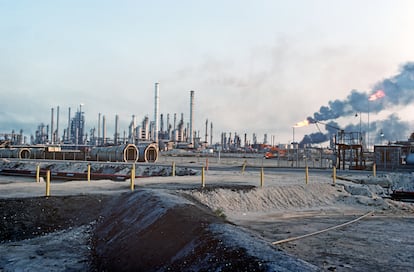
Four: several countries in OPEC announced on Saturday an emergency meeting to use their idle production capacity if necessary (3.5 million barrels per day concentrated in four countries: Saudi Arabia, the United Arab Emirates, Iraq and Kuwait).
Both Bloomberg and Reuters cited sources on Saturday pointing to an increase in production by the oil cartel starting this Sunday.
“Gas and oil prices are set to open sharply higher on Monday,” predicts Gonzalo Escribano of the Elcano Royal Institute. “If the conflict escalates and there are attacks on energy infrastructure, and in the unlikely event that Iran manages to block the Strait of Hormuz, prices could even rise above $100. But that’s the worst-case scenario: normally, after the initial shock, ways will be found to reduce tensions. The United States isn’t going to go into its midterm elections with soaring oil prices.”
“In the short term, we won’t be able to escape price tensions, which will be greater or lesser depending on the impact of the attack, Iran’s response, and the blockade of the Strait of Hormuz, but in the coming days we will see the price of crude oil above $80 a barrel,” says Leopoldo Torralba, director of analysis at Arcano. “In the medium term, the catastrophic scenario can never be ruled out, but it is unlikely: Iran is unlikely to block Hormuz for very long because the main victim would be its major ally, China, and that could also provoke a much larger-scale intervention by the United States.”
A pragmatic approach focused on negotiations would likely result in initial price increases of over $10 per barrel, reaching approximately $85. A more aggressive response, involving retaliatory measures against regional producers and brokers, as well as temporary disruptions to supply via the Strait of Hormuz, would lead to more sustained price hikes, potentially reaching $15 per barrel, or above $90.
If the attacks were to lead to internal chaos in Iran and the regime were to attack other countries or persistently block the strait, the collapse of Iranian production and the severe deterioration of stability in the Middle East would cause larger and more prolonged price increases, pushing the price of a barrel to around $100. It could even rise further depending on the intensity of the escalation: Oxford Economics projects a price of crude oil above $140 in the worst-case scenario.
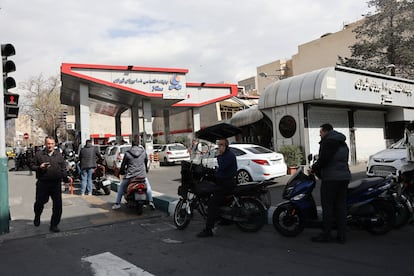
Geopolitical uncertainty will therefore trigger a shock of major proportions in energy markets. In the short term, China would be the country most affected by the intervention in Iran. However, Beijing has long-term supply contracts at fixed prices, has been reducing its dependence on fossil fuels for years and could find oil from other producers, the sources consulted note — albeit at higher prices.
In the medium term, those increases will be passed on to inflation and could erode purchasing power worldwide, depending also on the intensity of that escalation. This erosion of purchasing power has been a constant since the Great Recession and helps to explain the wave of populism across the Western world and Donald Trump’s rise to power.
Ahead of the November midterm elections, opinion polls show Trump has been steadily losing support. We shall see how a military conflict affects disposable income. And voting intentions. Wars always bring surprises on both fronts — almost always unpleasant ones.
Sign up for our weekly newsletter to get more English-language news coverage from EL PAÍS USA Edition









































