
Logbook of the ‘MV Hondius’: From Ushuaia to the Canary Islands, chronology of a hantavirus outbreak
Timeline of a luxury cruise that ended up becoming an epidemiological emergency
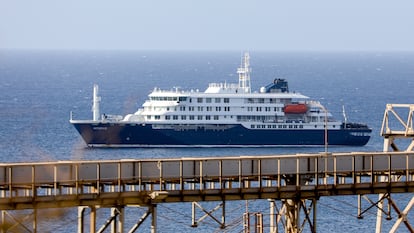

Scientific vessels, icebreakers, and cruise ships like the Grand Princess, one of the largest in the world, congregate in the port of Ushuaia. In this context, the MV Hondius wouldn’t stand out. It’s an ice-strengthened expedition ship, 107 meters long, with a capacity for about 170 people. On March 20, 149 people boarded: 88 passengers and 59 crew members. They represent 23 nationalities, and 14 are Spanish: five from Catalonia, three from Madrid, one from Galicia, and one from Valencia. The latter, oceanographer Aitana Forcén-Vázquez, is also part of the crew, acting as a guide for the tourists. There’s also an elderly Dutch couple who traveled to various locations in Chile and Argentina before arriving here, at the southernmost point of the continent. The MV Hondius advertises numerous amenities and a luxurious atmosphere on its website. Fares for this voyage range from $17,600 to $29,400. There are scheduled stops at some of the most remote islands on the planet, visiting diverse ecosystems and ending in Cape Verde, known as the “African Caribbean.” This is the logbook of their journey.
On March 20, the cruise departs from Tierra del Fuego, in Argentine Patagonia. It makes several excursions into the Antarctic region. Afterward, it returns to Ushuaia, from where it sets sail again on April 1, this time heading north. It follows an itinerary through the South Atlantic, with stops in remote and ecologically diverse regions.
On April 6, a 70-year-old Dutch man began to feel unwell. He had a fever, headache, abdominal pain, and diarrhea. His condition progressively worsened, he developed acute respiratory distress, and he died on April 11. The cause of death could not be determined at the time. Passengers traveled with his body on board for almost two weeks.

On April 24, the ship docked in Saint Helena, a remote island in the Atlantic Ocean, nearly 1,250 miles off the coast of Angola. There, the deceased’s body was disembarked, accompanied by his 69-year-old wife, who was to begin the repatriation process to the Netherlands. She began experiencing gastrointestinal distress. Meanwhile, on the cruise ship, an adult male, a British national, sought help from the doctor due to a fever, difficulty breathing, and symptoms of pneumonia.
On April 25, the Dutch woman traveled by plane to South Africa with her husband’s body. She began to feel worse during the flight and fainted at O.R. Tambo International Airport in Johannesburg. She was taken to a medical center, where she died the following day.
On April 26, the British man’s condition worsened. The ship was already at Ascension Island. From there, the patient was airlifted to South Africa on April 27, where he is currently hospitalized in an intensive care unit.
On April 28, an adult woman of German nationality reported feeling unwell. She began to develop symptoms of pneumonia and her condition deteriorated rapidly.
On May 2, the woman died. The cause of death is unknown. But that same day, laboratory tests conducted in South Africa confirmed the hantavirus infection in the British man in the ICU. On May 4, the same virus was identified in the first woman who had died. It seemed clear: there was an outbreak of a dangerous hantavirus on the ship.
On May 3, the MV Hondius reached the vicinity of Cape Verde. Three passengers presented with high fever and/or gastrointestinal symptoms. Medical teams in Cape Verde evaluated the patients and collected additional samples for analysis. They did not grant permission for the ship to dock or for the sick passengers to disembark. One of those infected, in serious condition, was the cruise ship’s doctor.
On May 4, when the MV Hondius was scheduled to dock in Cape Verde, the news broke. Since then, it has remained anchored off the port of Praia awaiting a solution. Health authorities are trying to identify the initial source of the infection. The atmosphere on board the vessel is relatively calm, and the passengers are “generally, composed,” according to the shipping company.
On May 5, after lengthy negotiations between the WHO and the Spanish government, the Ministry of Health announced that it had agreed to allow the ship to travel to the Canary Islands, without specifying its exact destination. Among those on board was the Dutch doctor, whose condition was too serious to permit an evacuation to the Netherlands. “Spain has a moral and legal obligation to assist these people, among whom are also several Spanish citizens,” the Ministry of Health stated in a press release. They are expected to arrive at their destination in three or four days.
Sign up for our weekly newsletter to get more English-language news coverage from EL PAÍS USA Edition









































