
Mercury trafficking for gold mines: The Jalisco New Generation Cartel’s new multimillion-dollar ‘business’
The Environmental Investigation Agency report that the criminal organization has earned more than $8 billion since 2019 through smuggling in Mexico bound for South America
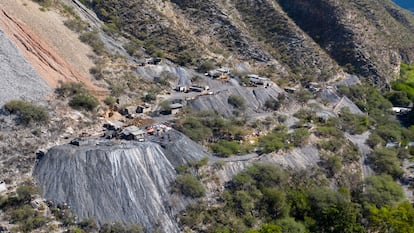

The range of businesses operated by the Jalisco New Generation Cartel (CJNG) is extensive: fentanyl, weapons, fuel, extortion, migration. And now, the trafficking of Mexican mercury for illegal gold mining in South America. This has been revealed by the U.S. Environmental Investigation Agency (EIA) in its most recent report, Traffickers Leave No Stone Unturned.
According to the report, Mexico’s most powerful criminal organization has extended its tentacles into countries like Bolivia, Peru, and Colombia to keep filling its coffers. The NGO estimates that from 2019 to the current year, the cartel’s earnings from the trafficking of mercury — a substance considered one of the ten most lethal chemicals in the world — amount to approximately $8 billion
According to the report, the Mexican state of Querétaro is the point of origin for “the largest illegal flows of mercury ever documented.” To be precise, between April 2019 and June 2025, around 200 tons have been smuggled from the Cristo Vive, El Mono, La Fe, and La Peña mines, destined for gold mining in the countries mentioned. This averages about 40 tons of mercury per year between 2019 and 2024. These mines are highly protected by recently built fortifications, erected between November and December 2023, which include gates, watchtowers with cameras, barbed wire, and men armed with high-caliber weapons
The vast majority of artisanal and small-scale gold miners — often operating illegally — rely on the daily use of mercury. They use it to facilitate the separation and capture of particles of this precious metal from sand and other substrates from which it is extracted. Afterward, gold is separated from mercury through a combustion process, during which the mercury evaporates. This practice accounts for approximately 40% of all human-caused atmospheric mercury emissions.
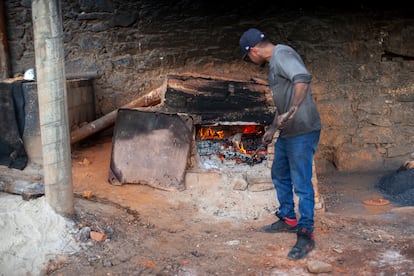
According to testimonies from sources working in the mines in Querétaro, the demand for mercury in gold mining has boosted the complex operation and made it profitable. These same sources have indicated that a new “mercury rush” has been sweeping the region since the beginning of this year, largely triggered by record prices offered by traffickers ($330 per kilogram), a consequence of the rise in gold prices.
Julia Yansura, director of the Environmental Crime and Illicit Finance Program at the Coalition for Financial Accountability and Corporate Transparency (FACT), says the report is eye-opening. Until its publication, according to researchers and governments of various countries, it was believed that mercury for gold mining in South America came from countries like Russia, China, Tajikistan, and the United Arab Emirates; and that it was distributed overland through Bolivia to neighboring nations. “The fact that these new findings involve Mexico really surprises me,” she says via video call.
More than 10 years of smuggling
As a result of export bans implemented by the European Union in 2011 and the United States in 2013, Mexico quickly became one of the world’s main mercury suppliers, alongside China, Indonesia, and Kyrgyzstan. In Querétaro, home to the world’s second-largest mercury reserves, at least 19 mines were operating in 2020, producing up to 100 tons annually. Production in areas like La Plazuela has reached “almost industrial” levels under the shadow of the CJNG.
At the head of this operation, according to the report, is allegedly the Mexican Juan José N., who has been involved in smuggling for over a decade. He oversees the purchase of liquid mercury from miners, the concealment of the metal in bags filled with gravel, its illegal transport to seaports, and its fraudulent shipment.
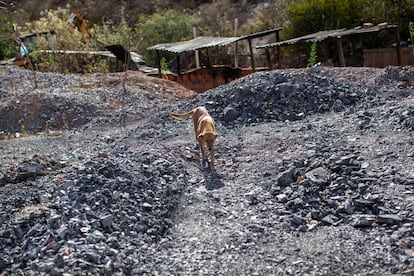
From the ports of Manzanillo and Veracruz, containers — each weighing approximately 20 tons — are prepared for shipment to Panama, a stop that traffickers use as a transshipment hub en route to India, Bolivia, Colombia, Peru, or Ecuador.
Their modus operandi involves adding four tons of liquid mercury to bags of gravel loaded into a container about six meters long. Once inside, the containers are covered with dozens of identical bags filled with regular rubble. “The main reason for this is that traffickers misdeclare the shipments from Mexico as ‘construction materials’ or ‘decorative stones,’” the report explains. In this way, until June of this year, suspicious shipments have been able to pass inspections.
On June 7, Peruvian customs authorities confirmed the seizure at the Callao port of a container with smuggled mercury valued at approximately $500,000, originating from Mexico and headed to Bolivia. The National Superintendency of Customs and Tax Administration in Peru detected the cargo hidden within a shipment of 20 tons of “crushed stone” (gravel), transported in 25-kilogram bags, which according to expert estimates, could yield about four tons of liquid mercury after processing.
EIA analysts identified a total of 50 shipments exported from Mexico that likely contained mercury-containing material between April 2019 and June 2025. Of these shipments, 37 were destined for Peru, 10 for Colombia, and three for Bolivia. According to the government agency’s analysis, this would represent approximately 200 tons of smuggled mercury.
Money laundering
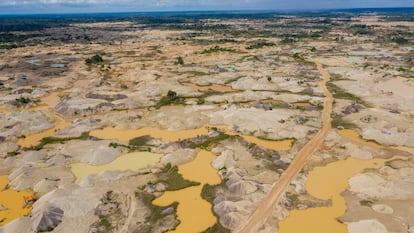
The growth of illegal gold mining, which is experiencing a new boom with prices rising to $107 per gram in the last six months, has turned mercury into a highly sought-after catalyst. Criminal groups like the CJNG have taken advantage not only of a source of income but also of another means to launder money, explains Yansura.
“Gold is incredibly valuable, and easy to transport. Plus, it doesn’t spoil like cash,” explains the FACT director. Yansura says gold isn’t as traceable as diamonds, for example. It’s very easy to melt down and convert into other items. Traffickers create “very ugly, quickly made” jewelry and then send it with travelers flying to places like Miami.
“If anyone asks them questions about the jewelry, they claim it’s a family item. They avoid questions. We know that a large portion of the gold that comes out is associated with organized crime,” Yansura explains.
The report’s findings also shed light on the current shortcomings of the Minamata Convention signed in 2013. The international treaty, to which Mexico is a party, aims to prohibit or restrict the production, import, and export of mercury. Mexico has set a grace period for its extraction that extends until 2032. While Mexico’s reports to the Convention seem to indicate a gradual phase-out of production under control, the EIA investigation supports a different conclusion. Mercury production and smuggling from Mexico remain significant, the document notes.

The EIA report argues that mercury must be treated for what it is: a highly toxic catalyst for converging crimes such as human rights violations, arms trafficking, drug trafficking, and the illegal extraction of natural resources. It states: “Allowing the continued production of mercury in Mexico until 2032 — with its attendant deadly effects on natural ecosystems and people — will in practice create deadly lasting effects for generations in Mexico and across Latin America.”
Sign up for our weekly newsletter to get more English-language news coverage from EL PAÍS USA Edition









































