
The opening bars of a geoeconomic funeral march
Experts foresee stagflation reminiscent of the 1970s — or even a global recession in the worst‑case scenario — but forecasts remain shaky given the high level of geopolitical uncertainty

“Did anyone get the license plate of that truck?” Something like that must have been on half the world’s mind in the second half of 2008, when the system lost control and ran over — almost literally — the economy and international markets. That license plate belonged to Lehman Brothers, according to an excellent book by Princeton’s Alan Blinder.
But few economists saw the crash coming. Today too, very few experts are clear about what’s coming amid the war in Iran and the formidable energy shock it has unleashed. Everyone can see Trump’s license plate on the truck that has just hit us, but the economic injuries it may cause are still uncertain: they will depend on how long the conflict lasts, on the blockade of the Strait of Hormuz, on the damage to energy infrastructure in the Gulf and, ultimately, on the mood of the Trump–Netanyahu duo, who — together with Putin in Ukraine — are making the global geoeconomy dance to the rhythm of a geopolitical funeral march.
With uncertainty at an all-time high, economic historians argue that a 1970s-style economic malaise is looming: stagflation (a combination of economic stagnation and inflation) and, in the worst-case scenario, a shock that could end in a global recession. Macroeconomists and financial‑market specialists cling to a Caribbean saying: “the only sure thing is that nobody knows.” And commodity experts — the people who arguably have the best information right now — have spent the past five weeks with their hands on their heads.

Back in 2008, very few people correctly predicted what was coming. One of them was Nouriel Roubini, who now predicts that the escalating conflict in the Gulf will intensify, leading to low growth, high inflation, and, on top of that, major risks of a financial crisis.
Raghuram Rajan, another economist who saw the last crisis coming nearly two decades ago, sees oil heading toward $150 a barrel — perhaps even $200 — and warns that the devastating effects of an energy shutdown will seep through the entire economy via supply chains, eventually triggering a severe recession.
Ann Pettifor, a British economist who also predicted the last major crisis of capitalism, warns of the financial markets’ potential to accelerate the blow and knock out the real economy.
Steve Keen, a post-Keynesian economist who was also right about the Great Recession, is the most pessimistic: he foresees the biggest crisis in modern economic history, and stresses that the war has acted as a catalyst, exposing the vulnerabilities of the global economy. And there are many vulnerabilities: the risk of a dollar crash, an artificial‑intelligence bubble, as well as tensions in the currency, debt, private credit, and equity markets.

The late economist Joan Robinson used to say that the present is “an ever-moving break between the irrevocable past and the unknown future.” In a conversation with this newspaper, Paul De Grauwe, a professor at Leuven, paraphrases Robinson to argue that today’s economic forecasts are little more than organized mirages: “No one can predict what will happen with wars, and therefore it is impossible to make sound forecasts, and that has implications for consumers, investors, businesses, and governments.”
The OECD and the World Trade Organization recently released their projections, and the International Monetary Fund will do so in a matter of days; all of them strike tones ranging from somber to bleak. In the best‑case scenario — if the war ends soon and the damage is not extensive — the impact will be felt in inflation, in a few tenths of growth, in a long‑lasting dislocation of the energy sector, and in higher risk premiums across many areas. The worst‑case scenario is even grimmer: a severe global recession if the Strait of Hormuz does not reopen soon, with enormous destabilizing potential if financial markets accelerate the downturn.
The first tremors are already being felt, but the impact is far from uniform: the economic shock is global, yet highly uneven. Broadly speaking, the shock is playing out across these fronts.
Losers (and winners)
Energy‑importing countries are far more exposed than exporters (the United States has been an exporter since 2019 thanks to fracking; Russia also emerges as a major beneficiary of this turmoil, as do Gulf countries that manage to keep selling gas and oil). Asia and Europe are the hardest hit. Poor countries — and low‑income households everywhere — will be among the most disadvantaged: fertilizer prices are already rising, and food costs are set to follow. In the poorest countries, roughly 40% of income goes to food; in emerging economies, about 20%; in wealthy countries, just 9%.
There is yet a third group of losers: countries with limited energy reserves and heavy dependence on imports from the Gulf. Those that have done their homework and built up reserves (China) or expanded renewables (Spain) may fare better. Spain, moreover, will benefit from an additional boost from tourism.
Energy
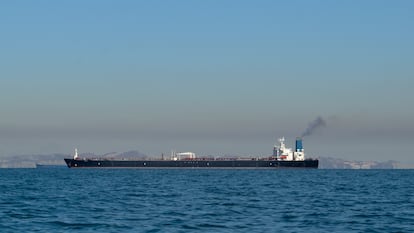
The blockade of the Strait of Hormuz — through which one‑fifth of the world’s energy supply passes — and the damage to Gulf infrastructure have already produced “the largest supply disruption in the history of the global oil market,” surpassing both the war in Ukraine and the oil shocks of the 1970s, according to the International Energy Agency. The IMF is urging governments to prepare for the unthinkable: there is a shortfall of around 10 million barrels of oil per day, according to Oxford Economics, and shortages or even rationing cannot be ruled out.
Energy‑importing economies in Africa, the Middle East and Latin America are already the most affected. The bill will be steep for the major industrial economies of Asia, with pressure on their balance of payments, currencies and public finances. The impact in Europe will also be significant: after the invasion of Ukraine, there was much talk of energy independence, but in practice, cheap Russian energy was simply replaced with U.S. gas. Italy and the United Kingdom are more exposed because of their reliance on gas; France and Spain less so, thanks to France’s nuclear capacity and Spain’s investment in renewables.
Even among Gulf producers, the outlook is bleak: they face difficulties transporting crude and natural gas, and Iran’s missile strikes point to reduced stability — a deeply uncertain future. “Worldwide, the Hormuz blockade is triggering a supply shock that will bring stagflation: lower GDP and higher prices, and the impact will not be worse in Europe than in other regions such as Asia,” says De Grauwe.
United States
“We are energy exporters, and even so the likelihood of a recession is high, because the blockade of Hormuz is likely to drag on. On top of that, the risk comes at a moment of worrying signals in the private‑credit market, extremely high equity valuations, an AI bubble, and unsustainable public finances,” economist Desmond Lachman of the ultraconservative American Enterprise Institute told EL PAÍS.
Progressives share this view: “Trump has made a serious miscalculation with Iran — he will have to choose between escalation and a full withdrawal from the Middle East. And he will feel the impact at home, through the loss of purchasing power,” James Galbraith of the University of Texas said in an email.
The economic shock will have long‑term consequences, with Europe seeking to free itself from dependence on Washington for energy and security, and with China consolidating its position in the struggle for global dominance as a major renewable‑energy power.
The economic shock will have long‑term consequences, with Europe seeking to free itself from dependence on Washington for energy and security, and with China consolidating its position in the struggle for global dominance as a major renewable‑energy power.
Supply chains and food
The last tankers that left Hormuz before the invasion are only now reaching their destinations. Rerouting ships along alternative paths — and the resulting surge in freight and insurance costs — will push up prices and delivery times for all kinds of goods worldwide, with the risk of disrupting global supply chains. One‑third of the world’s fertilizers pass through Hormuz: the threat to harvests and to food prices is already becoming visible.
The dislocation of supply chains will hit the industrial sectors of advanced economies, with the risk of factory shutdowns due to the combined effect of higher energy prices and shortages of key inputs. Serious supply risks are already emerging for products such as helium (essential for semiconductors) and sulfur (crucial for nickel production in Indonesia and for electric‑vehicle batteries).
Inflation
The impact of energy prices on inflation and GDP comes with worrying consequences. Over time, rising transport costs also push up industrial prices, and second‑round effects (hysteresis, in economists’ impenetrable jargon) emerge as workers understandably demand higher wages, which in turn intensify inflationary pressures. The major central banks will be under extreme stress: recessions following sharp spikes in energy prices are not caused by inflation itself, but by interest‑rate hikes. “Rate increases do not solve supply shocks and they worsen the economic slowdown. The ECB should not overreact,” De Grauwe says. But markets are already pricing in two rate hikes in 2026. The ECB is inclined to react aggressively.
Financial markets
Stock markets around the world have already fallen, though only moderately: investors are still betting on an imminent end to the conflict. So far, their track record has been poor. Yields on public debt have risen in both advanced and emerging economies. Energy‑importing countries are facing pressure on their trade balances, which is feeding through into stress in currency markets. “Fasten your seatbelts,” IMF managing director Kristalina Georgieva warned a few days ago.
If the war continues, a kind of transmission belt will kick in — from energy markets to financial markets, and from financial markets to the real economy. There is a supply shortfall of 10 million barrels of oil per day relative to global demand: several countries have already rolled out emergency measures to contain fuel prices, but if the war drags on those measures will not be enough, and there is little fiscal room for much more. It is also likely that one of the “solutions” to this turmoil will be lower consumption, even if the world seems poorly prepared for that.
Catastrophism, the 2026 edition
Economist Andy Xie — formerly of MIT, the IMF and Morgan Stanley, and one of the few who accurately foresaw both the Lehman collapse and, earlier still, the Asian crisis — sketches a bleak outlook. In August 2008 he nailed it: “The apocalypse is near.”
Today, he strikes a similarly somber tone: “As oil inventories drop, the price will rise further. When the oil price is high enough, stock markets will tumble, triggering a global recession,” Xie wrote in the South China Morning Post. “The U.S. economy depends on its stock market. The huge investments in artificial intelligence that keep the economy afloat can only continue in a frothy market. When the market crashes, AI investment will collapse. The U.S. government cannot continue the war with a collapsing stock market and recession looming. Surging oil prices will end the war via the stock market.”
The apocalypse almost always disappoints its prophets. But that almost deserves attention when the economy becomes just another weapon of war.
Sign up for our weekly newsletter to get more English-language news coverage from EL PAÍS USA Edition









































