
The destructive storm of climate change is looming over Asia
Experts point out that global warming is driving unprecedented weather events on the continent, the most vulnerable to flooding
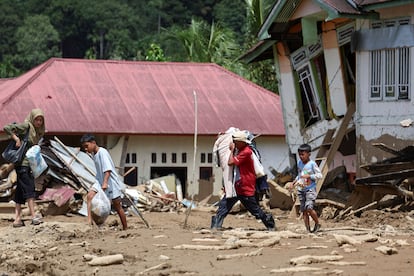

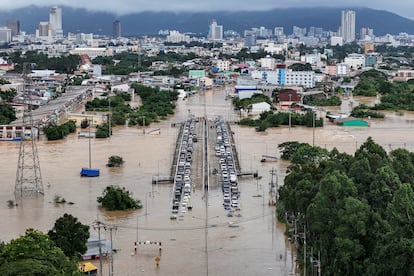
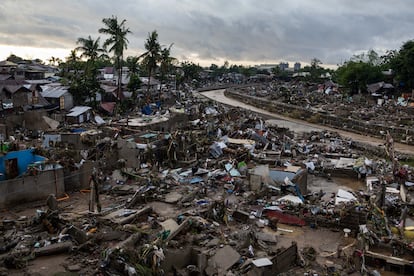
The torrential rains that have battered South and Southeast Asia in recent weeks have once again highlighted the region’s vulnerability to the climate crisis. Indonesia, the Philippines, Thailand, Vietnam, and Sri Lanka have experienced a series of floods and landslides that have already left 1,300 people dead and 1,000 missing. A succession of three tropical cyclones, coinciding with the monsoon season, has brought rainfall levels unseen in decades, devastating basic infrastructure and forcing hundreds of thousands of people to flee their homes. Millions of those affected now face shortages of drinking water, power outages, and the uncertainty of whether they will ever be able to return to their homes.
Experts categorically state that climate change is driving unprecedented weather events in Asia, the region of the world most vulnerable to flash floods, which in turn is overwhelming the response capacity of governments. However, other factors have also intensified the impact of these floods, such as deforestation, deficiencies in protection systems, and a lack of funding to improve emergency preparedness.
Asia is warming almost twice as fast as the global average, according to the World Meteorological Organization (WMO). Furthermore, a report by the Intergovernmental Panel on Climate Change (IPCC) concludes that as temperatures continue to rise, the southern and southeastern parts of the continent will experience more intense rainfall and a “significant increase” in flooding in monsoon areas. These analysts predict that coastal cities in the region will see “significant increases” in average annual economic losses due to flooding.
The WMO states that the formation of tropical storms in latitudes near the equator (outside their usual range) and increasingly violent monsoons “is something that was not seen very often before,” but is now becoming an “unusual and worrying” pattern. Clare Nullis, spokesperson for the UN agency, emphasized this week to the media in Geneva that this shift of cyclones toward areas where local communities lack experience in dealing with them has amplified the damage.
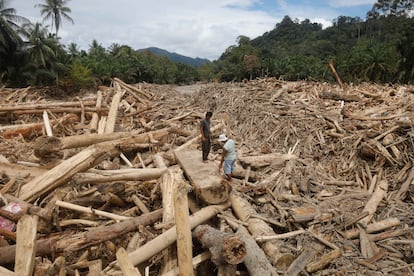
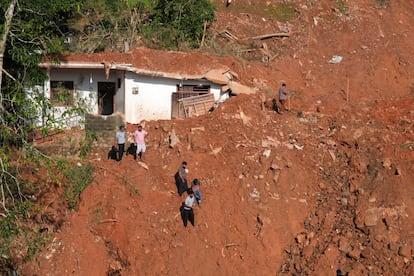
This is what has happened in Indonesia, which has become the epicenter of the tragedy in recent days. In the provinces of Aceh, North Sumatra, and West Sumatra, several villages remain completely isolated after bridges and roads collapsed last week. Authorities have deployed helicopters to reach areas rescuers have not yet been able to access by land. The force of the currents swept away homes and triggered landslides on deforested hillsides. There are more than 700 dead, hundreds missing, and over 1.5 million people affected.
In Sri Lanka, the situation is equally critical. The impact of Cyclone Ditwah has led to what UNICEF calls a “fast-moving humanitarian emergency” — a crisis evolving so rapidly that it overwhelms the capacity for immediate response. More than 1.4 million people, including 275,000 children, have had their lives disrupted by the destruction caused by the severe storms. Furthermore, the deterioration of drinking water systems and overcrowding in makeshift shelters increases the risk of the outbreak of diseases.
Sri Lanka, whose economy has been weakened for some time, is facing difficulties restoring basic services and mobilizing funds for reconstruction. “The needs far exceed the resources available at this time,” UNICEF emphasizes.
Vietnam and the Philippines, meanwhile, have been experiencing months of exceptional rainfall, which has claimed the lives of hundreds of people, caused persistent damage to essential infrastructure, and flooded historical and tourist sites. At the end of October, a weather station in central Vietnam recorded 1,739 millimeters of rain in 24 hours, a figure being studied by the WMO that, if validated, would set a record for the entire Northern Hemisphere.
Thailand has also experienced its own episode of devastation. November’s rains, particularly intense in the south of the country, damaged key infrastructure and exposed weaknesses in emergency response systems, which the government itself has acknowledged. Initial estimates point to losses in the millions in the agricultural sector alone, representing a significant blow to a country whose economy is already very weak.
UN agencies insist that these events cannot be interpreted in isolation. They emphasize that atmospheric warming is increasing the air’s capacity to hold moisture, triggering more intense rainfall. They also warn that this trend will intensify as temperatures rise.
Ocean warming in the region (also above the global average, according to the WMO) brings more energy and moisture into the atmosphere, increasing the likelihood of more intense storms and much heavier rainfall. While scientists caution that it is not yet possible to attribute every specific cyclone to climate change, there is a strong consensus that rising temperatures increase the frequency and severity of these weather events.
This year, this underlying trend has been compounded by the simultaneous presence of a La Niña event (the phenomenon that occurs when cooling in the central Pacific shifts heat westward, intensifying monsoon rains in Southeast Asia) and a negative Indian Ocean dipole (warmer-than-normal waters near Indonesia that draw in moisture and intensify rainfall). These two natural phenomena do not usually reach their peak at the same time because they originate from different ocean basins, follow their own circulation patterns, and tend to occur at different times. Their convergence amplifies the potential for more violent rainfall and potentially more destructive storms.
Economic blow
The economic consequences of these weather events in the region are enormous. In 2024, seasonal flooding caused $25 billion in damages in Asia-Pacific, according to a study by the insurance brokerage Aon, a figure that could be far exceeded in 2025.
So far, Vietnam estimates losses exceeding $3 billion this year; in Thailand, the damage from the November floods could subtract up to one-tenth of the annual GDP, while Indonesia reports an annual average of $1.37 billion in disaster losses, a figure that experts fear will increase this year.
Despite the growing urgency, the international response has been slow. During COP30, the UN Climate Change Conference held in Brazil in November, countries pledged to triple adaptation resources and set a target of mobilizing up to $1.3 trillion annually in climate finance by 2035. The commitment was welcomed as a step forward, but fell short of the demands of the most vulnerable states, such as funding in the form of grants to help them cope with increasingly costly disasters (rather than loans, which further increase their debt levels) or deeper cuts in fossil fuel emissions.
Sign up for our weekly newsletter to get more English-language news coverage from EL PAÍS USA Edition









































