
Kevin Warsh officially confirmed as Federal Reserve chair
The 56-year-old economist takes the helm of the Fed at a pivotal moment, amid renewed inflationary pressures and White House attempts to exert influence over the institution
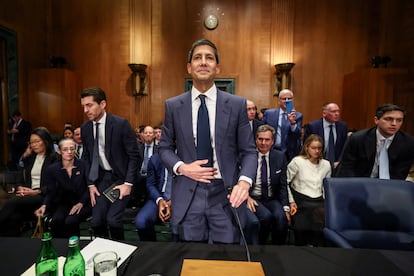

Kevin Warsh became the new chair of the Federal Reserve on Wednesday after securing final approval from the U.S. Senate.
After a complex confirmation process, the lawyer, financier, and former Fed governor (2006–2011) cleared the final hurdle on Capitol Hill, winning at least the 51 votes needed in what was the most partisan vote in the Fed’s history.
Traditionally, Federal Reserve chairs have enjoyed broad, bipartisan backing, but Warsh — nominated by U.S. President Donald Trump and supported by Republicans — received just a single vote from the Democrats, from Pennsylvania Senator John Fetterman.
During the confirmation process, Warsh failed to dispel concerns about his independence from Trump. He responded evasively or jokingly to questions about the state of the economy and even avoided answering whether Trump lost the 2020 election to Joe Biden. Warsh, 56, was born in Albany, New York, and takes office at a time when the Fed’s autonomy is being questioned following White House efforts to exert control over the institution.
He succeeds Jerome Powell, whose term ends Friday, May 15, leaving behind a significant legacy. Powell will be remembered as the man who steered the U.S. economy through the COVID-19 pandemic and, above all, as the one who stood up to Trump’s pressures, effectively building a firewall to defend the Fed’s independence from the White House.
For months, Trump pressured Powell with insults, threats, and public criticism, urging him to resign or to cut interest rates more aggressively. The Trump administration also opened a criminal investigation into him and attempted to remove another Federal Reserve governor, Lisa Cook, in a case still pending before the Supreme Court.
Despite those pressures, Powell is stepping down — but not leaving entirely. While his term as chair ends, he will continue to serve as a member of the Fed’s Board of Governors until 2028. Though he has said he will keep a low profile, his influence over future decisions remains to be seen.
The official swearing-in ceremony has yet to be scheduled, but it will mark a symbolic transfer of power — the end of an era, from Powell to Warsh. The new chair will have to show whether, in difficult moments, he aligns himself with Trump or upholds the long-standing tradition of independence from political power.
His four-year term begins at a critical juncture for the economy, with prices rising amid the war in Iran. Inflation jumped to 3.8% in April, its highest level in three years, driven by soaring fuel costs as well as increases in food and other household goods.
Warsh has spent months building the case for interest rate cuts, as urged by the White House. But he takes the helm of the Fed at a time of growing uncertainty over whether the institution should hold rates steady — or even raise them — to prevent a new inflationary spiral.
He arrives at a decisive moment, with renewed inflationary pressures and a clear vision for the direction he wants to set. He has called for a “regime change”: a more conservative tone in monetary policy leading to lower rates, closer coordination with the Treasury, a less exposed communications strategy to avoid constraining future decisions, and a commitment to shrinking the Fed’s balance sheet, which he sees as oversized.
His arrival will not be easy, given a divided Board of Governors that reflects the broader political climate. He will need to shield the institution from that polarization. Ultimately, only his decisions will determine whether he lives up to his promise of independence — or remains aligned with the president who nominated him.
Sign up for our weekly newsletter to get more English-language news coverage from EL PAÍS USA Edition









































