
Spain’s top court suspends voting rights for some descendants of Civil War exiles
The provisional ruling affects citizens who obtained nationality under the Democratic Memory Law, known as the ‘Grandchildren’s Law’
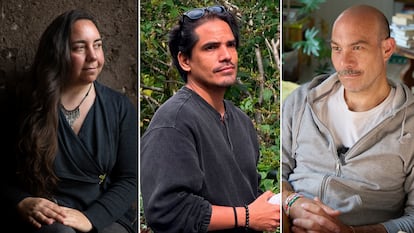
Spain’s Supreme Court decision to suspend the voting rights of Spaniards who acquired citizenship through the Democratic Memory Law, popularly known as the “Grandchildren’s Law” (Ley de Nietos), has sparked surprise and criticism among beneficiaries across Latin America.
The ruling centers on a dispute over who qualifies for citizenship under the law. While the legislation was intended to restore citizenship rights to descendants of exiles from the Civil War and Franco dictatorship, the government later broadened its application by presuming exile status for Spaniards who left the country between 1936 and 1955. The Supreme Court has now temporarily suspended voting rights for beneficiaries who cannot specifically prove that their ancestors were exiles, pending a final decision on the case.
The challenge was brought by the far-right party Vox, which argued that Spain’s Socialist-led government sought to expand the electoral roll in a way that could potentially benefit from the votes of these new citizens.
The Democratic Memory Law significantly broadened access to Spanish nationality for descendants of exiles and emigrants, leading to hundreds of thousands of applications, particularly in countries such as Argentina, Cuba, Mexico, Venezuela, and Uruguay.
Below are the first reactions from a group of beneficiaries of the law.
Felipe Gómez, Mexico City: ‘This will lead us to fight for our right to vote’
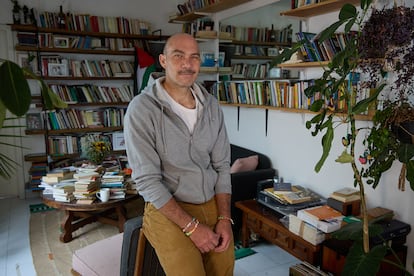
In the 16 years since becoming a Spanish citizen, Felipe Gómez had never exercised his right to vote. The cultural policy professor is the grandson of Encarnación Ruiz, a Republican exile who arrived in Mexico in 1939 after fleeing Spain following Francisco Franco’s victory in the Civil War. Gómez acquired Spanish nationality in 2010 under Spain’s first Historical Memory Law, which opened a pathway to citizenship for descendants of exiles. He says he did so for reasons of “identity and historical memory.”
The recent developments, however, have changed his perspective. “I think this could be a miscalculation by the far right, because it could lead many of us to make sure we exercise and defend our right to vote. And we certainly would not vote for the right, which is precisely the political force trying to prevent us from doing so,” he says by phone.
Gómez says he already provided evidence of his family’s exile when he applied for citizenship. Among the documents he submitted was the record of his grandmother’s arrival at the port of Veracruz. She reached Mexico aboard the Flandre together with her 10 siblings and their father, Ramón Ruiz Rebollo, a member of parliament during Spain’s Second Republic in Cantabria. “I don’t think I’ll have a problem,” Gómez says; this year he will go through the process to try to vote.
Beyond his own case, the 44-year-old Mexican academic stresses that the Supreme Court’s decision is only a provisional measure.
“I would expect this to be resolved in accordance with the law before the elections. No democratic state in the 21st century can distinguish between different types of nationals, because that would be tantamount to distinguishing between citizens of one category and another,” he says.
The Supreme Court’s decision applies exclusively to the right to vote and does not affect the granting of citizenship. In response, Gómez points out: “There would be no justification for recognizing full citizenship while excluding such a fundamental and important right as the right to vote.”
Antonia Álvarez, Santiago, Chile: ‘This decision makes us feel looked down upon’
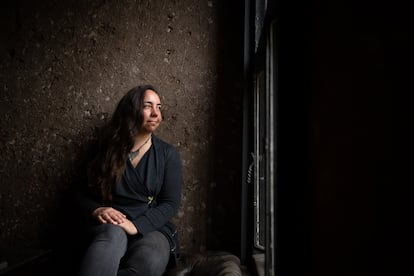
Antonia Álvarez, a 43-year-old Chilean business owner and physical education teacher, says she feels Spanish through and through. She is just one step away from obtaining Spanish citizenship through the Democratic Memory Law, a process she began in mid-2024. Based on current processing times, she expects a decision within the next few months, as Spanish consulates are now resolving applications submitted about two years ago.
That is why the Spanish Supreme Court’s decision to suspend the voting rights of people who obtain citizenship through the Democratic Memory Law left her feeling uncertain.
“This will clearly affect many people who should have this right as citizens, both those who have already obtained citizenship and those of us who are still going through the process. This decision makes us feel looked down upon because it is a way of saying, ‘You do not have this right because you were not born here,’” she says.
“The moment this exclusion happens, you begin to wonder what else you might be excluded from. It seems there is discrimination before the law, and those of us who are still waiting for a decision on our applications are the ones facing the greatest uncertainty,” she adds.
Her concern is shared by five other members of her family, including her father and two sisters, who are also awaiting a response from the Spanish consulate in Santiago: “I’m not just thinking about myself, but about all the people who, like me, completed this procedure as a way of reclaiming their family histories.”
Maximiliano Calichio, Buenos Aires: ‘If you have citizenship, you expect to be able to vote’
Argentina is home to the largest population of Spanish citizens living abroad. But Maximiliano Calichio was not among the 543,971 Spanish nationals registered in Argentina by the Spanish government as of January 1, because he only recently completed the process.
The 39-year-old administrative worker says it was just two weeks ago that he received an email informing him that his application for Spanish citizenship had been approved. He, his brother Leandro and their father obtained Spanish nationality this year through the Democratic Memory Law. Calichio views the measure as “an act of justice for all the Spanish immigrants Argentina received.”
More than two million Spaniards settled in Argentina, including his great-grandmother, who emigrated from Galicia in northwestern Spain at the beginning of the 20th century.
The email confirming his citizenship brought him great joy. The Supreme Court’s ruling, however, has left him puzzled. He finds it difficult to understand how he can be recognized as Spanish while potentially being denied the right to vote in Spanish elections. “If you have citizenship, you think you’ll be able to vote, right? It’s odd,” he says.
Calichio says obtaining Spanish nationality was primarily about family ties, heritage and historical recognition, but that he did plan to vote when the time came. “I follow international politics and imagined that as the elections approached I would learn more and choose a candidate,” he says.
Gonzalo García, Santiago, Chile: ‘One expects to participate in democratic life’
Engineer Gonzalo García, 60, was the only member of his family without Spanish citizenship until just over a year ago. His wife and two daughters had already become Spanish citizens, and in 2025 he was finally able to obtain nationality himself under Spain’s Democratic Memory Law. He qualified through his paternal grandparents, who were born in La Rioja and Bilbao.
“It is not a good thing, because one expects to participate in the democratic life of the country where one has naturalized,” he says.
García decided to pursue Spanish citizenship partly because his family could eventually settle in Spain. “It was very difficult to obtain the documents for one of my grandparents because his birth certificate was recorded in a village with about 30 inhabitants, and I was able to get it through an aunt. When they granted me citizenship, I was very happy, I couldn’t believe it, because I’ve always wanted to live outside Chile and this was an opportunity.”
Fredy Jaldin Ronquillo, Cuban resident in Spain: ‘You also come with the desire to be heard for the first time’
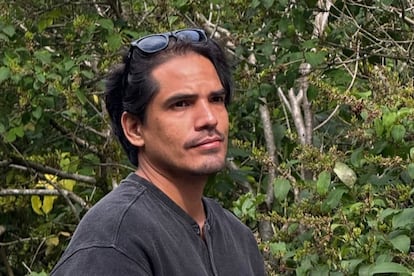
Fredy Jaldin Ronquillo, 33, has been living in Galicia for just over a year. Born in Camagüey, Cuba, he moved to Spain in 2025 after obtaining Spanish citizenship through the Democratic Memory Law. Like hundreds of his fellow Cubans in recent years, he came in search of a better life and greater economic prosperity, but also with the awareness that he wanted to feel like a full member of the country he had just moved to and, in doing so, exercise all of his rights.
Now he is frustrated by the idea that his vote will not count in elections in the country where he lives. “You also come with the desire to be able to participate in democracy and make your voice heard for the first time. It affects me deeply, especially coming from a country like Cuba, where an individual’s voice doesn’t count,” he says regretfully.
Since settling in Spain, Jaldin says he has often reflected on how his own journey mirrors that of his Spanish ancestors, but in reverse. They arrived in Cuba in the 1930s, fleeing the war. He studied architecture in Havana, a profession that for decades has been prohibited from being practiced independently on the island, and which he now practices in Galicia.
“Since I arrived, I have regularized my status and I’m working in the field I studied,” he says. “I contribute economically to this country, so why shouldn’t I have the right to participate in its democracy? That makes me think that perhaps my future is not in Spain, but rather in another country where they know how to better appreciate my worth as a citizen.”
Sign up for our weekly newsletter to get more English-language news coverage from EL PAÍS USA Edition









































