
Mohamed Mezghani, from the International Association of Public Transport: ‘A traffic jam of electric cars is still a traffic jam’
The secretary general of the UITP advocates in favor of a carrot-and-stick approach: restrictions on private vehicles and good service from subways, trains and buses

Public transportation is experiencing a boom in Europe. After the severe reputational crisis during the worst years of the COVID-19 pandemic, governments have opted for strategies to revitalize transit systems, implementing fare reductions, single transit passes offering unlimited monthly travel, as well as new services. Passengers have returned, but many challenges lie ahead, from inadequate funding and staff shortages, to the impact of accidents.
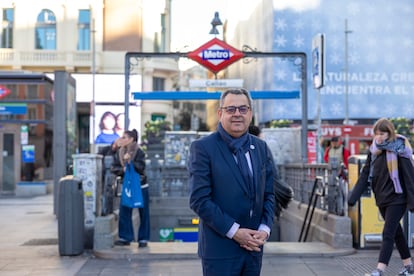
“Rail transport is the safest [option]; passengers will return,” says Mohamed Mezghani, referring to the recent train accidents in Spain. The 62-year-old Tunisian is secretary general of the International Association of Public Transport (UITP), the sector’s leading organization, which brings together nearly 2,000 companies in about 100 countries. He’s in Madrid to attend a UITP meeting.
Question. What’s the state of public transportation in Europe?
Answer. In cities like Madrid and Barcelona, it has already surpassed 2019 levels, before the COVID-19 pandemic. In others, like Brussels, it still slightly below, but it’s moving in the right direction. Many systems have been modernized and buses were electrified with European Union funding… but the problem now is that there’s less funding available. And that’s the challenge: we need more public transit, but there’s less money to support it. That’s why we’re closely watching the next European Multiannual Financial Framework (MFF) – which begins in 2027 – as we need more funds to be made available to modernize and expand the public network.
Q. What impact do fare reductions have?
A. Companies and operators don’t decide the routes or fares, so they have to be compensated [with public funds for shortfalls]. But now that demand is recovering – with returning passengers [and] tourists traveling again – this means that, if a good service is offered, we’ll have even more users and less compensation will be needed.
More affordable fares should only be for those who truly need them. If we do it to attract people who drive, experience shows that this doesn’t work, because the ticket price isn’t the problem: rather, it’s the lack of frequency or services. So, we need to invest money in providing a dense, frequent and high-quality public transit system. That’s what attracts more passengers.
Q. In Spain, public transit use has been growing for five years. What’s the reason for this?
A. Economic development, [more] businesses, tourism, more people going to offices, less teleworking… Spain has very good public transit. Perhaps when you live in Spain you don’t realize it, but I travel all over the world and I see that Spain has good quality public transit. There’s been a lot of investment in buses, trains, trams, subways, etc. And that’s very important. The more frequent the service, the more people are attracted to using it.
We need to find a good carrot-and-stick policy: restricting car use and controlling parking, while providing good public transit service. It’s also a matter of political will to put public transportation on the political agenda. All of this encourages better and greater use.
Q. Is public transportation key to developing the economy?
A. Yes, they go hand in hand. Public transportation is an investment, not a cost. I think it’s a mistake to assume that it’s only used by those who have no choice, or by students or the poor. Public transportation should be for everyone. And, if you have a good option available, you won’t need to use a car. In Singapore, 80% of people live within a 10-minute walk of a metro or bus stop; those are good conditions for using it. When you invest one euro in public transportation, you generate four euros [of economic impact]: jobs in the sector, tourism, accessibility… plus, it always benefits local businesses.
Q. Madrid is building residential areas without public transportation. What problems could this cause?
A. It’s a mistake. Ideally, the workers who build the new areas should be able to get to work by metro. That’s what they did in Copenhagen: they built the metro to reach empty areas. [After that, they built] the housing. It’s called transit-oriented development (TOD). And this is ideal, because public transportation needs urban density: the less there is, the less efficient it is. If you build the houses and then think about mobility, it’s too late. That’s what happened in Los Angeles, which is trying to develop its public transportation for the 2028 Summer Olympics… but they can’t change the way the city is structured. It takes many years to reclaim a city that’s designed for cars.
Q. Germany, Austria and Spain have all launched a single public transit pass, which, for a monthly fee, provides users with unlimited access to all kinds of buses, trams, subways and trains. Is this a good idea?
A. It’s a very important initiative, because it makes using public transit easy. In Austria, you [get] the pass and you don’t have to worry about anything else. The challenge is calculating the exact fare to, on the one hand, attract passengers and, on the other, generate enough revenue to maintain the system. The idea of having a single pass is excellent. If you’re an occasional user, it makes things easier; you don’t have to worry about how much each ticket costs.
Q. What role should trains, subways and buses play in 21st-century cities?
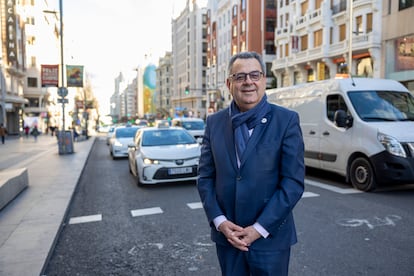
A. Our cities are congested with cars. And, even if they’re electric or self-driving, they’ll still be cars occupying public space. If we don’t develop alternative modes of transportation (for people to walk, cycle, use public transit, or carpool), our cities could collapse. A traffic jam of electric cars is still a traffic jam: to optimize space in the city, we need public transit. We need to integrate alternatives to the private car – trains and buses, but also taxis, bicycles and car-sharing – so that they’re easy to combine, ideally in a single app.
Q. Do these modes of transit help with decarbonization?
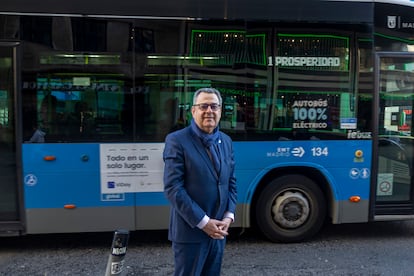
A. Public transportation emits three to four times less CO₂ than a car; its impact on decarbonization is proven. We need to avoid (encourage fewer trips), shift (from cars to public transit or bicycles) and improve (replace fossil fuel vehicles with zero-emission ones). Electrification alone isn’t enough: an electric bus stuck in traffic doesn’t attract more passengers. Dedicated bus lanes are needed to make them more efficient and faster, [so that they] attract more people.
Q. There have been two serious rail accidents in Spain this year. Could this lead to fewer people taking the train?
A. [Trains are] the safest mode of transportation. Generally, after an accident, there’s an emotional reaction: some people are hesitant to use it. But then, we regain our rational mindset and start using it again.
Q. How will self-driving vehicles be integrated?
A. In China and the United States, robo-taxis are operating as a commercial service: they’re safer than taxis driven by people. The problem is that, if we replace cars with autonomous vehicles, we’ll generate more traffic, because some will be driving around [without people]… and that would be chaos. Autonomous vehicles should be deployed as part of a shared, on-demand fleet that complements mass transit: for trips from bus or metro stations to less densely populated areas, or at night. Autonomous vehicles could play a role, because they’ll cost less than a bus and can operate on demand, offering a very flexible service.
Q. Should public transit be paid for after consumption, like with utility bills?
A. Some cities are already implementing this post-payment system; it’s the simplest way, with a card or your mobile phone. This is how it works, for example, in Paris, where you’re charged directly to your account at the end of the month.
Q. April 17th marks the first-ever World Public Transport Day. What is its purpose?
A. It’s an initiative launched by the sector to promote public transit and all that it can do for the economy, society, the environment and people; [it makes] our cities better places to live. Furthermore, the UN has declared 2026-2035 the “Decade of Sustainable Transport.” We’ve committed to training 20,000 people in this field over the next decade. The sector seeks to reposition its image and reaffirm its central role in building more livable and resilient cities.
Q. What other challenges does the public transit sector face?
A. Staff shortages: many cities are struggling to hire drivers and mechanics. And then, there’s digital transformation: digitalization and artificial intelligence demand new skill sets. [Our] strategy involves explaining that working [in this field] helps make cities and the environment more sustainable.
Q. Perhaps, to achieve this, we should invest more in advertising public transit, like how car brands promote themselves.
A. We only talk about public transit when it’s overcrowded, when there’s an accident, or when there’s a strike. We need to change the narrative and talk about the enormous service it provides to people. And showcase that, without public transit, some people can’t get to work or even move around, because it’s vital for cities.
Sign up for our weekly newsletter to get more English-language news coverage from EL PAÍS USA Edition









































