
Flávio Bolsonaro proposes five Bukele‑style prisons, lowering the age of criminal responsibility and chemical castration in Brazil
The far‑right candidate presents his tough-on-crime program at a time when polls show his rival, President Lula, taking a bigger lead
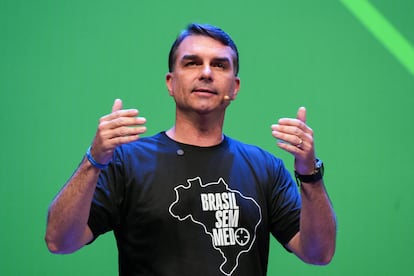
More than three months remain before the elections, but Brazil is already in campaign mode. Senator Flávio Bolsonaro, son of former president Jair Bolsonaro and the leading right‑wing contender, on Thursday presented his security proposals, which draw heavily on the hard‑line policies of El Salvador’s president Nayib Bukele — a model embraced across Latin America’s far right.
Flávio Bolsonaro unveiled his plan Brasil sem medo (Brazil without fear) in a high‑profile event in São Paulo’s financial district. A flagship proposal is the promise to build five new maximum‑security prisons “of the model adopted by El Salvador.” Together with the five existing federal prisons, the plan would create a complex called treva (meaning “gloom” in Portuguese). According to his program, the name was chosen “to take away the citizen’s fear and pass it on to the criminal.”
In line with a recent U.S. decision, the candidate proposes designating drug cartel factions and paramilitary groups as “narco‑terrorist organizations” and warned that “a criminal armed with a rifle will be shot by security forces.” He also promises to lower the age of criminal responsibility from 18 to 16, although for serious crimes (homicide, torture, rape, drug trafficking) minors from the age of 14 would be tried as adults.
The senator also proposes chemical castration for rapists, stepped‑up border controls to prevent the entry of drugs and weapons, deploying Navy troops to the ports that export the most cocaine, and 500,000 new prison spots. On public safety, he intends to create a national facial‑recognition system and install one million additional security cameras across Brazil. Many of these ideas would require constitutional amendments.
The program includes the usual far‑right proclamations, such as full enforcement of prison sentences and jail as punishment rather than rehabilitation. However, it does offer some specific gestures to female voters. It calls for “zero tolerance for femicide” (using that specific term, which is rejected by much of the far right). It also proposes that perpetrators subject to restraining orders against more than half a million Brazilian women be monitored with electronic ankle bracelets.
This, like other promises, is inspired by policies already trialed in São Paulo. One of the authors of the program is Guilherme Derrite, a former state security secretary whose tenure was heavily criticized after a spike in police‑caused deaths. Former judge Sérgio Moro, who served as justice and public security minister under Jair Bolsonaro, has also actively contributed to the proposals. He fell out with the clan patriarch; he now appears to be giving the successor a chance.
The plan comes as Flávio Bolsonaro seeks to regain popularity after being implicated in the Banco Master scandal and as recent polls suggested President Lula is improving in approval ratings and widening his lead.
A tough‑on‑crime message mobilizes his voter base and resonates with the average voter. Violence is Brazilians’ top concern: 30% consider it the country’s main problem, ahead of corruption (19%) and social issues (16%), according to a poll published last week by the Quaest institute.
Sign up for our weekly newsletter to get more English-language news coverage from EL PAÍS USA Edition









































