
Trump repeats the Venezuela playbook to force change in Cuba
The CIA director presented Havana with demands similar to those he made to Caracas in January. The threat of prosecuting Raúl Castro evokes Nicolás Maduro’s capture

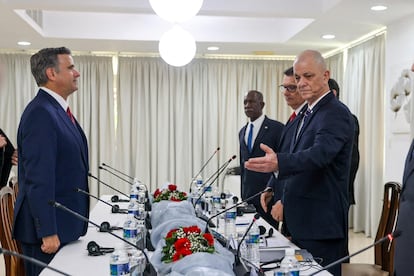
The image is striking: the CIA director — carrying the long history of U.S. interference in Cuba and Latin America on his shoulders — John Ratcliffe seated at the same table as his Cuban counterpart, Ramón Romero Curbelo; Cuba’s interior minister, Lázaro Casas; and Raúl Castro’s grandson, Raúl Rodríguez Castro. In Havana. Conversing cordially on the very same day that, amid popular protests and sweeping blackouts, the regime issued an SOS: the island’s last remaining fuel reserves had run dry.
For the head of U.S. intelligence, it was not his first diplomatic mission. He had already met in Caracas in January with Venezuelan Vice President Delcy Rodríguez for a similar encounter.
Ratcliffe arrived bearing a blunt message — a diplomatic version of “nice country you have here, shame if something happened to it” — along with a host of implied warnings. He told Cuban leaders that the United States was prepared to lend a hand in addressing the island’s deepening crisis; in fact, only hours earlier, the State Department had officially reiterated its offer of $100 million (€86 million) in humanitarian aid.
But that assistance is not unconditional: Donald Trump’s administration is demanding “fundamental changes” to “seriously address economic and security issues.” It also underscores that the U.S. president — though he has spent the week focused on his summit with Chinese President Xi Jinping in Beijing — is beginning to grow impatient over the lack of progress.
Indirectly, Ratcliffe’s very presence as a senior official within Trump’s inner circle underscored the seriousness with which the Republican administration is handling these contacts; the urgency of a situation worsened by tougher sanctions and the energy blockade the United States has imposed since January; and perhaps the possibility of reaching an agreement with representatives of the Castro regime that could avert chaos on the island.
The CIA has provided no details about the specific measures Havana must take. But from the statement circulated through its representatives, it is clear that Washington expects economic and political reforms. And that Cuba cannot serve as a “safe haven” for “adversaries” of the United States “in the Western Hemisphere,” the term the White House uses to refer to the Americas.
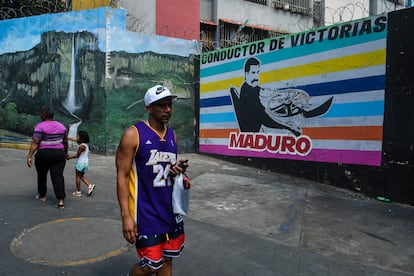
A message almost identical to the one Ratcliffe delivered to Venezuela’s acting president immediately after the U.S. military operation that captured Nicolás Maduro and forcibly removed him from the country.
Ratcliffe’s visit — which had not been announced in advance — was not the first by a CIA director to the Cuban capital in the later years of the Castro era. John Brennan, who headed the agency during Barack Obama’s administration, traveled there following the secret negotiations brokered by the Vatican that ultimately led to the restoration of diplomatic relations in 2015 and a brief thaw between the neighboring adversaries.
In Brennan’s case, Washington never officially acknowledged that the visit had taken place. This time, neither government tried to keep it secret. Havana was the first to reveal the meeting — the second publicly known encounter between the two countries since the beginning of the new phase of U.S. pressure on the island. Shortly afterward, the CIA confirmed it and released images of the encounter on social media. Both sides wanted it to be known.
Ordinarily, any negotiations conducted abroad by the head of U.S. intelligence services would be top secret, surfacing only years later in memoirs or declassified documents. But Ratcliffe is a highly unusual envoy, serving in an administration that is anything but orthodox.
The CIA director is one of Trump’s closest confidants, having previously served as director of national intelligence during the Republican’s first term. He now appears to have taken on a curious diplomatic role: that of intermediary in dealings with hostile governments.
Last year, he discussed Iran’s nuclear program with Israeli Prime Minister Benjamin Netanyahu and Israeli intelligence chief David Barnea ahead of the June strike on the Islamic Republic’s nuclear facilities. He has also taken part in several rounds of negotiations over peace talks between Russia and Ukraine, as well as in the prisoner swap that exchanged Russian national Alexander Vinnik for American teacher Mark Fogel.
His most recent known solo mission had been his trip to Venezuela in January. Ratcliffe was the first senior U.S. official known to have met with acting president Delcy Rodríguez. And then, as now in Cuba, his task was to make the White House’s position unmistakably clear: if Maduro’s former number two followed Washington’s instructions to the letter, she would remain in power and the Trump administration would work with her.
Otherwise, as the president had already warned publicly, she would face a fate “worse” than that of her predecessor. Ratcliffe also told his counterpart — in language strikingly similar to that used in Havana — that Venezuela cannot continue to be a “safe haven for adversaries in the Western Hemisphere,” especially drug traffickers.
Trump, who has embraced the Venezuela operation as the template for foreign interventions even when they become complicated — intense pressure during negotiations, plenty of stick and few carrots, the looming possibility of military force, and, when necessary, swift, spectacular, and ideally brief offensives — has once again deployed Ratcliffe on a similar mission.
As in Venezuela and Iran, the threat of military — or judicial — action against the regime also hangs in the background. It is no coincidence that, at the very moment news of the CIA chief’s visit emerged, representatives of the U.S. Department of Justice revealed that a formal indictment against Raúl Castro, 94, was being prepared in connection with the 1996 shootdown of two aircraft belonging to the anti-Castro group Brothers to the Rescue over international waters, when he served as defense minister.
Many see it as a warning to the regime — and as a sign that, should the Venezuelan model be repeated, Fidel Castro’s brother could become Washington’s scapegoat, much as Maduro did.
Nor is it coincidental that, in recent days, specialized tracking sites have detected an uptick in the activity of spy planes and drones around the island, much as happened in Venezuela before Operation Absolute Resolution on January 3.
The coming days are shaping up to be critical. Trump — who since the intervention in Venezuela has repeatedly insisted that Cuba “is going to fall pretty soon” and is “next” on his list — has already returned to Washington from Beijing. And he is eager for a political victory to erase the sour mood among voters caused by the prolonged war in Iran and surging gasoline prices, which have driven up the cost of virtually everything else: this week, inflation hit 3.8%, a level not seen since the most turbulent period of the Biden administration.
Also this week, Secretary of State Marco Rubio, the son of Cuban immigrants and the official overseeing Cuba policy within the Trump administration, voiced skepticism about the prospects for change so long as the Castro regime — which he has repeatedly labeled “incompetent” — remains in power.
Trump himself, in an interview with Fox News journalist Brett Baier aired Friday, expressed confidence that he would achieve the outcome he seeks. “I think we’re going to turn [Cuba],” he said. The government in Havana, clinging to its calls for national sovereignty, will decide whether the American president is right.









































