
A Cuba on the brink of collapse peers into the vertigo of change imposed from the United States
The CIA director’s presence in Havana, one day after the regime admitted it had exhausted its fuel reserves, accelerates Trump’s ‘takeover’ of the island
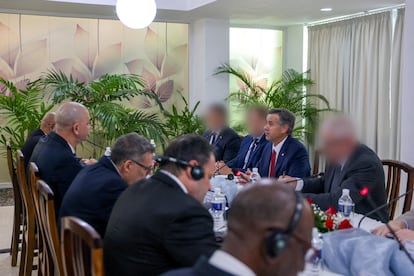
Time accelerated in Cuba this Thursday to the rhythm of sensational news and images—among them, the CIA director in Havana, something unseen in seven decades of Castroism. The day ended with reasonable certainty that change is approaching on an island on the verge of collapse: change imposed from Washington, after more than four months of economic and political pressure from the Trump administration to hasten the end of the regime. So this Friday, both Washington and Cuba woke up watching out for the next milestones on an uncertain timeline, with the U.S. president and his strongman, Secretary of State Marco Rubio, aboard Air Force One on their way back from China.
First came the formalization of Washington’s offer of 100 million dollars to “provide direct assistance to the Cuban people” through the Catholic Church. An offer that Cuba’s leaders initially rejected before accepting it, acknowledging that the mission undertaken with the military intervention in Venezuela in January—cutting off the island’s fuel supply—is producing its final effects.
Then came the release of political prisoner Sissi Abascal Zamora, who immediately traveled into exile. Shortly after, confirmation that CIA Director John Ratcliffe was in Havana, evidenced by a series of photographs that forced one to look twice, arrived. Last was the leak to U.S. media that a federal prosecutor from southern Florida—home to an exile community that lives in anxious anticipation of any sign of Castroism’s end—was preparing an uncertain legal gambit: indicting 94-year-old Raúl Castro for the 1996 shootdown of two small planes belonging to Hermanos de Rescate, a humanitarian organization based in Miami. Four people were killed in that attack. The potential legal move would represent a new pressure measure in what appears to be Washington’s strategy toward Havana—similar to the one employed against Venezuela, or even Iran.
In the rhetorical escalation from Trump and his administration, the “takeover” of the island is treated as a foregone conclusion. But with events moving this fast, it is no longer so clear that it will arrive, as the Republican promised, once the Middle East crisis has been resolved. The war against Iran remains mired in a stalemate of rejected peace proposals and the collapse of global energy trade caused by the closure of the Strait of Hormuz in the Persian Gulf.
The U.S. president has been absorbed this week by Taiwan and his meeting with Chinese President Xi Jinping, and the reporters traveling with him on Air Force One did not ask him about Cuba—depriving the world of another serving of his contradictory messages.
The CIA director, who arrived with a warning to Havana to refrain from intelligence cooperation with China and Russia, is the highest-ranking member of the U.S. government to set foot on the island since Trump’s campaign began. His presence marks a step forward in Washington’s pressure strategy, and its timing did not appear to be left to chance: it came one day after Vicente de la O Levy, Cuba’s Minister of Energy and Mines, announced that oil supplies for domestic consumption and power plants had run out—including the million barrels of Russian-origin oil that Washington had allowed through in April.
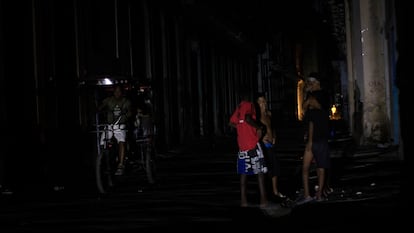
“We have absolutely no fuel, absolutely no diesel. In Havana, blackouts today exceed 20 or 22 hours a day,” said the minister, who chose to skip the part where his compatriots—perennially on the edge of the abyss, always pushed a little further—protested by banging pots in streets blocked by piles of accumulated garbage they set on fire, beside useless gas stations. “This dramatic deterioration has a single cause,” Cuban President Miguel Díaz-Canel wrote on X: “The genocidal energy blockade to which the United States subjects our country.”
The Trump administration’s decision to send Ratcliffe to sit across the negotiating table from Cuba’s Interior Minister, Lázaro Álvarez Casas, and the island’s intelligence chief, General Ramón Romero Curbelo—a meeting the CIA conveniently made public—did not only stir doubts about who is really in charge in Cuba. It also fed the enigma surrounding a figure who has risen to prominence as Washington tightens its stranglehold on the island: Raúl Guillermo Rodríguez Castro, known as El Cangrejo, The Crab, the grandson and bodyguard of Raúl Castro.
In a pre-recorded interview with NBC aired Thursday night, Marco Rubio—himself a son of the exile community—insisted that Cuba’s prosperity is a matter of “national interest” for the United States. “We don’t want a failed state 150 kilometers from our shores,” he warned. Rubio has also repeatedly said that Washington could settle for sweeping economic reforms, leaving the more drastic changes to Cuba’s political structure for a later date—or, to put it plainly, replicating the Venezuelan model and applying it to the island that for years was Chavismo’s main pillar of support.
The parallels, however, and the prospects of exporting that model, are not absolute. Castroism is not Chavismo. And the degree of direct U.S. government involvement is not identical either. Rubio, the son of Cuban immigrants, has on several occasions expressed doubts about the regime’s competence: he tends to argue that it is the ineptitude of Cuba’s leaders, not the embargo or other U.S. pressure measures, that has ruined the island’s economy.
Rubio repeated that idea again this week, in an interview with Fox News, where he expressed skepticism about the possibility of “changing Cuba’s trajectory while those people remain in charge.”
To those arguments, the CIA added another on Thursday—equally well-worn—in the statement that followed the Havana meeting: Cuba, the text charged, is a “haven for U.S. adversaries,” in a barely veiled reference to Russia and China.
The Cuban Communist Party described the meeting with the CIA director—a senior official they had already received in Havana in secret during the Obama years—as “part of efforts to address the current situation.” The Interior Ministry, which oversees the island’s vast apparatus of espionage and repression, spoke of “developing bilateral cooperation” and defended its “unequivocal condemnation of terrorism in all its forms and manifestations.”
With those words, the regime added euphemism to the repertoire of contradictory positions its officials have wielded in recent months while absorbing Washington’s pressure. The messaging has swung between willingness to cooperate with Washington and warnings that “any external aggressor” would meet “impregnable resistance”—while Trump floats the idea of sending a powerful aircraft carrier to finish the job. Meanwhile, and despite pressure from U.S. negotiators, the mass release of political prisoners has yet to materialize.
In February, it emerged that Rubio had been in contact with El Cangrejo, and that the latter had traveled to the capital of Saint Kitts and Nevis, on the sidelines of the Caribbean Community (CARICOM) summit, to meet with the Secretary of State’s advisers. In March, President Díaz-Canel—whose own role in this process is also in question—acknowledged for the first time that they were negotiating with the Trump administration. Then came the first visit by a U.S. delegation to Havana on April 10th.
Thursday’s visit—for which Ratcliffe arrived aboard a Boeing C-40B Clipper from Andrews Air Force Base, used for official travel by the U.S. president and other senior officials due to its proximity to Washington—was the second since Trump’s pressure campaign began. What comes next—whether only economic change is applied, a comprehensive political reform is undertaken, a supervised transitional state along Venezuelan lines emerges, or simply more of the same continues—remains unknown in a Cuba on the brink of collapse, where this week, time sped up.









































