
Cuba announces it has exhausted all its fuel reserves: ‘We have absolutely nothing’
The Energy Minister explains that stocks of diesel and fuel oil, key to powering the electricity grid, have run out just two weeks after the US tightened energy restrictions
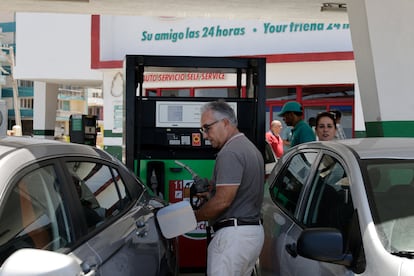

Cuba is definitively out of fuel. Cuban Minister of Energy and Mines Vicente de la O Levy announced Wednesday afternoon that the country has not a single drop of diesel or fuel oil left, vital for powering the country’s ailing electrical grid, which suffers from constant and increasingly prolonged blackouts. “We have absolutely no fuel oil, absolutely no diesel. We have no more reserves,” the minister explained in a televised statement. “Cuba is open to anyone who wants to sell us fuel,” he added, without mentioning the strict energy embargo imposed by the United States, which is tightening its grip while simultaneously maintaining an open channel of negotiation with the Castroist regime, which is seeking some room to maneuver while the population struggles to survive.
Since late January, the White House has maintained an oil blockade against the island, threatening sanctions and tariffs on anyone who supplies it with energy. Having lost its main suppliers — Venezuela and Mexico — due to the blockade, Cuba is experiencing its worst supply crisis, which, in addition to blackouts that have plunged the entire island into darkness, is triggering serious problems in basic services such as hospitals and transportation.
“The situation is very tense, it’s getting hotter,” the minister added, also announcing that they have completely used up the last shipment from abroad. At the end of March, a Russian oil tanker arrived with 100,000 tons of crude oil. Two-thirds of Cuba’s energy demand was met by fuel imports, mainly from Venezuela and Mexico. Eighty percent of the energy mix is based on 16 thermoelectric generating units and various fuel oil and diesel engines scattered throughout the country.
The Cuban energy grid, the minister added, is now solely dependent on Cuba’s scarce crude oil, natural gas, and renewables. Cuba has an installed capacity of 1,300 megawatts of solar energy thanks to panels installed by Chinese companies over the past two years. But much of that energy is lost because it cannot be stored in batteries due to the instability of the precarious power grid. “In Havana, blackouts now exceed 20-22 hours (per day),” said De la O Levy.
China, a decades-long ally of Havana, has been a pillar of foreign aid to the regime. Donald Trump is currently in Beijing. On Tuesday, before departing, he sent another message that appeared to be a commitment to diplomacy. “Cuba is asking for help, and we are going to talk!” he wrote on social media. This Wednesday, the State Department issued a statement offering the island $100 million in aid to carry out “meaningful reforms to Cuba’s communist system.”
At the same time, the Republican further tightened sanctions on May 1, imposing penalties on almost any non-U.S. person or entity that maintains commercial relations with the island, especially in the energy, defense, security, and finance sectors. It’s the carrot-and-stick strategy, used by Trump whenever possible, and in recent weeks, rumors of an imminent intervention on the island have been added to the mix.
In addition to some heated statements, CNN reported a large number of flights by U.S. spy planes and drones. Since February 4, the U.S. Air Force and Navy have completed at least 25 such flights, most of them around Cuba’s two main cities, Havana and Santiago. This type of activity also increased around Venezuela in the weeks leading up to the January 3 operation to capture Nicolás Maduro.
Sign up for our weekly newsletter to get more English-language news coverage from EL PAÍS USA Edition









































