
A new crime map for Mexico
Beyond acronyms and groups, and the unequal territorial control they exert, the death of El Mencho demonstrates the intensification of operations against crime in the country, under the watchful eye of the United States
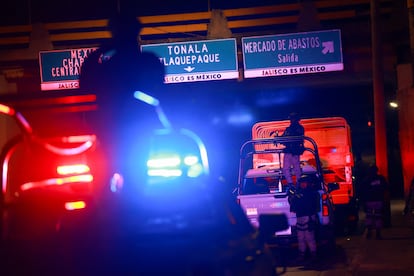
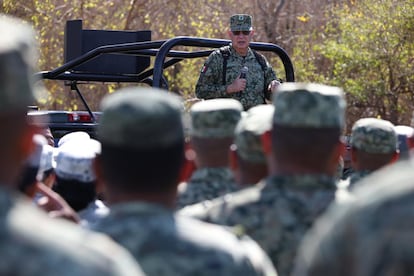
First, César Sepúlveda, “El Bótox,” fell in late January in Michoacán, and just a day later, Ryan Wedding followed suit, supposedly surrendering in Mexico City. In the following weeks, authorities focused on southern Sinaloa, besieged by the brutality of a cell linked to Los Chapitos, while the army, in Jalisco, orchestrated its major operation: the capture of the elusive leader of the Jalisco New Generation Cartel (CJNG) — the vast criminal network spanning the Americas — Nemesio Oseguera, alias “El Mencho.” His death in a shootout with the military confirms the Mexican authorities’ intensified fight against crime. But the disappearance of various figures from the criminal chess board leaves the cartels without leadership and ushers in a period of uncertainty, in which violence looms as a menacing possibility.
In Mexico, and in Latin America in general, crime is no longer just drug trafficking. The old paradigm where cocaine, marijuana, and heroin fueled illicit industries, especially in rural areas, has given way to a different, much more complex reality. Any economy is fair game, from avocados and limes in Michoacán to street market stalls and transportation routes in Guerrero, to the theft of gasoline from the pipelines of the national oil company, Pemex. Where there is money, there is crime, and the cartels have also lowered the cost of their drug business by abandoning agriculture and turning to synthetic drugs. In this new paradigm, the CJNG and El Mencho paved the way, while building new protection networks, shielded by regional political power.
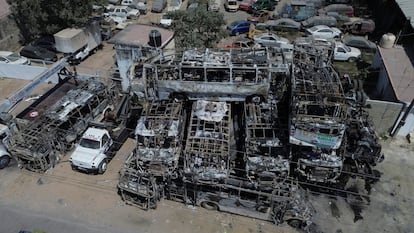
Beyond El Mencho, the criminal underworld has undergone numerous changes in recent months, especially considering the erosion of power within the Sinaloa Cartel’s main factions, particularly Los Chapitos, led by the sons of the imprisoned drug lord Joaquín “El Chapo” Guzmán. La Mayiza — the faction loyal to Ismael “El Mayo” Zambada — and that of Chapo Isidro have also suffered losses, though to a lesser extent. The blows dealt to criminal groups in Guanajuato, Zacatecas, Tamaulipas, and Tabasco, to name a few, have further painted a picture and also raise questions about the effectiveness of the government’s strategy, which boasts tens of thousands of arrests in its first 17 months in office, a considerable reduction in homicidal violence, and efforts to curb extortion.
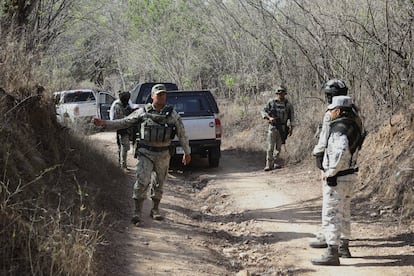
But doubts remain, and southern Sinaloa reflects them like no other region. After nearly a year and a half of operations, with hundreds arrested and just as many killed, mainly in the central part of the state, criminal networks in the south have escalated the level of violence, as if what had happened in previous months didn’t concern them. On January 23, a group linked to Los Chapitos, according to federal Security Secretary Omar García Harfuch, disappeared a group of 10 mine workers in the municipal seat of Concordia, near the popular tourist destination of Mazatlán. Authorities have identified the bodies of seven, exhumed from nearby clandestine graves. Around the same time, members of the same group disappeared four tourists from the State of Mexico in Mazatlán. They have not been seen since.
The apparent resilience of Los Chapitos, who have lost key operatives in the last two years, is not only surprising but also worrying. This phenomenon, like the case of El Mencho, sheds light on the limitations of the government’s security strategy and the future of crime in the country — the infamous criminal landscape. Ernesto López Portillo, coordinator of the Citizen Security Program at the Ibero-American University, elaborates on this issue. “The pressure exerted by the U.S. on Mexico in terms of security forces it to respond in ways that do not dismantle [criminal] structures, but do collapse leadership, generating not less, but more violence,” he argues. “In short, are they going after the leadership or the structures of crime?”
This question hits the nail on the head. Mexico has been at war with organized crime for 20 years, with peaks of aggression, as during the administration of Felipe Calderón (2006-2012), and troughs, as experienced during the presidency of Andrés Manuel López Obrador (2018-2024). And throughout this time, the cycle of emergence, growth, attack, and collapse of criminal leadership has repeated itself several times, as with Los Zetas or the Knights Templar. Crime resists, adapts, evolves. “Everything about El Mencho makes us forget that this is a very old cycle of repetition,” says López Portillo. “And everything being said at the moment omits the social, economic, and political base of the CJNG, ignoring its interaction with the state, replicating the idea that the state and organized crime are separate entities. It’s very frustrating.”
Along the same lines, academic Rossana Reguillo, author of Necromáquina. Cuando morir no es suficiente (Necromachine: When Dying Is Not Enough), a seminal essay on the forms of violence in Mexico, points out the weaknesses of the security strategy. “This [the El Mencho operation] proves once again the absence of state policies that address the real problem these groups represent. The choice is to decapitate rather than dismantle. By doing this, you provoke the emergence of other leaders. We already know this movie; we’ve seen it a thousand times,” she criticizes. “And what’s more,” she adds, “this machinery, this necromachinery, operates without Menchos, Chapos, etc.; it operates as criminal networks.”

So much doubt and uncertainty paints the current picture, a time when absences demand attention. In the hot lowlands of Michoacán, the downfall of El Bótox, leader of an extortion ring with numerous interests in the powerful lemon agribusiness, has sent old associates and enemies into hiding, wary of the possibility that the government might turn its attention to them. The operations against El Bótox and others, following several high-profile assassinations, such as that of Carlos Manzo, mayor of Uruapan, keeps Michoacán in a state of waiting. Meanwhile, Wedding’s departure from the criminal scene has dealt a major blow to the flow of cocaine from Mexico to the United States and Canada, judging by the comments of the Donald Trump administration, which has portrayed the former Olympic athlete as a modern-day Pablo Escobar — a debatable comparison in terms of leadership and business volume.
Since October 2024, when Claudia Sheinbaum took office, the government has somewhat tentatively targeted the structures experts have been discussing, structures deeply rooted in a web of political and criminal complicity. In the State of Mexico, for example, the country’s most populous state, which surrounds three-quarters of the capital, the Security Cabinet launched Operation Swarm in November 2024, aimed precisely at dismantling this network of complicity. Authorities arrested officials from 10 municipalities in the state, including several police chiefs, all members of a criminal conspiracy linked to the La Nueva Familia Michoacana cartel. Like the CJNG and the Sinaloa Cartel, the Trump administration designated this group a narco-terrorist organization exactly one year ago.
Operation Swarm briefly illuminated the country’s deep-seated problem, one far more complex than anticipated. It’s not that officials and police chiefs protect criminals or turn a blind eye to their activities. Rather, they participate in a scheme to co-opt the state at both the municipal and state levels, where criminals, in addition to extorting money from residents and government officials, have become obligated suppliers. Chicken, tortillas, vegetables, cement, musical groups for local festivals — everything passes through them. They also demand positions within municipal administrations, the police force, and the Secretariat of the Interior, all in an attempt to control registries of merchants, families with migrants sending remittances, and so on.
The government action thus sought to loosen these criminal networks. A few months ago, the Security Cabinet expanded Operation Swarm to Jalisco, a stronghold of the CJNG cartel, with the arrest of the mayor of Tequila and three other officials. Authorities accuse the mayor of leading an extortion scheme targeting tequila and beer producers in the area, on behalf of the CJNG. Previously, the mayor, a member of Morena, President Sheinbaum’s party, had been under scrutiny by the Security Cabinet for glorifying the criminal group and El Mencho, inviting a corrido band to the municipality that dedicates songs to the drug lord and displays his image on screens at their concerts.
A source familiar with crime in the State of Mexico and the country in general told this newspaper a couple of months ago that the results of Operation Swarm, before the raid in Tequila, were rather modest. “It was important to start, but this is much deeper than that,” the source asserted. Operation Swarm was like crime itself: the authorities were cutting off the head of the criminal network on the institutional side, without dismantling the dynamics, structures, and vast chains of institutionalized corruption. The question is how to tackle the entire network in a country where, as López Portillo points out, the administration of justice suffers from endemic weakness.
Latitude and longitude, the fall of El Mencho, and the fate of the CJNG draw the coordinates of the future. Following the death of the criminal leader, authorities have found accounting documents detailing payroll payments to dozens of collaborators, gunmen, commanders, lookouts, as well as police officers and other officials. The documents demonstrate the CJNG’s absolute control over vast areas of Jalisco, whose capital, Guadalajara, will host several World Cup matches this summer. Thus, questions about El Mencho’s successors are not as important as the extent of their current territorial control. Nevertheless, all of Mexico is wondering what will come next, and what can be expected from the fall of the country’s last major criminal leader.
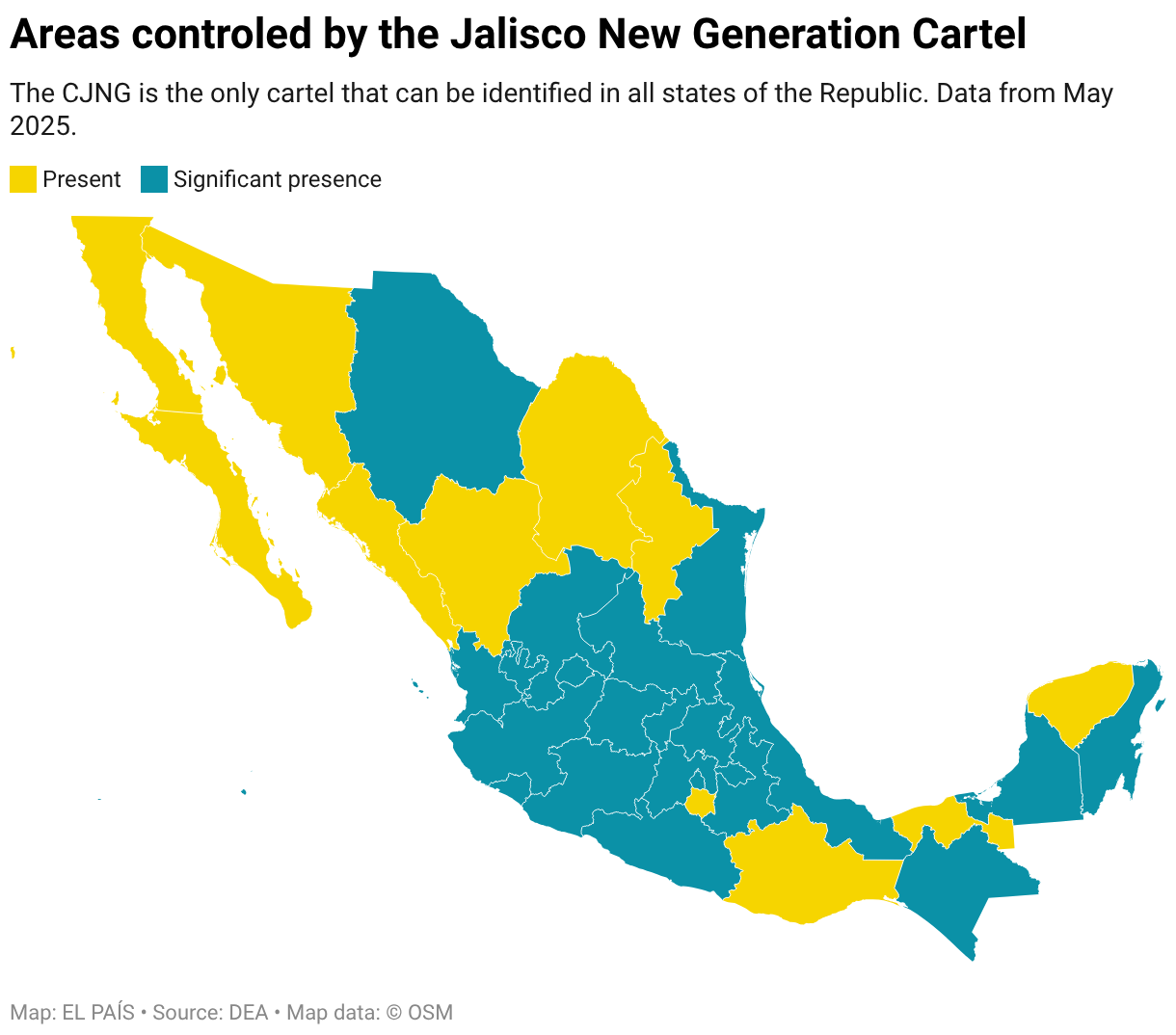
Secretary Harfuch indicated in late February during a visit to Sinaloa that there are four possible candidates for the criminal leadership, though he did not name them. The problem lies in anticipating how that succession will unfold — or even if it will occur at all — and whether there will be infighting among the group’s leaders. “The CJNG was born with a highly centralized leadership, and the figure who achieved it [Mencho] also managed to unify the group,” explains Salvador Maldonado, an academic at El Colegio de Michoacán and an expert on the dynamics of violence in the region. “That centralization has called the succession into question, because there are no heirs of his caliber. The question is how to generate new stability without divisions. And how will the new leaders create incentives for people to remain part of this organization?” he adds.
Clues to what’s coming may emerge in Michoacán within weeks. This state, bordering Jalisco, is where the CJNG originated. El Mencho was born in a town in Aguililla, not far from the troubled region of Apatzingán and Tierra Caliente, the scene, more than 10 years ago, of the rise of the self-defense groups — a relatively genuine, citizen-led response to the organized crime then represented by the Knights Templar. The latter’s downfall led to splits and new alliances, which in recent times have positioned the CJNG as a key player in several wars across different parts of the state. “It’s still early, but it’s important to note that the regional wars will be the touchstone of the group’s future. That’s the central point,” Maldonado points out.
But it’s not just Michoacán. The CJNG is waging wars in several states in the central part of the country, fueled by the criminal group’s years of prosperity under El Mencho’s leadership. These are wars instigated by young men recruited, by force or otherwise, who fight, as documents left behind after El Mencho’s death demonstrate, for $200 or $300. El Mencho’s downfall throws these conflicts — and their future — into uncertainty.
“I wonder what will happen here in the medium term, with these warring leaderships, and about expectations for the role of the new coordinator,” Maldonado reflects. Reguillo points to two scenarios that complement Maldonado’s. “One, that there will be an internal struggle for a new, single-person leadership, which would increase the violence and could also send a message of weakness to other groups. And another scenario is that there will be a ‘shadow government,’ meaning that everything was already prearranged,” he concludes.
Sign up for our weekly newsletter to get more English-language news coverage from EL PAÍS USA Edition









































