
A new ‘El Chapo’ emerges in Sinaloa
Mexican authorities point to the growing influence of Fausto Isidro, once a mid-level regional crime boss, in drug trafficking to the United States

The dust has settled from the latest war within the Sinaloa Cartel, revealing the shape of what remains of the surviving criminal structures after 15 months of fighting. The infighting between factions has left the main ones battered, especially Los Chapitos, commanded by the sons of Joaquín “El Chapo” Guzmán, the old regional drug lord. Of the four sons, only two remain at large, living on the run and stripped of their key lieutenants, who have either been killed or captured. Their enemies — the sons and followers of their father’s former partner, Ismael “El Mayo” Zambada — have emerged stronger from the war. But the biggest victory in all this violent chaos belongs to neither faction.
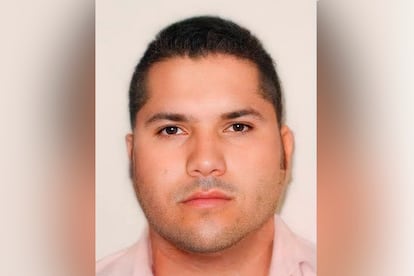
A new “Chapo” is emerging in Sinaloa, less media-savvy than his predecessor, but just as capable of exporting drugs north. Security sources consulted by EL PAÍS indicate that the main beneficiary of the cartel war is, beyond a doubt, the group led by Fausto Isidro Meza Flores, alias “El Chapo" Isidro. One of the U.S. government’s biggest enemies, Meza Flores runs a major operation producing and trafficking synthetic drugs, fentanyl, and methamphetamine, primarily in northern Sinaloa, especially in Los Mochis and Guasave. “He exports more drugs than everyone else,” one of the sources asserts. “He’s the big winner of the war; he’s very powerful,” the same source adds, a surprising statement given the events of December.
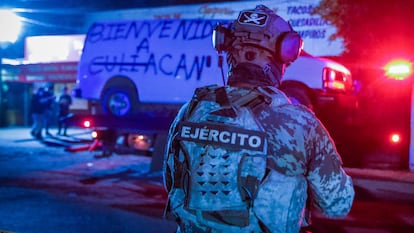
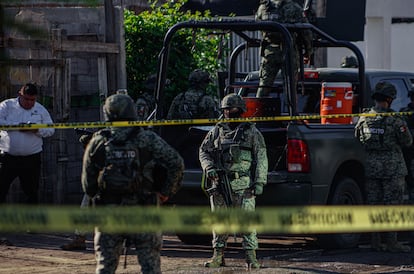
In the final weeks of last year, Mexican authorities virtually wiped out one of the pillars of El Chapo Isidro’s faction, the Inzunza family. On December 1, marines killed the son, Pedro Inzunza Coronel, alias “El Pichón,” in Choix, a small municipality inland from the coastal city of Los Mochis. “[El Pichón] started shooting at the Navy helicopter, and they returned fire,” a source familiar with the federal security cabinet meetings noted. Several other arrests were also made in that operation. On New Year’s Eve, the National Guard arrested the father, Pedro Inzunza Noriega, alias “Sagitario,” 62, in Culiacán, the state capital. Unlike the previous arrest, this one was made without a single shot being fired.
One would think that the downfall of the Noriegas, the first criminals accused of narco-terrorism by the U.S., had dealt a significant blow to El Chapo Isidro’s group. The Trump administration, in fact, considered the Noriegas to be the leaders of the faction. In a statement released in May, the U.S. Department of Justice placed them at the head of the “Beltrán Leyva organization,” named after the family that founded the faction more than 20 years ago, now fallen from grace, with the Beltrán Leyva brothers either dead or in prison. “This organization, under the leadership of Inzunza Noriega, is allegedly responsible for some of the largest seizures of fentanyl and cocaine destined for the United States in history,” said the FBI agent in charge of the Noriega investigation at the time.
In Mexico, the interpretation is different. To begin with, authorities place El Chapo Isidro at the head of the faction, even above the son of Alfredo Beltrán Leyva, one of the founding brothers, who is serving a sentence in the United States. This son, Jesús Alfredo Beltrán, alias “El Mochomito,” is another target of the Trump administration, although not at the level of El Chapo Isidro, who a few months ago was added to the FBI’s list of the 10 most wanted fugitives. To give an idea of the scale of the new Chapo’s operation, one of the sources consulted stated: “I wouldn’t say that [the fall of the Noriega brothers] affected his operation. If anything, it was a blow to his morale.”
Little is known about El Chapo Isidro. In a profile prepared a few years ago by Cenapi, an analysis center of the former Attorney General’s Office, researchers placed his birth on June 19, 1982, in Navojoa, just across the regional border in the neighboring state of Sonora. It is unknown how he arrived in Sinaloa. “His strength was scrap metal; he dismantled ships in Guasave, at Las Glorias beach and El Colorado, and sold the scrap. He was involved [in drug trafficking], but he wasn’t very important,” says a Sinaloa security force agent, consulted about him.
Sometime in the first decade of this century, Meza Flores began to accumulate power. The Beltrán Leyva brothers — Arturo, above all, then Alfredo, and finally Héctor — cousins of El Chapo Guzmán, ran their own network exporting cocaine, methamphetamine, and heroin to the United States. Their group and Guzmán’s operated in parallel, without any issues. But at the end of the decade, the situation changed. In January 2008, authorities arrested Alfredo Beltrán, a capture his brothers attributed to a betrayal by El Chapo Guzmán. In May of that year, hitmen gunned down one of his sons, Édgar Guzmán López, in a shopping mall in Culiacán.
That war — like the one waged over the last 15 months by the rest of El Chapo’s sons against the faction loyal to El Mayo — resulted in thousands of murders, a fragmentation of the country’s drug trafficking structures, and their militarization, a situation that explains the present panorama and the last 20 years of violence. El Chapo Isidro thrived in the ruins of that first war. The only surviving member of the Beltrán Leyva cartel, Héctor, took refuge in Nayarit, from where he rebuilt his organization, notorious in recent years for its alleged ties to former Secretary of Defense Salvador Cienfuegos, as documented by U.S. authorities. Héctor was arrested in 2014 and died, supposedly of a heart attack, in 2018.
Once in Sinaloa, El Chapo Isidro grew up in the criminal corridor along the northern coast, between Los Mochis and Guasave, where authorities made the largest fentanyl seizure in the country’s recent history: over a ton, in December 2024. He rose to power under the wing of his uncles, Agustín and Salomé Flores Apodaca. After the former’s arrest in 2012 and subsequent extradition, El Chapo Isidro took command of the faction. “He inherited the entire Beltrán Leyva business, overseeing Guasave and the surrounding mountains, all the way to León Fonseca and Sinaloa de Leyva,” says the Sinaloa security forces agent.
From 2011 to 2020, Mexican authorities arrested him at least four times, according to Cenapi’s records, for serious crimes such as organized crime, drug trafficking, kidnapping, and weapons possession. For some reason, none of these resulted in him being imprisoned. The Mexico Attorney General’s Office has at least 15 open investigations against him. In the United States, the U.S. Attorney’s Offices in Southern California and the District of Columbia filed separate indictments against him for conspiring to traffic cocaine, methamphetamine, and heroin into the country, and for using weapons in that conspiracy. But, for now, he remains a target.
Sign up for our weekly newsletter to get more English-language news coverage from EL PAÍS USA Edition









































