
Malala: ‘Reading a book alone in her room is an act of resistance for an Afghan girl’
The Pakistani activist visited Spain as part of an international campaign to have the ‘systematic erasure’ of women in Afghanistan recognized as a crime against humanity


Malala doesn’t need a last name. Simply saying her first name, without uttering Yousafzai, conjures up familiar images: she’s the girl who defied the Taliban in her native Pakistan, the activist who dedicated her life to girls’ education, and who, at 17, became the youngest person to receive the Nobel Peace Prize. She’s a “heroine,” an “inspiration,” a person “destined for greatness.”
These are the labels Malala herself lists with a touch of detachment, describing the expectations others placed on her when, at 15, a Taliban gunman shot her in the head. She recounts this in her latest book, Finding My Way, published last October. “I can’t escape the feeling that a giant hand pulled me out of one story and dropped me into a completely new one. At 15, I hadn’t had time to figure out who I wanted to be when, suddenly, everyone wanted to tell me who I was,” she writes.
She has just visited Madrid, where the script for this second part of the story unfolds. She would spend no more than 12 hours in Spain. The agenda was meticulously planned: institutional meetings with Prime Minister Pedro Sánchez and Foreign Minister José Manuel Albares, with hardly any time for the media. She was accompanied by Sahar Halaimzai, executive director of the Malala Fund, who intervenes when the conversation delves into the intricacies of international law.
Malala’s trip has a very specific objective: to spur a global movement to have the systematic erasure of women in Afghanistan recognized and classified as “gender apartheid.” The timing is crucial, as the United Nations is negotiating a new treaty on crimes against humanity, and codifying “the erasure of women from public life” would close the legal vacuum that currently leaves these abuses without a specific tool to prosecute them.
In person, Malala speaks slowly and carefully, choosing her words thoughtfully. She knows — as she acknowledges in the book — how to deflect questions that could turn her name into a weapon. She also accepts that she cannot escape questions about the attack on her, a part of her life that feels “very distant” — she is now 28 — but that “fills the air” every time she enters a room. She doesn’t avoid talking about politics, but she steers it back to a central theme: education as the foundation of equality.
Question. Do you think the world has normalized the oppression of women in Afghanistan?
Answer. Afghanistan is an example of systemic oppression against women and girls, where the Taliban as a misogynistic oppressive group are limiting women from every right, from the right to learn, the right to work… and they’re punishing women who dare to speak out or dare to go to work in secret, who dare to learn in secret. And it should be a wake-up call to us. It should alarm the world that such oppressive things can happen, where half of the population is being erased from public life. But I see passivity and how the world is looking the other way. It’s been nearly five years (since the Taliban returned to power), and we don’t see any progress. Rather, we’re seeing the Taliban announcing new extreme rules: that a woman cannot be seen from the window of her house. Even if she is sick and needs to see a doctor, they are limited in their public movement as well. Afghan activists and human rights experts call it a gender apartheid.
Q. What role should the international community play in supporting girls and women?
A. We need to have a system of accountability, and we should not be normalizing relations with the Taliban. Women’s rights should be on top of the international agenda.
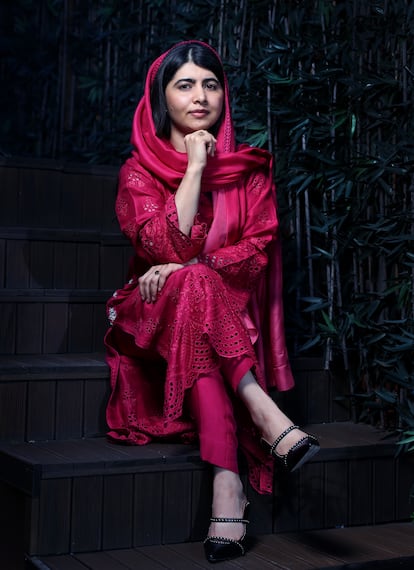
Q. Classifying gender apartheid as a crime against humanity, if achieved, will not be immediate. How can Afghan girls be helped right now?
A. We are doing everything we can to provide education to girls at home. We are supporting Afghan partners who are providing alternative education through television, radio, online platforms. I had a conversation with a few Afghan girls who are part of these underground secret schools, and they told me how learning gives them hope in this dark time. One girl said that even reading a book alone in her room is an act of resistance for her. Afghan girls are not giving up. They have the courage and the bravery, but they want the world to stand with them as well.
Q. Since your activism in Pakistan as a child, how has your approach changed to addressing current challenges in girls’ education and rights?
A. I started advocating for girls’ education when I was 11 years old. That’s when the Taliban in Pakistan, in my valley, banned girls from going to school. They bombed schools, and they would not allow women to go to work. I thought that would never happen again. When I was attacked at 15, the world stood with me, and I thought, this means a true commitment to girls everywhere, that we would not put the education of any girl at risk.
Q. That hasn’t been the case…
A. I personally feel very lucky that I went to university and completed my education, but I don’t want my story to be an exception. I want every girl to be able to complete her education and choose her own future. What we have seen in Afghanistan is a reminder to us that there is little protection for women and girls. There is little support in international law.
When I was attacked at 15, the world stood with me, and I thought, this means a true commitment to girls everywhere, that we would not put the education of any girl at risk
Q. Do you think the situation of women in Afghanistan reflects a broader phenomenon?
A. Women’s rights in Afghanistan should not be seen as a side issue. If we say we are feminists and we believe in gender equality, but we can’t act, it is of no use. We have to care about what’s happening with women and girls in Afghanistan, because it doesn’t only matter for Afghanistan, it matters for women and girls everywhere.
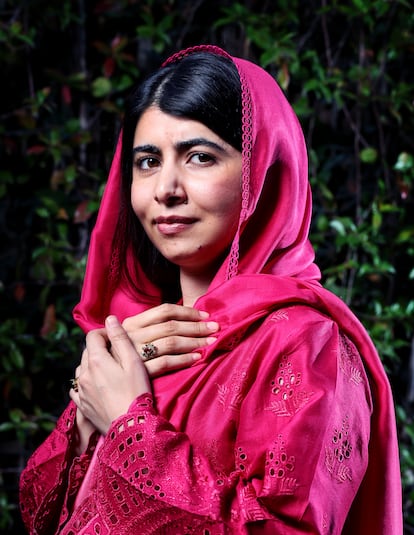
Q. Beyond Afghanistan, cuts in official development assistance are hitting women hardest around the world. Are we experiencing a global setback in the fight for women’s equality?
A. Honestly, it’s really difficult to process so many setbacks, from cuts in international aid, to the Taliban ban on girls’ education, to the destruction of the entire education system in Gaza, and the crisis facing women and girls in so many parts of the world. But I see it as a reminder of where we actually are and how we need to come together. And ensure that we do more, because what we have done is not enough. When misogyny becomes institutionalized and nothing is done about it, I worry that it won’t stop there. It may seem like a distant issue, but it’s a lot closer than we think.
Q. After all these years of activism, do you still consider education to be the key to achieving equality for girls?
A. I believe that education is the foundation of ensuring equality for women and girls. There are 120 million girls around the world who cannot go to school for different reasons.
When misogyny becomes institutionalized and nothing is done about it, I worry that it won’t stop there. It may seem like a distant issue, but it’s a lot closer than we think
Q. Many people consider you a symbol of courage. Do you ever feel afraid?
A. I’ve dedicated almost my entire life to activism for girls’ education, and I have been defined as brave and courageous. And I thought that meant not being afraid. But over the years, I have felt fear. I’ve been scared, not just for myself, but for girls everywhere. But even if I have a panic attack, even if I feel scared, it doesn’t stop me from the work that I want to do, and that is to shape a better future for girls. I’ve heard stories of girls, I’ve met with incredible girls, including Afghan girls, who are not giving up despite the fear. And that speaks to the resilience of women everywhere.
Q. What would you say to an Afghan girl if you could speak to her right now?
A. My message to all Afghan girls is that we stand with you. You’re brave, you’re resilient. Keep learning, even if it’s in secret. Keep speaking out in any way that you can. You have sisters, you have supporters around the world, and more and more people will be behind you. We want you to have the right to be in school. We want you to live with dignity. We will not give up. We will always stand with you.
Sign up for our weekly newsletter to get more English-language news coverage from EL PAÍS USA Edition









































