
Chavismo continues to silence radio stations while proclaiming a ‘new era’ of freedoms
At least eight stations have been shut down so far in 2026. The crackdown contrasts with the government’s gestures of openness amid a surprising critical shift by large corporations like Venevisión
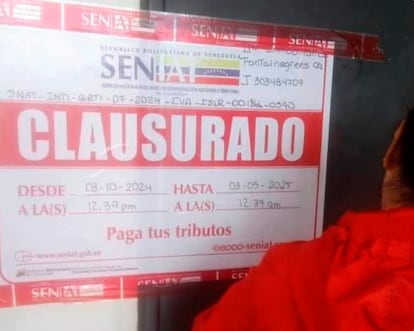
The National Union of Press Workers (SNTP) has reported that officials from the National Telecommunications Commission (Conatel) and members of the National Guard raided the headquarters of radio station Urbana 94.3 FM, located in Guatire — a commuter town near Caracas — shut it down, and confiscated all its equipment. The station had been broadcasting for 16 years.
Conatel has also shut down radio stations Unika 92.1 in Caracas; Impacto 105.3 FM in La Fría — a town on the border with Colombia; and Rítmica 104.1 in Puerto Cabello, on the country’s central coast. At each station, an average of 25 people have lost their jobs. All of these stations’ broadcasting equipment has also been confiscated.
These decisions are being made while Venezuela is going through an apparent period of political openness regarding public freedoms, and the government of Delcy Rodríguez, under pressure from Washington, is agreeing to redefine the relationship of the state with social actors who exercise their constitutional right to criticism and civil opposition.
The members of the SNTP themselves recently announced a working meeting with the legislative commission in charge of monitoring the Amnesty Law, to request a review of the cases of 40 journalists or press workers who are still facing legal proceedings or have been subject to other sanctions, such as the cancellation of their passports.
Until a few weeks ago, Venezuela had as many as 24 journalists imprisoned, the highest number in Latin America at the time. All have been released in recent days, according to data from the SNTP.
The measures taken by Conatel against these radio stations have not been publicly justified or explained — as has happened on other occasions in the past — and are aimed at changing the ownership structure of the media in Venezuela, especially radio. “Particularly before the 2024 presidential elections, the government made a great effort to control public opinion before the vote. Many stations were nationalized or changed hands to friends of the government,” says a spokesperson for the NGO Espacio Público, who preferred to remain anonymous.
Espacio Público recorded 16 radio stations closed in Venezuela in 2023. A year later, that number had risen to 21. According to the researchers behind these studies, in some cases the closures were for political reasons, but in others, no formal explanations were given; they were simply carried out. In 2025, seven more stations were shut down.
The Press and Society Institute (IPYS) estimates that in a year like 2022, for example, up to 95 regional radio stations were shut down without causing much public outcry or impact. The confiscation of equipment has become a common practice when stations lose their licenses. Experts warn that the authorities are waiting to see which regional stations’ licenses are about to expire so they can refuse to renew them and proceed with the change of ownership.
Espacio Público has also documented 62 news websites across the country, some of them international, that have been blocked. The National College of Journalists (CNP) has made similar reports over the years: regional or municipal radio stations have been shut down for reporting community issues, covering corruption, or allowing the dissemination of content critical of the government of former president Nicolás Maduro.
The signals emanating from the Chavista government amid a context of openness and amnesty unfolding in the country are contradictory. The president of the National Assembly, Jorge Rodríguez, recently gave a much-discussed interview to the well-known independent journalist Luis Olavarrieta, in which he made new commitments to press freedom and national reconciliation as fundamental principles. “I believe the work of all journalism, especially independent journalism, is essential,” he stated, acknowledging the regime’s excesses during this period. “It is necessary to allow the flow of information without fear of reprisals,” he affirmed.
While this is happening in the regional broadcasting landscape of Venezuela, the major mass media outlets are somewhat impatiently awaiting the end of certain censorship measures imposed on them by the authorities. Some nationally recognized radio journalists, such as Shirley Varnagy, have returned to their morning slots on Unión Radio — one of the most listened-to networks in the country — after being taken off the air for three months for commenting on the Nobel Peace Prize awarded to María Corina Machado. Amid a still very restrictive censorship framework, both she and the rest of the country’s radio broadcasters are beginning to exercise criticism again and to evaluate reality with greater transparency.
The most surprising turn of events has been that of Venevisión, owned by Gustavo Cisneros, one of the corporations of Venezuela’s golden age of television and one of the most important channels in Latin America until the end of the 20th century. After 20 years of developing a neutral, restrained news line, in which criticism was scarce and the voice of Chavismo abundant, its president, Andrés Badra, used particularly assertive and categorical language before his audience and before the Chavista authorities on the occasion of the station’s 65th anniversary.
Badra’s words were inconceivable coming from a long-time Venevisión executive. “We have had great joys, moments to celebrate, but at the same time we have gone through very dark, difficult times these past years. We saw the Fourth Republic [the years of democracy] come and go; the Fifth [the time of Chavismo]; and now we are heading toward the ‘Sixth Republic’ in this transition. At a time like this, it is necessary to have the courage to raise our voices for democracy and the reinstitutionalization of the country when the time comes.”
Venevisión, which has begun to air openly critical content, has already received several warnings from authorities regarding its new stance, but the channel is now ignoring the complaints. Adriana Cisneros, Gustavo’s daughter, now at the helm of the Cisneros Group companies, which have ties to Washington, recently announced the creation of a $1 billion private equity fund to support Venezuela’s reconstruction within the context promoted by Donald Trump and Marco Rubio.
Sign up for our weekly newsletter to get more English-language news coverage from EL PAÍS USA Edition









































