
Nature’s analgesic power: ‘I stood there observing the greenery and it was as if the pain evaporated’
Numerous studies and experts link exposure to natural environments with a decrease in pain perception: ‘It modulates the autonomic nervous system, improves physical health, strengthens the immune system, and reduces cortisol levels’

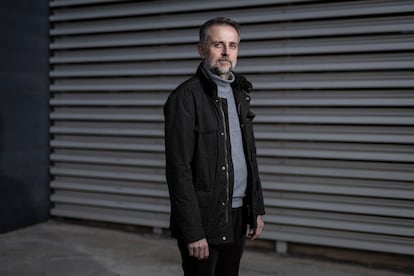
When Xavier was told he had myofascial pain syndrome, he was relatively relieved. He no longer had to continue his search for an explanation for his knee and lower back pain. The diagnosis helped stop the rumination and banished the darkest thoughts. But he was dealt a blow when the doctor proposed a treatment: pills (anti-inflammatories and opioids) and a quiet life, with walks of no more than half an hour. “I told myself I wasn’t going to settle for that and I started looking for alternatives,” he says.
His journey has had its learning moments. “First, I had to understand that, in my case, the pain wasn’t associated with injury; my brain had created an alarm that went off in the absence of any damage.” Then came a “gradual approach” to what he was feeling in his body, which was leading him down a path of bitterness. He adopted a long-term approach, with a lot of trial and error, a firm decision to test his limits, and a more compassionate attitude toward himself, including his own pain: “I stopped avoiding it; I even started to embrace it with curiosity.”
This approach, Xavier continues, has allowed him to cultivate “a deep contemplation” of his inner experiences and also of what he sees, hears, or smells. He enjoys going out into the countryside and walking barefoot along the seashore. He even finds moments of complete connection in a small park near his home in Hospitalet de Llobregat (Barcelona, Spain). “These are moments of calm and enjoyment, very different from the hustle and bustle of the city,” he says. Amid clear horizons and birdsong, the torment seems less intense. “I see a very clear link between being in nature and a reduced sense of pain,” he says.
What’s happening to Xavier is nothing out of the ordinary. Scientists have long been dissecting the analgesic potential of natural environments. Dozens of studies link exposure to trees and mountains with a reduction in physical suffering. In a meta-analysis published last January in Nature, Max Steininger of the University of Vienna concluded that, on a scale of 0 to 10, natural stimuli reduce the perception of pain by an average of one point. The same as drinking three large beers or smoking a little marijuana.
Steininger and his colleagues prioritized studies of patients with acute, temporary pain over those focused on people with chronic pain. “[This] is a very heterogeneous category, and anxiety or depression are common, so it’s difficult to isolate the experience of pain per se,” he says via videoconference.
A curious filter was also used: they only considered virtual exposure to nature (photographs, videos, sound recordings, etc.). “We wanted to eliminate possible concomitant elements such as physical exercise or social contact that are common in real-life exposures,” he explains. A rigorous and aseptic criterion, paradoxically unnatural, to isolate the stimulus (or its audiovisual recreation) as much as possible. Should the analgesic effect increase when placed in real nature instead of its reproduction in a laboratory? “Most likely, but we don’t know,” he replies cautiously.
Restoration of attention
With a scientific, but above all therapeutic, approach, Mayte Serrat works precisely with the variables that were discarded—out of empirical caution—by Steninger’s meta-analysis: people with chronic pain (especially fibromyalgia) and real outings to nature. Serrat conducts therapy with her patients in a park next to Vall d’Hebron Hospital (Barcelona), where she coordinates the Fibrowalk program, now established in all primary care centers in Catalonia. She has also created CIM Project, an inclusive hiking club with a wide range of activities: from short walks on flat terrain to forays into high-level mountaineering. “Last year, 30 of us reached Everest Base Camp. And this year we’re going to Kilimanjaro,” she says.
Serrat highlights several reasons that could explain the benefits of nature in pain reduction: “It modulates the autonomic nervous system, improves physical health, strengthens the immune system, and reduces cortisol levels. All of this leads to a diminished perception of symptoms in many people.” Despite its numerous positive effects, she cautions that it should never be considered a therapy in the strict sense, but rather a complement. For her, she continues, what matters most is “consistency of exposure.” It’s unreasonable to go to the countryside occasionally or sit in a park only once in a blue moon and expect lasting effects.
Steininger, for his part, refers to a 2014 review that points to other causes in the virtuous cycle of nature and pain. For example, the presence in green spaces of specific microorganisms or phytoncides (volatile substances released by trees to protect themselves from pests). Although more research is needed to corroborate their analgesic properties, the initial data are promising.
However, Steininger highlights a key reason that applies to a wide range of ailments and natural settings. It is based on the so-called attention restoration theory (ART), postulated by Rachel and Stephen Kaplan in the 1980s. The dynamic is quite simple: “Natural elements have a fascinating component that attracts people’s attention, thus facilitating a shift in focus from the painful experience to them.” In a 2025 paper, also published in Nature, Steininger used neuroimaging techniques to corroborate the assumptions of ART.
The contemplative moments Xavier—the Barcelona resident with myofascial pain syndrome—refers to are, in a way, like the absorbed attention given to forests or seascapes theorized by the Kaplans. Laura, from the northern Spanish city of Burgos, has suffered for 20 years from pain in her feet, hips, and lower back, and was still without a clear diagnosis. Then she experienced the same reduction in symptoms last summer. She shows a photograph taken by her partner in which she is seen sitting on the edge of a cliff in the Irati Forest in the region of Navarre. “I was going through a rough patch. In fact, the day before we had decided to shorten our hike because I wasn’t feeling well,” she explains. In the photo, Laura appears captivated and peaceful. “I stood there observing the mountains, the clouds, the greenery... and I felt absolute relaxation, as if the pain evaporated.”
Sign up for our weekly newsletter to get more English-language news coverage from EL PAÍS USA Edition









































