
Sarah Schulman, writer: ‘Perpetrators now present themselves as victims’
A decade ago, the intellectual published ‘Conflict Is Not Abuse,’ a book about the use of victimhood to justify cruelty. This practice has now become the norm worldwide
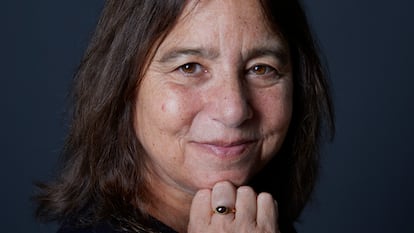

Victimhood, its exploitation and its political use to justify cruelty have been among the topics most extensively researched by Sarah Schulman. A decade has passed since the writer, LGBTQ+ activist and AIDS historian published Conflict Is Not Abuse: Overstating Harm, Community Responsibility, and the Duty of Repair, which is now being released in Spanish. “Sadly, it turns out the book was prophetic,” the 68-year-old author explains to EL PAÍS via video conference. “It came out before Trump was elected, and he’s proven all the arguments presented to be true. All of his rhetoric revolves around him being a victim. We see the same thing with Netanyahu. This idea of the perpetrator presenting themselves as the victim is now the global norm, unfortunately.”
Question. This line of reasoning can be applied to the far-right party Vox in Spain, or Milei in Argentina, or Le Pen in France. It’s the playbook of the so-called “reactionary international.” What’s behind this?
Answer. In the U.S., we have this rhetoric about how white men are so oppressed by everything. And how, if any woman or person of color has any job, they only have it because of DEI. The reality is that this dominant group feels repressed simply because they’re asked to be self-critical. This phenomenon already existed, but it has become more extreme.
Q. Why?
A. Because of the inability to recognize mistakes. People raised to dominate are told – and taught – that they should never feel uncomfortable. If you ask them to question themselves or reflect on how they relate to others, it’s as if you’re attacking them, mistreating them. On the other hand, there are also traumatized people… so much so that they have difficulty staying afloat and feel like they’re being attacked in every situation.
Both privileged and traumatized people feel deeply threatened by difference – by the expression and visibility of that difference. And the only way to go through life without ever feeling uncomfortable is for everyone around you to be repressed. Feeling uncomfortable is a sign of a healthy society; it’s something I think we should all want to experience.
Q. In the book, you highlight a complex nuance: that feeling like a victim doesn’t necessarily mean being right.
A. Unfortunately, now, in order to be eligible for compassion, you have to be a pure, flawless victim. And, if you say, “you know, maybe I participated in the problem, maybe I contributed,” everyone goes, “well then, you deserve whatever you get.” Acknowledging being part of a problem doesn’t diminish the value of having been a victim.
We’ve confused punishing others with repairing the harm done to us. We only feel relief from our suffering if someone is punished for it. But what would happen if we separated the two? What if we were listened to when we needed help? Punishment doesn’t work: it only creates more pain.
Q. Yet society has become more punitive, more punishing.
A. Every day, there’s more and more punishment. I live in a country where about 2,000 people each day are detained [by ICE] without having committed any crime... and they’re being deported to countries that they didn’t even come from. Right now, the level of cruelty in the United States is unbelievable. We have a government that doesn’t listen to the law. The country’s ruling class relies on blame and punishment… especially against immigrants. In the U.S., immigrants are the hardest-working people, but [the government] says that they’re stealing the nation’s wealth. It’s absurd. Right now, everything is topsy-turvy.
Q. In addition to anti-immigrant sentiment, there are also attacks on the LGBTQ+ community.
A. Especially against trans people. The government is repressing trans people and making an example out of them. They’ve always operated this way: they choose a very small minority that lacks power – a group that the majority of the population is unfamiliar with – and make them the object of all fears. It’s a historical pattern.
With gay people, it’s different. There’s a group of openly gay and lesbian men and women who are fascists: [the techno-oligarch] Peter Thiel; Bari Weiss, who runs CBS News and is also a Zionist; Alice Weidel, leader of the German far-right [AFD]… we can also talk about Caitlin Jenner, a trans woman and Trump supporter.
There have always been LGBTQ+ people in the elite who feel immune to everything. The only thing that matters to them is their money and their racial supremacy. This shows that identity may carry weight in our convictions, but what’s really important are the values you live by.
Q. One of the chapters in your book focuses on the 2014 Gaza War. Reading it is like watching the news… only now, it’s much more brutal.
A. Millions of people have taken to the streets for Palestine around the world. But many governments – like the American one – continue to send money to Israel. As an American Jew, I feel it’s my job to stop my government from continuing to fund Israel. This position is becoming increasingly popular. As soon as the United States stopped funding the killings, the Israeli government would collapse.
Q. American support for Israel has come from both Republicans and Democrats.
A. U.S. investments in Israel are also based on an imperial, racist and colonial past. Moreover, we have Christian Zionism – not just Jewish Zionism. In fact, there are more members in Christian Zionist organizations than Jews worldwide. There are alternatives to this. Spain has proved that: it has been inspiring. So has Ireland. Europe must lead the opposition to Trump. Canada, for its part, is now standing up to him. Many Americans are thinking, “Please, somebody say ‘no’ to Trump.”
Q. You’ve done a lot of research on LGBTQ+ activism and the worst period of the HIV/AIDS pandemic. Can that experience be of use today?
A. We have a lot to learn from it. I was part of ACT UP (the AIDS Coalition to Unleash Power, a leading organization that advocates for the rights of people living with HIV and AIDS) and a journalist specializing in covering AIDS. I even wrote a book – Let the Record Show: A Political History of ACT UP New York, 1987–1993 (2021) – about the organization’s history.
ACT UP achieved so many victories because it had a structure where you could disagree. They had a bottom line: direct action to end the AIDS crisis. A single sentence, not a 50-page manifesto. Within that framework, each person could do what they believed was useful. That structure of radical democracy – in which many different responses could coexist – is what made it so successful.
All movements that try to impose a single analysis or a single strategy fail in the end. We live in a situation where every community in the world is under attack from an oligarchy and threatened by the climate crisis. To ask all these different communities to have just one analysis is absurd. It’s never going to happen. So, we need a politics of strategic alliances, where we work with people [when] we agree with them and move forward.
Let me give you an example. The Catholic Church has been my enemy for my entire life, right? But now we have Pope Leo, and he supports migrants. When priests are arrested for confronting ICE, for the first time in my life, I’m on the same side as the priests. I still disagree with the Church on other issues, [but we can be] flexible and mature in our approach to politics. We have to get through this hell to reach a new future.

Q. That reflection could be taken into consideration by the left in many countries, including the United States.
A. For the first time, we have a left wing of the Democratic Party that’s getting some power. That’s something new here. It’s very exciting… and it’s happening all over the country. What happened in New York City (with the election of Zohran Mamdani, who hails from that faction) is a miracle. I’ve lived here all my life and I’ve never seen New Yorkers so proud of their city.
Q. Faced with the success of this leftist faction, Trump has responded by stirring up panic about what’s supposedly a communist “threat.”
A. Historically, the term “communist” has been used in the U.S. to silence people: the government even executed people for being communists, like the Rosenbergs [in 1953]. If you look at people with AIDS, Palestinians, or trans people, there’s a common pattern: they’re people who are in danger. They’re vulnerable, [yet they’re] falsely portrayed as dangerous, when the real threat comes from others, like tech oligarchs.
Q. You’ve written about how desire can become something that you get punished for. Is that still happening today?
A. At the highest levels of power [and] in everyday life, we’re still seeing so much of sexual violence. Right now, we’re in the midst of [learning about] terrible rape charges on university campuses (the “Cornell Seven” case). In recent years, women have changed enormously, but men haven’t changed at all.
On one hand, there’s an overreaction when somebody expresses desire for you. That’s not a crime. You should be able to simply say, “Thanks, I’m not interested.” And that should be the end of it. On the other hand, there’s a real threat: many straight men are still dangerous. People may overreact to that danger, and that has consequences, such as turning mere desire into something punitive. But it’s understandable.
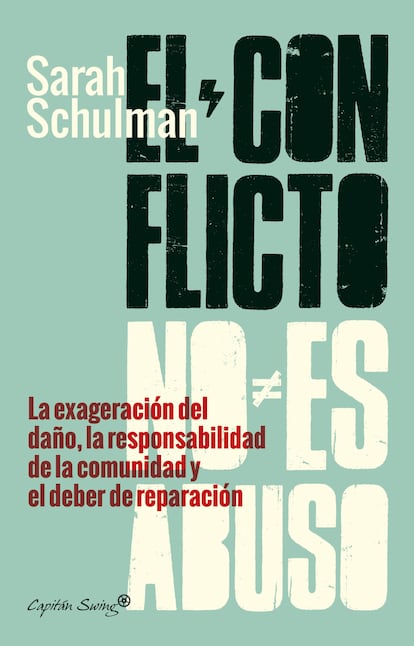
Translated by Avik Jain Chatlani.
Sign up for our weekly newsletter to get more English-language news coverage from EL PAÍS USA Edition









































