
Richard Dean Anderson, the iconic MacGyver: ‘He was different, a TV hero who didn’t use guns. He would think, look and solve the problem’
The actor who played the resourceful TV hero reunited with fans at San Diego Comic-Con Málaga. Now 76 and living a low-key life by the ocean, he admits he has little recollection of MacGyver’s unlikely trip to the Basque Country
He had a solution for everything. There was no problem he couldn’t tackle. Whether it was forcing open a lock by melting ice, building a defibrillator out of two candlesticks and a microphone cable, making a bomb with a stick of chewing gum or defusing one with a paper clip. He could even stop a sulfuric acid leak with milk chocolate bars. As a popular Spanish saying inspired by the character goes: “You’re more dangerous than MacGyver in a hardware store.”
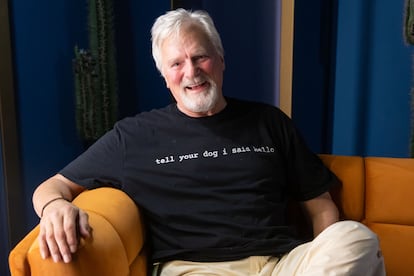
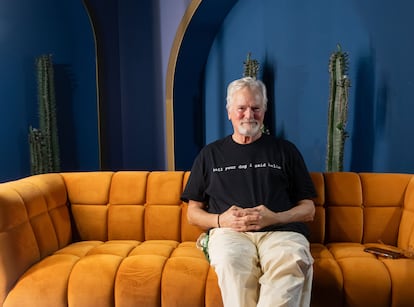
“I had no idea people said that in Spain. That’s fantastic,” says Richard Dean Anderson, the actor who brought the resourceful hero to life, bursting into laughter. Warm and engaging, the 76-year-old was one of the biggest nostalgia draws at last weekend’s San Diego Comic-Con Málaga. At the event in the Spanish city, he signed autographs, posed for photographs with fans and took part in an entertaining panel discussion. He also spoke with EL PAÍS.
“Meeting fans is wonderful. It’s the best part of all this,” says the U.S. actor, who appreciates the warmth of the public, if not the warmth of the weather. “I’m from Minnesota. I have thick blood. Yesterday [Friday] was really hot. It was terrible,” he says while figuring out how to use a handheld fan.
He adds: “We ran into a bit of chaos that didn’t seem to keep the fans in mind. I don’t know if they are getting what they came for. I suppose I could adjust and accept that’s the way it is here, but I think about the fans, the people who pay the money to come and meet me and get an autograph or whatever... It all feels a little casual.”
“Still, I don’t really have a social life where I live and it’s always nice to meet people,” says Anderson, who lives north of Malibu, California, and leads a lifestyle far removed from that of a typical superstar.
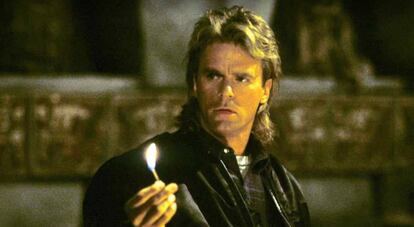
Anderson spends most of his time with his dogs and walking by the sea, away from television and the media. It’s a personal choice. After appearing in more than 600 episodes of the daytime drama General Hospital and becoming MacGyver, he later took on the role of Lt. O’Neill in Stargate, a character that further cemented his popularity in the United States. It also proved to be one of the last major chapters of his acting career.
The turning point came with the birth of his daughter, Wylie Anderson, 28 years ago. He says he quickly realized that nothing was worth spending time away from her as a newborn. “Now she writes, directs and produces. I try to help her however I can, even if that means getting out of the way,” he says.
His face may have disappeared from television screens, but at last weekend’s event in Spain, four decades later, it was one of the most recognizable thanks to the enormous success of MacGyver. Created by Lee David Zlotoff for ABC, the series aired on Spanish public broadcaster TVE between 1985 and 1992. Over the course of its seven seasons, it became a global phenomenon, drawing huge audiences and turning Anderson into an international star. He says he landed the role after asking to keep his glasses on during the audition so he could read his lines.
“The people in charge looked at each other and said: if he doesn’t mind being seen with glasses in a role like this, we’ve found our MacGyver,” he recalls.
The character also closely resembled the real-life Richard Dean Anderson. “The writers put in things that I was interested in, which included the environment, animal rights, anti-gun [measures]. And then there’s a certain part of living as a human being, like I ski, played hockey, and did all those jocular things,” he says.
“MacGyver was different: a TV hero who didn’t use guns. He would think, look and solve the problems without killing somebody, without shooting them,” he explains. “That allowed parents and children to watch the show together. And that’s what I feel most proud of and happy about: those relationships, especially between daughters and dads. I think that combination made the series memorable to a broader audience than normal.”
His role was that of a superhero who, instead of a cape and powers, always had pliers within reach. He was an ordinary person who saved lives, rescued people, and solved conflicts using science, never guns. “I don’t think there are enough people in the world who are intrigued or humbled by science on television today. Because you really have to watch, listen and observe. Whereas a sitcom or a regular drama, you can just hear,” says Anderson.
The actor says he helped devise many of the ingenious fixes his character used to get out of trouble. “We had collaborators — advisers from technical schools and universities near Los Angeles. They told us how something could be solved with what was in the room, and others contributed too. It was a collective effort,” he remembers before pausing to consider whether MacGyver would have used artificial intelligence if it had been available to him.
“He’s more of a practical solver of problems, more physical,“ he says. ”He uses his science mind to see angles or possibilities of what is real, what is right here and now. I don’t know enough about AI, but it’s a little frightening because it appears to me that it takes away the human element. It becomes automatic; it solves. I like the human mind and the way it works now. I understand that AI is not going to let us decide. It’s going to dictate. That scares me. But MacGyver and AI? Maybe he’d just be intrigued, like: how could I use this?”
MacGyver and the Basques
With Anderson visiting Spain, it was impossible not to bring up something rather more peculiar: a first-season episode in which Angus MacGyver travels to the Pyrenees to go undercover, disguising himself with little more than a towel, among a group of “Basque mountain fighters who have been at war with France and Spain since time immemorial,” as the show’s narrator puts it.
The group — whose members wear txapelas and use pelota baskets to hurl grenades — look less like Basque separatists than an unlikely cross between highwaymen and Sicilian gangsters. In the episode, which later went viral on YouTube in Spain, the hero must rescue a geologist whom her captors mistakenly believe to be a physicist and whom, MacGyver suspects, they intend to use to help build an atomic bomb.
“It was so long ago that I don’t remember it,” says Anderson. He has much clearer memories, however, of past holidays in Barcelona and Ibiza, and admits he arrived in Málaga a couple of days early in order to explore the city. “The beach, its castle, it’s incredible,” he says.
During a panel on Saturday afternoon at the San Diego Comic-Con Málaga, Anderson took it upon himself, without being prompted, to describe U.S. President Donald Trump as “a piece of shit.” “Yes, he’s a piece of shit,” he said.
In his later conversation with EL PAÍS, he reiterated the point. “I dislike very much what he is. I don’t like his behavior, his policies, his ego. He’s a negative man. I just don’t respect him, which is the worst thing I can say about a human being. I don’t respect him at all. But it’s one man’s opinion,” he said.
Strong words from the man who played MacGyver, and they came just days after he found himself in a scene few would ever have imagined: posing for a photograph with the cast of Los Serrano, one of Spain’s most beloved television series. What a crossover that would have been.
Sign up for our weekly newsletter to get more English-language news coverage from EL PAÍS USA Edition









































