
GDP doesn’t protect against the heat: European regions with more resources face a higher risk of mortality from high temperatures
A study led by ISGlobal shows that the most disadvantaged areas are more vulnerable to extreme weather, especially to the cold

When temperatures soar, it’s assumed that having more financial resources allows for more air conditioning and access to swimming pools to cool off. However, the reality is more complex, and wealth doesn’t protect against the heat. This is according to a study led by the Barcelona Institute for Global Health (ISGlobal), which found that European regions with higher socioeconomic levels have a greater risk of mortality from high temperatures than less privileged ones.
The study, published in Nature Health, quantifies how socio-economic factors impact vulnerability to heat- and cold-related mortality in 32 European countries. It uses data from the EARLY-ADAPT project database, which includes 161 million deaths from all causes between 2000 and 2019. The analysis examines how factors such as GDP, household income, and life expectancy influence temperature-related deaths.
According to Blanca Paniello-Castillo, ISGlobal researcher and lead author of the study, “we see that socioeconomic factors are an intrinsic part of people’s quality of life and the impact of temperatures on these premature deaths.”
As expected, the weather doesn’t affect everyone equally, and the most disadvantaged bear the brunt of it, especially when it comes to the cold. However, with heat, the situation is different, and the risk of death associated with high temperatures is greater in regions with greater resources.
“European regions with higher GDP, household income, and life expectancy show lower mortality rates associated with cold weather, probably because they have better-insulated housing, better healthcare infrastructure, or less energy poverty,” Paniello-Castillo points out. “However, these same regions with more resources show higher mortality rates due to heat, and we believe this is because they are areas with more intense urbanization, especially in cities,” she notes.
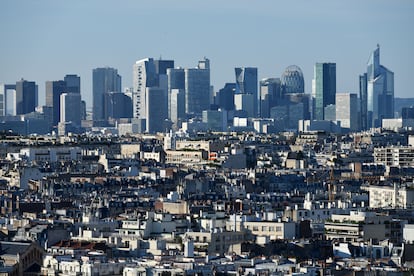
According to the researcher, other studies have already shown that regions with greater socioeconomic resources tend to be urban areas with more concentrated activity. “These are often cities with a lack of vegetation, with a lot of cement that promotes heat absorption and contributes to the urban heat island effect,” emphasizes Paniello-Castillo, who asserts that economic prosperity protects against the cold, but not against the heat. On the contrary, it increases exposure to high temperatures.
However, despite this paradox, the study emphasizes that the most disadvantaged regions are also the most vulnerable overall to temperature. Indicators such as the Gini index (which quantifies wealth inequality within a population), the difficulty of keeping homes warm, and material and social deprivation are directly associated with higher temperature-related mortality.
This is also because, nowadays, cold-related deaths in Europe far outnumber those associated with heat. This is largely due to the fact that cold-related deaths are recorded over a longer period of the year and, above all, because of the mortality rate during the colder months from respiratory illnesses such as the flu.
The study compares two hypothetical scenarios: one in which all regions had the most favorable socioeconomic conditions and another in which all were at the least favorable end of the spectrum. The difference in the number of deaths between the two scenarios exceeds 301,000 when the inability to keep the home warm is taken into account. Likewise, more than 183,071 deaths are estimated to be due to the aging population (from age 80 onward), and more than 180,000 due to income inequality.
For the researchers, these findings highlight the fundamental role of socioeconomic inequalities in shaping temperature-related mortality across Europe and the urgent need for equity-focused adaptation strategies.
As Paniello-Castillo emphasizes, including socioeconomic factors in adaptation plans achieves a double effect. “It’s like killing two birds with one stone, since it can reduce both inequality and the impact of temperatures,” she points out.
On the other hand, although cold-related deaths are more numerous today, researchers point out that between 2022 and 2024, an estimated 180,000 deaths were associated with high temperatures in Europe. Therefore, they consider thermal exposure (to both heat and cold) to be central to environmental epidemiology and is becoming a key element of public health.
According to Paniello-Castillo, for now, climate change is increasing heat-related deaths, but not decreasing cold-related ones. However, it is foreseeable that the current proportion will change in the future, with deaths caused by high temperatures becoming more prevalent.
Sign up for our weekly newsletter to get more English-language news coverage from EL PAÍS USA Edition









































