
Renewables: A strategy for peace
The sun and wind do not have to travel through the Strait of Hormuz, nor are they controlled by volatile autocrats

The U.S.-Israeli war on Iran has starkly exposed the security, economic, and climate risks of fossil fuel dependency. Leaders have a clear choice: either pivot to the stability and sustainability of renewable energy, or remain hostages to fortune in a world riven by unpredictable conflict and geopolitical rivalry.
Shockwaves through global energy markets have had an immediate and far-reaching political impact. With roughly 20% of the world’s oil passing through the Strait of Hormuz, the disruption resulting from both Iranian and U.S. actions illustrates how fossil fuel dependence turns into strategic leverage during conflict. Each escalation pushes prices higher. Oil has surged above $100 per barrel, and global fuel prices are expected to remain high for the foreseeable future.
It is only four years since another illegal war — Russia’s invasion of Ukraine — sent oil and gas prices soaring, exposing, once again, the vulnerabilities of a system built on scarcity. One fossil fuel–linked crisis is a wake-up call; two in less than five years is a clear signal that our energy systems need urgent, structural change.
Fossil fuels are also bankrolling some of the world’s worst conflicts. Since the start of the war in 2022, Russia’s fossil fuel revenues have far outstripped Western aid to Ukraine, allowing the Kremlin to sustain its aggression. Tragically, this latest price spike is expected to breathe even more life into Russia’s war machine. Proxy wars in Sudan, Yemen, and elsewhere are enabled by fossil fuel revenues and driven by disputes over resources.
Moving beyond fossil fuels must therefore be a priority — not just an environmental imperative, but a strategic investment in national and global security.
Countries must now decide whether to continue down a fossil fuel route or speed up the transition away from their use. There is a temptation to opt for the former, either shifting dependence from one supplier to another or expanding fossil fuel subsidies. While this may help in the short run, in the long term it will only deepen instability and entrench the very vulnerabilities countries are trying to escape.
At the same time, and even more worrisome, the climate consequences of the current system are accelerating. Fossil fuels account for roughly 75% of global greenhouse gas emissions, and climate-related disasters already cost the global economy more than $200 billion annually. The past three years have been the hottest ever recorded, with temperatures exceeding 1.5°C above pre-industrial levels for extended periods. Every fraction of a degree now brings sharper risks — more intense heatwaves, more destructive floods, and longer droughts that undermine food and water security.
Yet a cleaner, fairer, more secure energy future is available. Renewable energy offers a fundamentally different model, with steadily diminishing costs. Energy independence is a tool for stability, and this is exactly what renewables located within national borders can provide. The sun and wind do not have to travel through the Strait of Hormuz, nor are they controlled by volatile autocrats.
The path forward is clear, but to walk it requires leadership. Brazil has launched a global process to support countries in developing national roadmaps to transition away from fossil fuels — recognizing that this shift must be planned, not improvised. Building on this, the upcoming meeting in Santa Marta — co-convened by my country of Colombia and the Netherlands — is an early milestone that will bring together governments, experts and practitioners to focus on practical implementation.
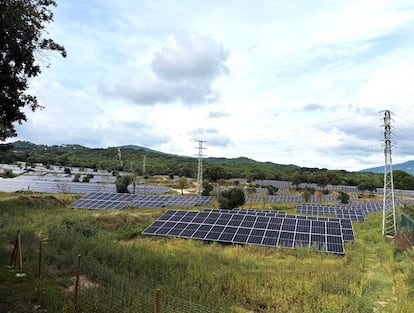
If countries were powered by clean energy, they would be protected from the disruptive impact of wars in the Middle East, Russia-Ukraine or elsewhere. Recent events show this in practice. Spain’s embrace of solar and wind energy has shielded it from the price hikes many others are facing, helping it remain less vulnerable to external economic and political pressures. Pakistan’s rapid solar expansion has helped avoid more than $12 billion in fossil fuel imports and is buffering the economy as gas shortages loom — strengthening the kind of stability that underpins peace. The lesson is clear: while the transition to renewables will not happen overnight, reducing dependence on fossil fuels can make countries more resilient to global shocks.
We now stand at a crossroads between two models of development: one rooted in extraction and uncertainty; the other in resilience and shared prosperity. Renewables offer a pathway toward the latter and the capacity to contribute to peace in an increasingly volatile world. It is a recalibration of the geopolitical playing field. It is a peace strategy in and of itself.
Sign up for our weekly newsletter to get more English-language news coverage from EL PAÍS USA Edition









































