
The midterm elections: Seven battles that will define the post‑Trump future
Under a month from Election Day, control of the Senate hinges on a handful of seats. In a deeply polarized country, everything will depend on which party can better mobilize its voter base


There is less than a month left until the midterm elections on November 3. The outcome will determine which party controls both houses of Congress and begin shaping the post-Donald Trump era.
The cost of living, the course of the economy, prices — especially gasoline — and the war in Iran are some of the issues voters care about most, according to polls. That turns these elections into a referendum on the president, whose approval ratings are at the lowest levels of his term, around 37%. But in a deeply polarized country, everything will depend on which party can better mobilize its voter base — and on a handful of very close contests in a few states.
All 435 seats in the House of Representatives are up for grabs. Democrats need to gain at least three net seats to take control of the body responsible for the national budget, something most experts — and the betting markets — think they are very likely to achieve. Polls currently give them an 8.5% lead over Republicans in voter intention.
One third of the 100 seats in the Senate are being contested. To win control, Democrats must gain four net seats, from the 47 seats they hold now to 51. These are the key battlegrounds for control of the Senate.
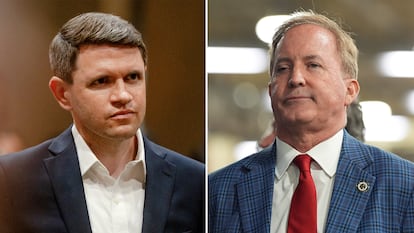
Texas: the seminarian and the sinner
Democrat James Talarico, a state legislator and seminarian, was virtually unknown until last February. He is now his party’s best hope to win a statewide contest in Texas for the first time since 1994, and he holds a slight lead in the polls against his rival, Republican Ken Paxton, the attorney general of the Lone Star State.
Under other circumstances, Talarico —who advocates a populist platform and has said provocative things such as that there are “six genders”— would likely have had no chance in deeply conservative Texas. But this time general voter discontent has been compounded by the Republicans’ choice of the controversial Paxton as their candidate.
Paxton narrowly won his party’s primary with the support of Trump and the party’s most conservative wing, but his political career has been marred by scandal. In 2015, he was accused of fraud, though he reached a deal with prosecutors to avoid trial without admitting guilt. The Republican-majority Texas House impeached him on corruption charges in 2023, although the state senate ultimately acquitted him.
The RealClearPolitics poll average gives Talarico a 2.4% lead over his rival.
Michigan: The progressive Muslim and the interventionist former FBI agent
If the progressive physician Abdul El-Sayed wins the Michigan seat he is contesting against Mike Rogers for the Democrats, he will become the first Muslim U.S. senator in American history. His victory would allow the party’s left wing to argue that its progressive positions can also win in swing states —a claim potential 2028 presidential contenders such as New Yorker Alexandria Ocasio-Cortez will weigh carefully. Conversely, if El-Sayed fails in a year favorable to Democrats, the message will be one of caution.
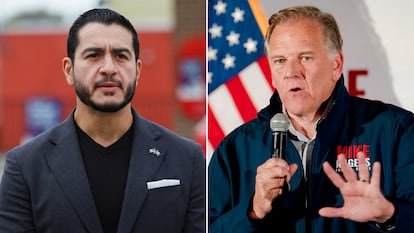
Republicans see his candidacy as a major opportunity to seize this Senate seat in Michigan from the Democrats. His opponent, former congressman Mike Rogers, has rushed to label him a dangerous “extremist” with “dangerous rhetoric.” El‑Sayed, an advocate of universal health care, has moderated some of his positions.
Rogers presents a profile opposite to his rival’s. A former FBI agent, he is a conservative Republican, anti-abortion, pro-business, and has a history of supporting overseas military interventions. He ran two years ago for Michigan’s other Senate seat, losing narrowly to Democrat Elissa Slotkin by 0.3 percentage points.
Voter intention gives El‑Sayed a 3.5 percentage-point advantage.
Maine: The last-minute candidate and the experienced senator
Troy Jackson was not the Democrats’ original candidate in this northern state, where pride in independent politics runs deep. The former state senate president — a moderate, soft-spoken, somewhat gray figure — was chosen in an emergency selection after the original frontrunner, the charismatic Graham Platner, resigned amid sexual assault allegations that the oyster farmer denies.
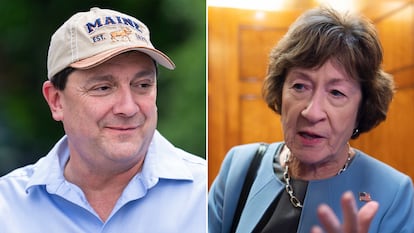
His Republican rival is formidable. One of the party’s more traditional congressional figures and one of the few lawmakers who occasionally votes with Democrats, Susan Collins has won U.S. Senate elections five times — each by a large margin over her opponent.
Maine is among the states hit hardest by the trade war the Trump administration unleashed on neighboring Canada, tariffs, and the steep rise in gasoline prices sparked by the war with Iran, a conflict Collins has supported in various Capitol votes.
Voter intention: Jackson leads by 0.2 percentage points.
Alaska: The local congresswoman and the Trump-allied senator
The nation’s largest state may feel the sting of steep cost-of-living increases more than any other. In its most remote areas, gasoline tops $10 a gallon, compared with the national average of $4.45 a gallon (almost double the prewar level). Alaska has tended to vote Republican in every election, but Democrats say anger over high prices could help their candidate, former congresswoman Mary Peltola, a centrist whose campaign slogan “fish, family, freedom” blends environmental protection with traditional values.
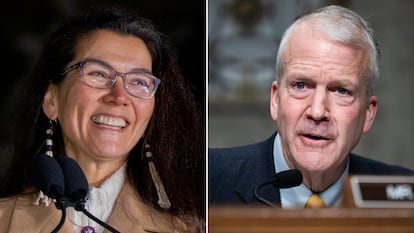
The daughter of a Yupik mother — one of Alaska’s indigenous groups — she was raised in a remote area where fishing and hunting are community-taught skills learned from childhood. In Congress, Peltola has cultivated good relationships with members of both parties, increasingly rare in today’s Washington. Last week she had to go on the defensive after an article in The New York Times accused her of poorly treating her staff. Her campaign acknowledged she endured a difficult period after the 2023 deaths of her mother and husband, but insists that that episode has passed.
The Republican Daniel Sullivan, who has defended the Senate seat he has held since 2015, presents himself as someone who delivers for Alaska — from pandemic aid to protecting the state’s aquaculture industry. Sullivan accuses his rival of being ineffective during her time in Congress. The senator could be hurt by the candidacy of an independent with a nearly identical name, Dan J. Sullivan.
Voter intention: Peltola leads by 1.5 percentage points.
Ohio: The former senator trying to return and the little‑known candidate
Republican senator Jon Husted, appointed two years ago to fill the vacancy left by J.D. Vance when the latter assumed the vice presidency, represents an anomaly within today’s GOP: a politician who prefers discussing economic plans rather than communicating on social media in all caps, shouting, or insults. That approach is causing problems in his current campaign: some Republican voters don’t know who he is.
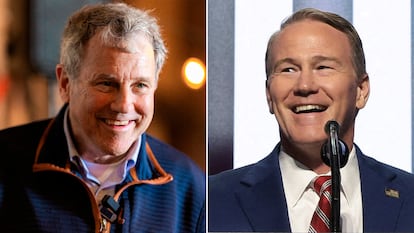
His rival, Sherrod Brown, who served in the Senate for two decades until J.D. Vance defeated him in 2020, faces the opposite problem: his name is so well known that many voters are unaware he left office six years ago. They assume he still holds that seat and blame him for Ohio’s ills and congressional inaction — a perception Husted’s campaign happily exploits: some of Husted’s ads refer to him as “Senator Brown.”
Voter intention: Brown leads by 3.1 percentage points.
Iowa: The candidate trying to distance herself from Trump and the challenger who won’t let her
Like Alaska and Maine, agricultural Iowa is among the northern states most affected by tariffs imposed by Trump and the war in Iran. That has made possible what seemed unlikely months ago in a territory that has become increasingly Republican over the past two decades: that the GOP Senate candidate, Congresswoman Ashley Hinson, is tied with —or even trailing in some polls — state legislator Josh Turek. A former Paralympic athlete who uses a wheelchair due to spina bifida, Turek has built his campaign on fighting corruption and promising greater transparency in campaign finance.
Hinson, a former TV journalist in the Capitol since 2020, benefits from a larger base: there are 183,000 more registered Republican voters than Democratic voters in Iowa. But Trump’s unpopularity and his policies weigh on her. The congresswoman has begun to distance herself from the president. After voting for the war against Iran, she now says the conflict “needs to be brought to a successful and immediate end,” and that Iowans “shouldn’t have to foot the bill at the pump or the checkout line for the war in Iran.”
Voter intention: Turek leads by 0.4 percentage points.
Kansas, the surprise battle: The megachurch pastor vs. the doctor who sued his patients
Few U.S. states are more Republican than Kansas: the last time it voted for a Democrat for the Senate was almost a century ago. But in recent weeks a pastor named Adam Hamilton has come within striking distance of achieving it as doubts grow around his rival, Republican senator Roger Marshall.
In addition to the usual factors that could produce this result in a state Trump carried by 16 percentage points — prices, the war — the candidates’ peculiar circumstances matter. Hamilton, a political newcomer with the appeal of a fresh face in an electorate hungry for new ideas, leads the largest Methodist church in Kansas. A former Republican, he switched parties when he announced his candidacy last spring.
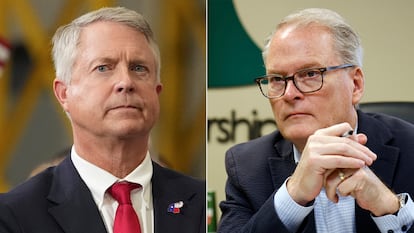
Marshall, by contrast, faces headwinds despite recent efforts to distance himself from Trump’s immigration and war policies. A report in The New York Times revealed that the senator’s clinic and partners sued nearly 700 patients over 20 years for unpaid medical bills, even garnishing some wages; 81 people were arrested for failing to appear in court. Most defendants were from rural Kansas; several were low-income mothers who had struggled to pay childbirth bills.
Voter intention: Marshall leads by 1.5 percentage points.
Sign up for our weekly newsletter to get more English-language news coverage from EL PAÍS USA Edition









































